

Carricero Oriental vs Carricero Estentóreo
Acrocephalus orientalis frente a Acrocephalus stentoreus
Juega un quiz con Carricero Oriental y Carricero Estentóreo
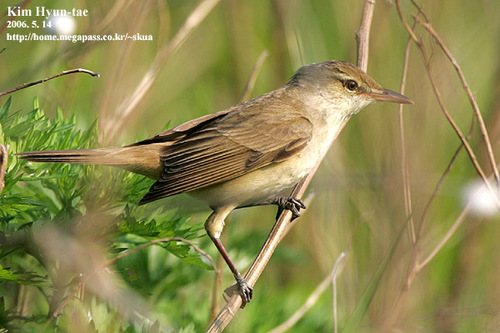 Carricero Oriental
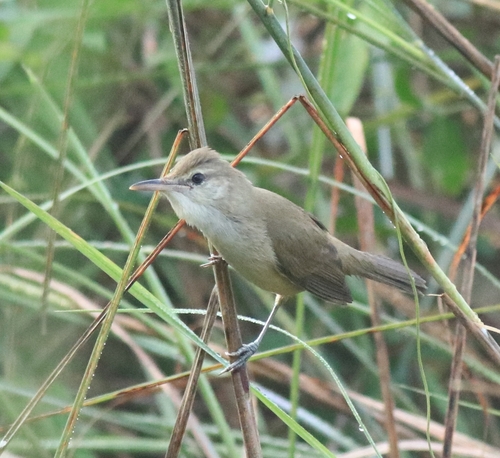 Carricero Estentóreo
En breve
La marca de campo más confiable para separar el Carricero Oriental del Carricero Estentóreo es la punta pálida y blanquecina de las plumas de la cola, que el Oriental muestra y el Estentóreo carece. Ambos son grandes, carriceros marrones con una estructura y tamaño similares, pero el Oriental es ligeramente más esbelto, con una cola más corta y de extremo más cuadrado y una proyección primaria ligeramente más larga. Las sutiles diferencias en el plumaje, como las estrechas rayas grisáceas en la garganta y el pecho del Oriental, pueden ayudar, pero a menudo son difíciles de ver en el campo. El color y la forma del pico, así como la presencia de un supercilio pálido y una franja ocular oscura, son marcas de apoyo útiles. La voz y el comportamiento son similares, por lo que las pistas visuales son las más útiles para la separación.
Consejos de identificación
- Punta de la cola: Busca una punta pálida y blanquecina en las plumas de la cola del Carricero Oriental; esta es la marca de campo más útil y está ausente en el Carricero Estentóreo. Verifica tanto en aves posadas como en vuelo.
- Forma de la cola: El Oriental tiene una cola más corta y de extremo más cuadrado; la cola del Estentóreo es más larga y menos cuadrada. Esto es sutil, pero puede ayudar en la comparación directa.
- Proyección primaria: El Oriental muestra una proyección primaria ligeramente más larga más allá de los terciarios, lo que da un aspecto de alas más puntiagudas en la mano o en reposo. Las alas del Estentóreo parecen un poco más cortas en relación con el cuerpo.
- Forma y color del pico: El pico del Oriental es bastante largo y pesado, marrón por encima y rosa por debajo con una abertura anaranjada brillante (especialmente obvia en juveniles y adultos cantores). El pico del Estentóreo es fuerte y puntiagudo, pero menos distintivamente coloreado.
- Supercilio y franja ocular: Ambos tienen un supercilio pálido y una franja ocular oscura, pero el supercilio del Oriental puede ser más contrastante, especialmente en plumaje fresco.
- Rayas en la garganta y el pecho: El Oriental muestra estrechas rayas grisáceas en la garganta y el pecho, mejor vistas con buena luz o en vistas cercanas. El Estentóreo carece de estas rayas y es más uniforme por debajo.
- Color de las partes superiores: El Oriental es marrón por encima con un rabadilla más pálido; el Estentóreo (especialmente las razas del norte) puede ser de un marrón más rico, pero esto es variable y se superpone.
- Partes inferiores: El Oriental es blanquecino por debajo, más marrón en los flancos y en las cobertoras de la cola; el Estentóreo es blanquecino por debajo pero más uniforme, careciendo del contraste marrón en los flancos y la cola.
- Color de los pies: El Oriental tiene pies grises, pero esto rara vez es visible en el campo y no es un separador fuerte.
- Canto: Ambos tienen cantos fuertes y complejos; el canto del Oriental incluye notas guturales y croantes y un llamado áspero 'chack', mientras que el del Estentóreo es un 'kereet-kereet-kereet' lento y parloteante con mimetismo. En la práctica, el canto no es un separador confiable a menos que conozcas bien a ambos.
- Elección de posadero: Ambos cantan desde las partes superiores prominentes de los juncos o arbustos, por lo que el comportamiento no es un separador.
- Hábitat: Ambos son especialistas en juncales; el hábitat no ayuda a menos que estés fuera del rango normal de una especie.
- Tamaño y apariencia: Ambos son grandes para los carriceros, pero el Oriental es ligeramente más esbelto y menos voluminoso que el Estentóreo. Esto es sutil y se utiliza mejor con experiencia o en comparación directa.
- Edad/sexo: No hay diferencias significativas entre los sexos; las marcas relacionadas con la edad no se describen excepto por la punta de la cola en el Oriental, que está presente en todas las edades.
- Trampas: Ten cuidado con los tonos de plumaje variables y la superposición de estructuras; siempre prioriza la punta de la cola y las rayas en la garganta cuando sean visibles.
Tamaño
Ambas especies son grandes para los carriceros Acrocephalus, con una longitud de 18–20 cm. El Carricero Oriental es ligeramente más esbelto y con alas más cortas que el Estentóreo, pero esto es sutil y no siempre es aparente en el campo. Sus envergaduras se superponen (Oriental: 23–26 cm), y ambos tienen un pico fuerte y puntiagudo. El tamaño por sí solo rara vez es diagnóstico, pero el Oriental puede parecer un poco más aerodinámico y menos voluminoso que el Estentóreo.
Plumaje
- Aves juveniles/inmaduras: No se describen marcas distintivas específicas de edad para las alas superiores o el vuelo de ninguna de las especies, por lo que la separación se basa en el plumaje de la cola y el cuerpo en todas las edades.
- Cola: El Carricero Oriental muestra una punta pálida y blanquecina en las plumas de la cola, visible cuando está posado o en vuelo; el Carricero Estentóreo carece de esta característica y tiene una cola simple.
- Partes superiores: Ambos son marrones por encima, pero el Oriental tiende a tener una rabadilla más pálida, mientras que el Estentóreo (especialmente las razas del norte) puede ser de un marrón más rico en general. Estas diferencias son sutiles y variables.
- Partes inferiores: El Oriental es blanquecino por debajo con flancos marrones y cobertoras de la cola, y muestra estrechas rayas grisáceas en la garganta y el pecho (busca estas en buena luz). El Estentóreo es blanquecino por debajo pero carece de las rayas y es de color más uniforme.
- Cabeza: Ambos tienen un supercilio pálido y una franja ocular oscura, pero el supercilio del Oriental puede ser más contrastante. El pico del Oriental es marrón por encima, rosa por debajo con una abertura anaranjada brillante; el Estentóreo tiene un pico fuerte y puntiagudo, pero el color del pico se enfatiza menos en las descripciones.
- Pies: El Oriental tiene pies grises; el Estentóreo no se describe específicamente, pero no es un separador clave.
Comportamiento
Ambas especies se comportan de manera similar, a menudo cantando desde posaderos prominentes en la parte superior de los juncos o arbustos. Son activas, moviéndose a través de la vegetación densa y ocasionalmente mostrándose bien al cantar. No se notan diferencias de comportamiento importantes que separen de manera confiable a los dos en el campo.
Hábitat
Ambas especies son especialistas en juncales, encontrándose en juncos altos y densos cerca del agua. El Carricero Oriental es típico de Asia oriental, mientras que el Carricero Estentóreo se encuentra desde Egipto hasta el sur y sureste de Asia. En áreas de superposición (por ejemplo, el sureste asiático), las preferencias de hábitat son casi idénticas, por lo que el hábitat no es un separador confiable.
Voz
Ambas especies tienen cantos fuertes y complejos entregados desde posaderos expuestos. El canto del Carricero Oriental es una mezcla de frases trinos y notas guturales y croantes, con un llamado fuerte y áspero 'chack'. El canto del Carricero Estentóreo es fuerte y se escucha a distancia, pero menos ruidoso que el Carricero Tordal, con un 'kereet-kereet-kereet' lento y parloteante y algo de mimetismo. En la práctica, sus cantos son lo suficientemente similares que la voz no es un separador confiable en el campo a menos que estés muy familiarizado con ambos.
Carricero Oriental · Carricero Estentóreo · Mis aves difíciles