

Correlimos Menudillo vs Correlimos Semipalmeado
Calidris minutilla frente a Calidris pusilla
Juega un quiz con Correlimos Menudillo y Correlimos Semipalmeado
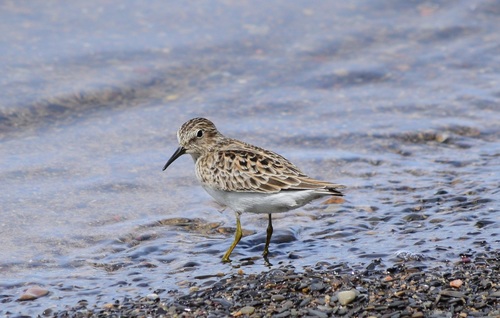 Correlimos Menudillo
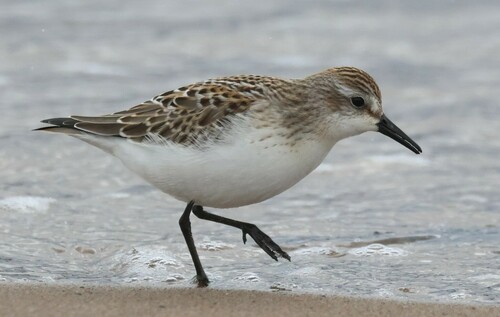 Correlimos Semipalmeado
En breve
La marca de campo más confiable para separar el Correlimos Menudillo del Correlimos Semipalmeado es el color de las patas: el Correlimos Menudillo siempre muestra patas de color amarillo-verde, mientras que el Correlimos Semipalmeado tiene patas negras. Esta diferencia es visible en todas las edades y estaciones, aunque el barro a veces puede oscurecer el color de las patas. Los Correlimos Menudillos juveniles son más rufo y tienen un patrón más audaz en la parte superior que los Correlimos Semipalmeados juveniles, que son más simples. Estructuralmente, el Menudillo es ligeramente más pequeño, más compacto y tiene un pico más fino y ligeramente curvado hacia abajo, mientras que el Semipalmeado es más robusto con un pico más grueso y recto. Ambas especies son pequeños 'peeps' y pueden ser confusos, especialmente en bandadas mixtas, pero prestar atención cuidadosa a las patas, el pico y el patrón de la parte superior generalmente confirmará la identificación.
Consejos de identificación
- El color de las patas es la marca de campo más confiable: El Correlimos Menudillo tiene patas de color amarillo-verde (nunca negras), mientras que el Correlimos Semipalmeado tiene patas negras. Verifica esto primero, pero ten cuidado con las manchas de barro.
- Forma y grosor del pico: El Correlimos Menudillo tiene un pico fino y ligeramente curvado hacia abajo; el pico del Semipalmeado es más grueso en la base, más corto y generalmente recto. La forma del pico se juzga mejor de perfil y a corta distancia.
- Patrón de la parte superior juvenil: Los Correlimos Menudillos juveniles son más brillantes y rufo en la parte superior, con franjas de manto blancas nítidas y un aspecto escamoso; los Correlimos Semipalmeados juveniles son de un gris-marrón más apagado, con menos contraste y poco o nada de rufo.
- Supercilio (ceja): El Correlimos Menudillo muestra una línea pálida más obvia sobre el ojo, especialmente en juveniles y adultos en cría. El supercilio del Semipalmeado es menos distintivo.
- Cara y corona: El Menudillo tiene una corona más oscura y contrastante y una cara más clara; el Semipalmeado es más simple y más uniforme en la cabeza.
- Tamaño y estructura: El Menudillo es más pequeño, más compacto y con un cuello más corto. El Semipalmeado es más robusto, con una cabeza proporcionalmente más grande y alas más largas. Esto es sutil y se utiliza mejor en comparación directa.
- Proyección primaria: El Semipalmeado a menudo muestra una proyección primaria más larga más allá de los terciarios, dando una apariencia de alas más largas en reposo; el Menudillo parece tener alas más cortas.
- Estructura de los dedos (avanzado): El Correlimos Semipalmeado tiene membranas parciales (semipalmación) entre los dedos, pero esto rara vez es visible en el campo. El Correlimos Menudillo carece de esta membrana.
- Comportamiento alimenticio: El Correlimos Menudillo puede alimentarse más cerca de la vegetación o en el borde fangoso, mientras que el Semipalmeado es más propenso a vadear en barro abierto o agua poco profunda. No es diagnóstico, pero puede ayudar en contexto.
- Composición de la bandada: Las bandadas grandes y densas durante la migración son más propensas a ser Semipalmeadas; el Menudillo a menudo se encuentra en grupos más pequeños o dispersos en el borde de bandadas mixtas.
- Plumaje en invierno: Ambas especies se vuelven más grises en la parte superior, pero el Menudillo permanece más claro y delicado; el Semipalmeado es más oscuro y simple. El color de las patas sigue siendo un separador clave.
- Vistas de vuelo: Ambas muestran una estrecha barra alar blanca, pero esto no las separa. Usa el color de las patas y la estructura si son visibles.
- Voz: No se describe en las notas proporcionadas; no confíes en las vocalizaciones para la separación basada en esta información.
- Trampas: El barro puede oscurecer el color de las patas, y la iluminación puede dificultar el juicio de la forma del pico. Los Correlimos Semipalmeados juveniles pueden parecer ligeramente más cálidos en la parte superior, pero nunca tan rufo o marcados nítidamente como los juveniles Menudillos.
- Contexto estacional: Ambas especies migran juntas y se pueden encontrar en los mismos hábitats. Los Correlimos Menudillos juveniles son especialmente brillantes y distintivos a finales del verano y principios del otoño.
Tamaño
El Correlimos Menudillo es el ave costera más pequeña de América del Norte, midiendo de 13 a 15 cm de longitud con una envergadura de 27 a 28 cm y pesando de 19 a 30 g [wikipedia]. El Correlimos Semipalmeado es ligeramente más grande, con 15 a 18 cm de largo, una envergadura de 35 a 37 cm y un peso de 18 a 51.5 g [wikipedia]. En el campo, esta diferencia de tamaño es sutil y a menudo está enmascarada en bandadas mixtas, pero el Semipalmeado generalmente parece más robusto y con alas más largas, especialmente en comparación directa.
Plumaje
- Aves juveniles/primer otoño: Los juveniles del Correlimos Menudillo son distintivamente rufo en la parte superior, con franjas de manto brillantes y un patrón escamoso nítido; los juveniles del Semipalmeado son más apagados, de un gris-marrón más oscuro en la parte superior, con menos contraste y careciendo de tonos rufo fuertes. El Menudillo también muestra un supercilio pálido más obvio (ceja).
- Adultos (cría): El Correlimos Menudillo es marrón en la parte superior con rayas oscuras y una línea pálida sobre el ojo; el Semipalmeado es de un gris-marrón más oscuro en la parte superior, con un supercilio menos distintivo y una cara generalmente más simple.
- Adultos (no cría/invierno): Ambas especies se vuelven más grises en la parte superior, pero el Menudillo mantiene un aspecto más claro y delicado, mientras que el Semipalmeado es más oscuro y simple. El color de las patas sigue siendo diagnóstico durante todo el año.
- Vuelo/ala superior: No se describe un patrón único de ala superior para ninguna de las especies en estas fuentes, así que concéntrate en la estructura y el color de las patas en vuelo. Ambas muestran una estrecha barra alar blanca, pero esto no es un separador confiable.
Comportamiento
Ambas especies forrajean activamente en los bancos de barro, picoteando en la superficie o sondeando en busca de pequeños invertebrados. Los Correlimos Menudillos a menudo parecen más delicados y precisos en sus movimientos, a veces alimentándose en el borde de charcas fangosas o en áreas ligeramente más vegetadas. Los Correlimos Semipalmeados pueden formar bandadas muy grandes y densas y pueden ser más propensos a vadear en agua poco profunda. En bandadas mixtas, los Correlimos Menudillos pueden estar ligeramente más dispersos y menos compactos que los Semipalmeados.
Hábitat
La superposición de hábitat es extensa durante la migración, con ambas especies utilizando bancos de barro, costas y los bordes de estanques. El Correlimos Menudillo puede ser más propenso a utilizar microhábitats ligeramente más fangosos o más vegetados, mientras que el Semipalmeado prefiere barro o arena abiertos y más húmedos. Sin embargo, esto no es un separador de campo confiable donde ambas ocurren juntas.
Correlimos Menudillo · Correlimos Semipalmeado · Mis aves difíciles