

Alondra Piquilarga vs Estornino Ventrinegro
Certhilauda subcoronata frente a Notopholia corusca
Juega un quiz con Alondra Piquilarga y Estornino Ventrinegro
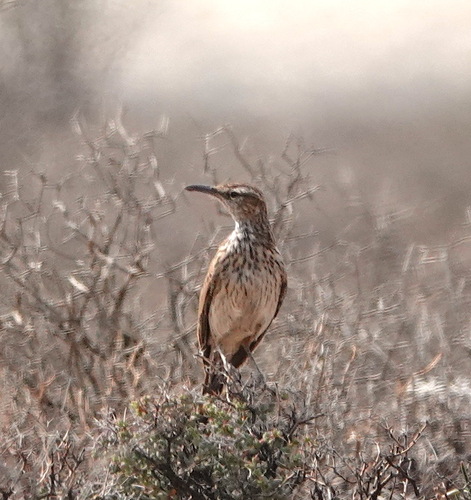 Alondra Piquilarga
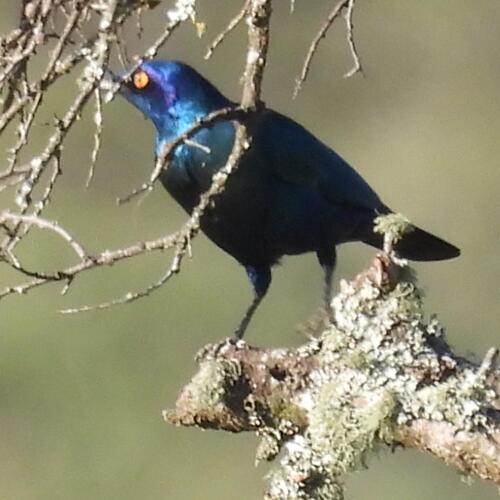 Estornino Ventrinegro
En breve
La marca de campo más confiable para separar la Alondra Piquilarga del Estornino Ventrinegro es la estructura y plumaje en general: la alondra es un ave terrestre de tonos terrosos y con manchas, con un pico largo, mientras que el estornino es una especie arbórea, oscura y de pico corto. En cualquier edad o estación, la alondra muestra un pico largo y curvado hacia abajo y una coloración críptica, mientras que el estornino es notablemente oscuro e iridiscente con una postura compacta y erguida. Si ves un ave manchada y arenosa en el suelo en un país árido, es la alondra; un ave oscura y brillante en un árbol es el estornino. Es poco probable que se confundan, excepto en vistas fugaces, pero la estructura y el contexto son decisivos.
Consejos de identificación
- Forma y longitud del pico: La alondra tiene un pico largo y curvado, siempre obvio de perfil; el pico del estornino es corto, recto y puntiagudo. Esto es visible en cualquier edad o ángulo.
- Brillo del plumaje: El Estornino Ventrinegro es brillante e iridiscente, especialmente con buena luz; la alondra es siempre mate y de tonos terrosos. Incluso a la sombra, el estornino se ve oscuro y uniforme, mientras que la alondra es manchada y arenosa.
- Partes inferiores: El estornino tiene un vientre y pecho uniformemente oscuros (negruzcos), mientras que la alondra tiene partes inferiores pálidas, manchadas o moteadas. Esto es claro en aves posadas y a menudo en vuelo.
- Manchas: Solo la alondra tiene manchas arriba y abajo; el estornino nunca tiene manchas.
- Color de los ojos: El iris del estornino puede cambiar de color según el estado de ánimo, pero esto es sutil y no es una marca de campo confiable. El ojo de la alondra es oscuro y poco notable.
- Color de las patas: No es diagnóstico según las notas, pero la alondra a menudo muestra patas pálidas o rosadas, mientras que las patas del estornino son oscuras.
- Postura y apariencia: La alondra es horizontal, a menudo agachada cerca del suelo; el estornino es erguido y se posa alto.
- Hábitat: Alondra en matorrales secos y abiertos; estornino en bosques, bordes de bosques o jardines. Si ves una 'alondra' en un árbol, reconsidera.
- Estilo de vuelo: La alondra vuela bajo y ondulante; el estornino vuela directamente entre posaderos.
- Tamaño del grupo: Las alondras suelen ser solitarias o en parejas; los estorninos a menudo están en pequeños grupos ruidosos.
- Forma de la cola: No se detalla en las notas, pero las alondras a menudo tienen colas más largas y graduadas; los estorninos tienen colas más cortas y cuadradas.
- Vocalizaciones: No se describen en las notas, por lo que no son un separador confiable aquí.
- Confusión juvenil: Incluso los estorninos jóvenes son oscuros y brillantes, nunca manchados o arenosos; las alondras juveniles son manchadas y crípticas.
- Contexto geográfico: Si estás en el Karoo o en una zona árida similar, espera ver la alondra; si estás en un bosque oriental o costero, espera ver el estornino.
- Posado vs. forrajeo: La alondra forrajea en el suelo, el estornino a menudo en árboles o arbustos.
Tamaño
La comparación directa de tamaño no es posible con las notas disponibles, pero ambas especies son paseriformes de tamaño mediano. El estornino puede parecer ligeramente más robusto y compacto, mientras que la alondra es más alargada, particularmente debido a su largo pico y cola. En el campo, las proporciones de la alondra son más delgadas y horizontales, mientras que el estornino es más erguido y robusto.
Plumaje
El plumaje es el separador más obvio en todas las edades. La Alondra Piquilarga es de tonos terrosos, con partes superiores manchadas y un pecho pálido, manchado o moteado, que se mezcla bien con el matorral seco. Nunca muestra iridiscencia. Las alondras juveniles y adultas son igualmente crípticas, sin un fuerte contraste o áreas brillantes. El Estornino Ventrinegro, en contraste, es negro o oscuro brillante con un brillo metálico, especialmente en los adultos. Sus partes inferiores son uniformemente oscuras (de ahí el nombre), y carece de manchas o tonos arenosos. Incluso los estorninos inmaduros son mucho más oscuros y brillantes que cualquier alondra, y nunca muestran el patrón manchado y camuflado de la alondra. No se han notado patrones distintivos de alas superiores específicos de edad para ninguna de las especies, pero el color y el brillo generales son diagnósticos.
Comportamiento
El comportamiento es una pista fuerte: la Alondra Piquilarga se ve casi siempre en el suelo, caminando o corriendo en matorrales secos y abiertos, a menudo sola o en parejas. Rara vez se posa alto. El Estornino Ventrinegro es típicamente arbóreo, forrajeando en árboles o arbustos, y a menudo se ve en pequeños grupos. Se posa erguido y puede ser activo y ruidoso. El estilo de vuelo también difiere: la alondra tiene un vuelo saltarín y ondulante bajo sobre el suelo, mientras que el estornino vuela más directamente entre los árboles.
Hábitat
El hábitat es un separador clave. La Alondra Piquilarga está restringida a matorrales secos subtropicales o tropicales en el sur de África, especialmente en el Karoo y zonas áridas similares. El Estornino Ventrinegro se encuentra en un rango mucho más amplio, incluyendo bosques, bordes de bosques y jardines en el este y sur de África, pero no es un ave de matorrales secos y abiertos. Si estás en un hábitat verdadero del Karoo, es muy poco probable que veas al estornino; en áreas boscosas o urbanas, la alondra está fuera de lugar.
Alondra Piquilarga · Estornino Ventrinegro · Mis aves difíciles