

Titirijí Cabecinegro vs Picoplano Sulfuroso
Todirostrum nigriceps frente a Tolmomyias sulphurescens
Juega un quiz con Titirijí Cabecinegro y Picoplano Sulfuroso
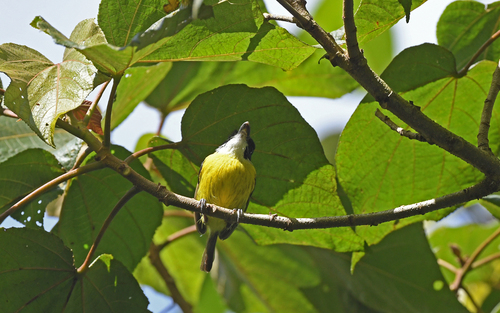 Titirijí Cabecinegro
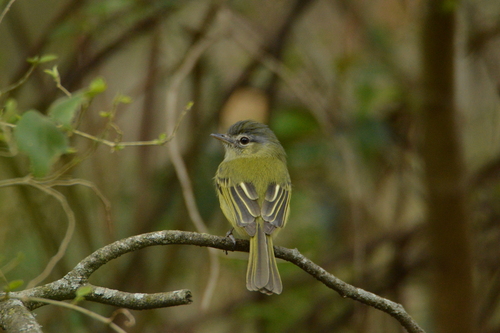 Picoplano Sulfuroso
En breve
La marca de campo más confiable para separar el Titirijí Cabecinegro del Picoplano Sulfuroso es la cabeza negra brillante y la garganta blanca del primero, que contrastan marcadamente con sus partes inferiores amarillas brillantes, características que nunca se muestran en ningún Picoplano Sulfuroso. En contraste, el Picoplano Sulfuroso siempre tiene una corona oliva o grisácea, un anillo ocular blanco delgado y una garganta verde pálido o gris, careciendo del audaz patrón de cabeza en blanco y negro. Las plumajes juveniles son sutilmente diferentes pero aún diagnósticas: los jóvenes Titirijí son más apagados pero retienen la cabeza negruzca y carecen de anillo ocular, mientras que los Picoplanos juveniles muestran un anillo ocular roto y una cara más pálida y menos contrastante. La estructura también es útil: el Titirijí es mucho más pequeño, con una cola corta y un pico recto y proporcionalmente grande, mientras que el Picoplano es más grande y tiene un pico ancho y plano. Ambas especies pueden mostrar partes inferiores amarillas y bandas alares, así que concéntrate en el patrón de la cabeza y el tamaño para una separación confiable.
Consejos de identificación
- El patrón de la cabeza es diagnóstico: El Titirijí Cabecinegro siempre muestra una cabeza y nuca negra brillante (o negra apagada en juveniles) con una garganta blanca; el Picoplano Sulfuroso nunca tiene una cabeza negra o garganta blanca: su corona es oliva o grisácea, y su garganta es verde pálido o gris.
- Presencia del anillo ocular: El Picoplano Sulfuroso tiene un anillo ocular blanco delgado (roto en juveniles); el Titirijí carece de cualquier anillo ocular a todas las edades.
- Forma y tamaño del pico: El Titirijí tiene un pico negro corto, recto y proporcionalmente grande; el Picoplano tiene un pico mucho más ancho y plano con una mandíbula inferior pálida: busca la forma ancha y plana de perfil.
- Tamaño del cuerpo: El Titirijí es diminuto (6.2 g, 8–10 cm), el Picoplano es mucho más grande (14–15 g, 12.5–14 cm): si tienes una idea de la escala, esta es una pista fuerte.
- Longitud y forma de la cola: El Titirijí tiene una cola negra muy corta; la cola del Picoplano es más larga, marrón a oscura, y nunca es tan corta o tan oscura como la del Titirijí.
- Color de las partes inferiores: Ambos pueden mostrar partes inferiores amarillas, pero las del Titirijí son amarillas brillantes y se destacan marcadamente de la garganta blanca; el amarillo del Picoplano está en el vientre y la parte inferior de la cola, con el pecho y la garganta más oliva o grisácea.
- Bandas alares: Ambas especies tienen dos bandas alares amarillentas, pero las del Titirijí son más brillantes y más definidas, especialmente en adultos; las del Picoplano son amarillentas-olivas y menos contrastantes.
- Diferencias juveniles: Los jóvenes Titirijí son más apagados pero aún tienen una cabeza oscura y carecen de anillo ocular; los juveniles Picoplanos tienen un anillo ocular roto y partes inferiores más pálidas, pero nunca una cabeza oscura.
- Color del iris: El Titirijí tiene iris oscuros a todas las edades; el iris del Picoplano es variable pero a menudo marrón pálido a gris en adultos, oscuro en juveniles: úsalo con precaución.
- Color de las patas: El Titirijí tiene patas gris azulado; las patas del Picoplano son grises: sutil, pero puede ayudar en buena luz.
- Comportamiento: El Titirijí es hiperactivo, moviendo su cola corta y moviéndose rápidamente; el Picoplano es más deliberado y se posa por más tiempo.
- Vocalizaciones: Las altas y repetitivas llamadas del Titirijí y la serie de 'jyip' son distintivas; la voz del Picoplano no se describe aquí, así que usa las llamadas del Titirijí como una pista positiva.
- Contexto del hábitat: Si estás en hábitats más secos o de borde, es más probable que encuentres al Picoplano; el Titirijí prefiere los interiores de bosques húmedos de tierras bajas.
- Rango geográfico: Si estás fuera de Colombia, Costa Rica, Ecuador, Panamá o Venezuela, es poco probable que encuentres al Titirijí; el Picoplano está ampliamente distribuido por los Neotrópicos.
- Diferencias sexuales: Ambas especies son sexualmente monomórficas: las diferencias en plumaje no están basadas en el sexo, así que no uses el sexo como pista.
Tamaño
El Titirijí Cabecinegro es significativamente más pequeño, con una longitud de 8–10.2 cm y aproximadamente 6.2 g de masa [wikidata], en comparación con la longitud de 12.5–14 cm y la masa de 14.5–15.2 g del Picoplano Sulfuroso [wikipedia]. En el campo, el Titirijí parece diminuto y compacto, con una cola corta y un aspecto de cabeza grande. El Picoplano es notablemente más robusto, con un cuerpo más largo y un pico más pesado y ancho. Si se ven uno al lado del otro, el Picoplano es más de dos veces más pesado y sustancialmente más largo.
Plumaje
Los Titirijí Cabecinegro juveniles y adultos siempre muestran una cabeza y nuca negra (o negra apagada en juveniles), con una garganta blanca y partes inferiores amarillas brillantes. Los juveniles son más apagados en general, con una garganta vagamente amarilla y bandas alares más oliva, pero aún carecen de anillo ocular. En contraste, todas las edades del Picoplano Sulfuroso tienen una corona oliva o grisácea, un anillo ocular blanco delgado (roto en juveniles) y una garganta verde pálido o gris. Sus partes superiores son verde oliva, y sus partes inferiores son amarillas pero menos marcadamente demarcadas del pecho. Las bandas alares del Picoplano son amarillentas-olivas y menos definidas que las brillantes bandas amarillas del Titirijí. La variación subspecífica en el Picoplano afecta los tonos de la corona y las partes inferiores, pero nunca produce una cabeza negra o garganta blanca. La cola del Picoplano es marrón a oscura, no negra. El color del ojo también es útil: el Titirijí tiene iris oscuros, mientras que el iris del Picoplano es variable pero a menudo marrón pálido a gris en adultos, oscuro en juveniles.
Comportamiento
El Titirijí Cabecinegro se ve típicamente como un ave muy activa e inquieta, a menudo moviendo su cola corta y realizando movimientos rápidos y rápidos a través del follaje bajo a medio. Su pequeño tamaño y comportamiento enérgico le dan una impresión de 'hiperactividad'. El Picoplano Sulfuroso, siendo más grande, se mueve de manera más deliberada, a menudo posándose en silencio durante períodos más largos y saliendo para atrapar insectos. Su pico más ancho se utiliza para recoger presas de hojas y ramas. El Titirijí a menudo busca alimento en parejas o pequeños grupos, mientras que el Picoplano es más a menudo solitario o en bandadas mixtas.
Hábitat
Ambas especies ocurren en bosques de tierras bajas y de ladera, pero el Titirijí Cabecinegro está más restringido a bosques húmedos, subtropicales o tropicales de tierras bajas en el centro y norte de América del Sur (Colombia, Costa Rica, Ecuador, Panamá, Venezuela) [wikipedia]. El Picoplano Sulfuroso tiene un rango mucho más amplio, encontrado desde México a través de toda América Central, Trinidad y casi toda América del Sur, excepto Chile. El Picoplano es más probable que se encuentre en hábitats más secos o de borde, crecimiento secundario y una gama más amplia de tipos de bosque. Si estás fuera del rango del Titirijí, la confusión es menos probable, pero ambos pueden superponerse en América Central y el norte de América del Sur.
Voz
La llamada del Titirijí Cabecinegro es un 'peep' agudo único, y su canto es una rápida serie de 5–8 notas 'jyip' agudas, acelerando y elevándose ligeramente al final, a menudo similares a insectos y repetidas con frecuencia. La voz del Picoplano Sulfuroso no se describe en las notas, por lo que no se puede contrastar aquí. En el campo, las llamadas altas, rápidas y repetitivas del Titirijí pueden ayudar a confirmar su presencia, especialmente si el ave está oculta.
Titirijí Cabecinegro · Picoplano Sulfuroso · Mis aves difíciles