

Zopilote Negro vs Tangara Picoplata
Coragyps atratus frente a Ramphocelus carbo
Juega un quiz con Zopilote Negro y Tangara Picoplata
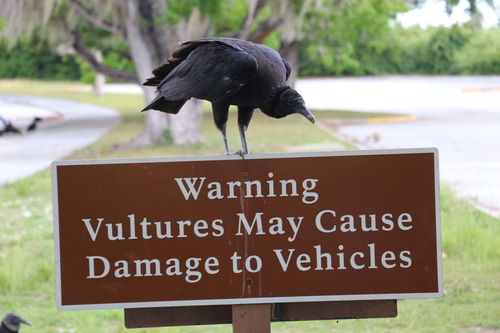 Zopilote Negro
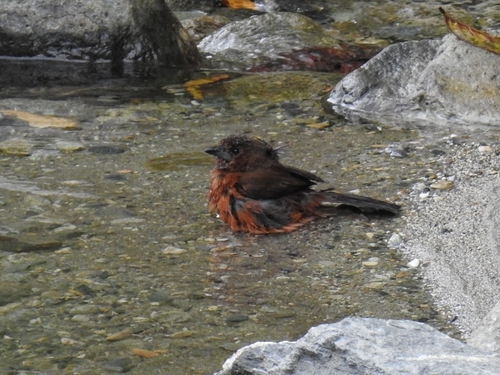 Tangara Picoplata
En breve
The most reliable field mark is size and structure: American Black Vulture is a massive, broad-winged scavenger, while Silver-beaked Tanager is a small, chunky songbird. In flight, Black Vulture shows broad, short wings with distinct white patches at the wingtips (visible in all ages), while Silver-beaked Tanager never shows white in the wing. Perched, Black Vulture is all-black with a bare, wrinkled gray head, whereas male Silver-beaked Tanager is deep crimson and black with a heavy, pale lower mandible. Females and immatures of the tanager are reddish-brown, never all-black. The two are extremely unlikely to be confused except in poor light or silhouette, but confusion can arise with distant, perched birds or quick views.
Consejos de identificación
- Size and shape: Black Vulture is enormous compared to Silver-beaked Tanager; if the bird is crow-sized or larger, it cannot be a tanager. Use this especially when birds are seen together with other species for scale.
- Flight profile and wing pattern: In flight, Black Vulture shows broad, short wings with a distinct white patch at the base of the primaries (visible from below in all ages). Silver-beaked Tanager never shows white in the wing; its wings are uniformly dark.
- Tail shape: Black Vulture has a short, square tail that barely extends past the folded wings; tanager has a proportionally longer, dusky tail.
- Head and bill: Black Vulture's head is bare, wrinkled, and gray; tanager's head is always feathered. Male tanager has a heavy, pale lower mandible (silvery-white), while female's bill is brownish dusky. Vulture's bill is hooked and pale at the tip, but this is rarely visible at distance.
- Plumage color: Black Vulture is all black with a slight gloss; male Silver-beaked Tanager is deep crimson and black, female/immature is reddish-brown. No age or sex of tanager is ever all-black with a bare head.
- Leg color: Black Vulture has grayish-white legs, often streaked white from uric acid; tanager's legs are dark horn-gray.
- Behavior: Black Vulture soars high, glides with wings flat, and is often seen at carcasses or perched in groups. Silver-beaked Tanager forages in dense vegetation, never soars, and is not attracted to carrion.
- Perching posture: Black Vulture often perches upright on dead trees, sometimes with wings spread. Tanager perches in a more horizontal, songbird-like stance.
- Habitat: Black Vulture is common in open, urban, and rural areas, often visible from a distance. Silver-beaked Tanager is found in forest edge, gardens, and shrubby areas, usually in humid lowlands.
- Vocalization: Black Vulture is silent except for hisses and grunts; tanager is a typical songbird and more likely to be heard vocalizing.
- Group size: Black Vulture is gregarious, often in large flocks; tanager is in pairs or small groups.
- Feeding behavior: Black Vulture feeds on carrion, often at roadkill or dumps; tanager feeds on fruit and insects in vegetation.
- Confusion risk: In poor light, a perched Black Vulture might be mistaken for a dark, chunky bird, but its size, bare head, and white wing patches in flight are diagnostic. Female/immature tanagers are reddish-brown and never all-black.
- Range overlap: Both species occur in parts of South America, but only Black Vulture is found in the US and Central America; tanager is absent from Chile and Uruguay and only a vagrant in Argentina.
- Sex/age pitfalls: Immature Black Vultures look like adults in flight; female/immature tanagers are never black and lack the male's silvery bill.
Tamaño
American Black Vulture is vastly larger, measuring 56–74 cm in length with a wingspan of 1.33–1.67 m and weighing 1.6–3 kg [wikipedia]. Silver-beaked Tanager is only 16–17 cm long and weighs 21–37.5 g [wikipedia]. The vulture is a heavy, broad-winged bird with a short, square tail, while the tanager is a small, thickset songbird with a proportionally large bill for its size. Even at a distance, the vulture's size and shape are diagnostic.
Plumaje
-
Juvenile/immature wing pattern: Black Vulture of all ages shows a bold white patch at the base of the primaries on the underside of the wing in flight, contrasting with otherwise black wings; this is visible in both adults and immatures [wikipedia]. Silver-beaked Tanager (all ages and sexes) has uniformly dark wings with no white patches or panels, and flight feathers are dusky black (males) or dusky with rufescent brown edges (females/immatures) [wikipedia].
-
Adult plumage: Black Vulture is glossy black overall, with a bare, gray wrinkled head and grayish-white legs. Silver-beaked Tanager males are deep carmine to crimson on head and underparts, with blackish upperparts and a striking silvery-white lower mandible. Females and immatures are rich reddish-brown to warm brown, with no black vulture-like features.
-
Tail: Black Vulture has a short, square tail that barely projects beyond the folded wings. Silver-beaked Tanager has a proportionally longer, dusky tail.
-
Head: Black Vulture's head is featherless and gray; tanager's head is always feathered, deep red in males, reddish-brown in females/immatures.
Comportamiento
Black Vulture is highly gregarious, often seen soaring high in groups or perched in large flocks, especially at carcasses or communal roosts. It soars with wings held flat and flaps in short bursts, followed by glides. It often stands with wings spread to warm or dry. Silver-beaked Tanager is a typical songbird, foraging in pairs or small groups in dense vegetation, rarely soaring or gliding. Its flight is direct and undulating, not soaring. Tanager is never seen feeding on carrion or soaring high overhead.
Hábitat
Black Vulture is found in open areas, urban settings, fields, and near human habitation, often wherever carrion is available. It is frequently seen in the open, on dead trees, or soaring above roads and towns. Silver-beaked Tanager prefers forest edges, gardens, shrubby areas, and second growth, usually in humid lowlands. It is rarely seen in open country or soaring; it keeps to cover and is mostly found in South American lowland habitats.
Voz
Black Vulture is generally silent, lacking a syrinx; it can only produce hisses and grunts, mainly when agitated or feeding. Silver-beaked Tanager, as a songbird, is capable of varied vocalizations (not detailed in the notes), but is generally more vocal than the vulture.