

Lechuza Común Americana vs Mochuelo Europeo
Tyto furcata frente a Athene noctua
Juega un quiz con Lechuza Común Americana y Mochuelo Europeo
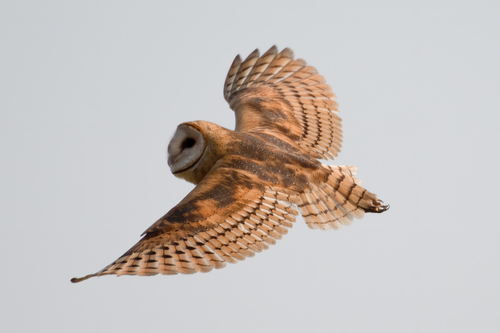 Lechuza Común Americana
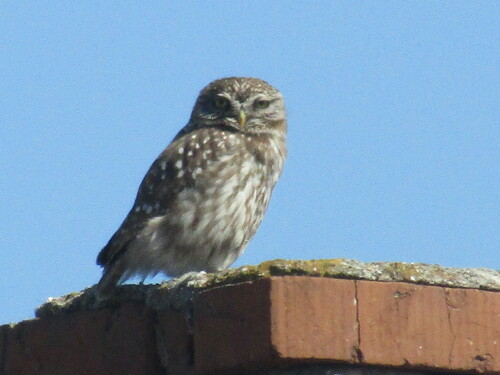 Mochuelo Europeo
En breve
The most reliable field mark to separate American Barn Owl from Little Owl is overall structure and facial pattern: Barn Owl is much larger, long-winged, and pale with a striking heart-shaped white face and black eyes, while Little Owl is compact, short-tailed, and brownish with a flat-topped head, yellow eyes, and prominent white 'eyebrows.' In flight, Barn Owl shows long, broad wings and a short, squarish tail, often with dangling feathered legs, whereas Little Owl has a bounding, woodpecker-like flight with rounded wings and a short tail. Juvenile Little Owls lack the white crown spots of adults, but even then, their streaked, brownish plumage and stern expression contrast sharply with the pale, ghostly Barn Owl. Barn Owl's undulating, buoyant flight and pale underparts are distinctive at any age. If you see a small, brown, streaky owl with a frowning face and yellow eyes, it's a Little Owl; a pale, long-winged, heart-faced owl is a Barn Owl.
Consejos de identificación
- Size and structure: Barn Owl is much larger, with a long, slim body, long wings, and a short, squarish tail. Little Owl is small, compact, and short-tailed.
- Facial pattern: Barn Owl has a striking, heart-shaped white or buff face with black eyes, giving a 'mask-like' appearance. Little Owl has a flat-topped head, yellow eyes, and white 'eyebrows' that create a stern, frowning look.
- Eye color: Barn Owl has black eyes; Little Owl has yellow eyes. This is visible even in poor light with binoculars.
- Plumage color: Barn Owl is pale overall, with white to buff underparts and little streaking; Little Owl is brown above, heavily speckled and streaked, and always has streaked underparts.
- Underpart pattern: Barn Owl's underparts are usually plain or finely speckled, never heavily streaked. Little Owl's underparts are always streaked with brown.
- Upperparts: Barn Owl is pale brown to grey, with fine speckles; Little Owl is brown with bold white spots and streaks.
- Flight style: Barn Owl has a buoyant, undulating flight with long, broad wings and often dangles its feathered legs. Little Owl has a bounding, woodpecker-like flight with rapid wingbeats and short glides.
- Tail shape: Barn Owl's tail is short and squarish; Little Owl's tail is also short but the body is more compact and the tail less noticeable in flight.
- Perched posture: Barn Owl often appears elongated and upright when perched; Little Owl is squat and compact, often sitting horizontally on posts or rocks.
- Legs: Barn Owl's legs are long and feathered, often visible dangling in flight. Little Owl has long legs for its size but they are less obvious and not usually seen dangling.
- Voice: Barn Owl is mostly silent or gives harsh screeches; Little Owl is very vocal, with a repeated 'kiew' and various yelps and whistles, especially at dusk or dawn.
- Habitat: Barn Owl is more likely in open fields, meadows, and barns; Little Owl is often seen in orchards, villages, and on rocks or buildings.
- Activity: Barn Owl is mainly nocturnal and rarely seen in daylight; Little Owl is often active and visible during the day.
- Juvenile confusion: Young Little Owls lack white crown spots but are still brown and streaky, never pale like Barn Owl. Barn Owl nestlings are white and quickly develop the heart-shaped face.
- Sex differences: Only relevant for Barn Owl: females are larger and more spotted below, but both sexes are much paler and larger than Little Owl.
Tamaño
American Barn Owl is much larger: it is a medium-sized owl with long wings and a short, squarish tail, while Little Owl is distinctly small and compact. Little Owl measures about 22 cm in length, with a wingspan of 56 cm and a weight of about 180 g. Barn Owl is significantly heavier (females can exceed 550 g), with a much longer wingspan and larger body. The size difference is obvious even at a distance, especially in flight.
Plumaje
-
Juvenile/immature marks: Juvenile Little Owls are duller than adults and lack the adult's white crown spots, but still show brown, streaked plumage and a pale, streaked underside. Barn Owl nestlings are covered in white down, and even young birds quickly develop the heart-shaped facial disk. There are no distinctive juvenile upperwing patterns in either species that mimic each other.
-
Adults: Barn Owl is pale overall, with a bright white or buff heart-shaped face, black eyes, and pale underparts (white to reddish buff, sometimes with fine blackish speckles). Upperparts are pale brown to grey, with fine speckles and light brown remiges with darker bands. Little Owl is brown above, heavily speckled and streaked with white, and has a pale, streaked underside. The face is flat-topped, with white 'eyebrows' and yellow eyes, giving a stern look. The underparts are always streaked, never plain as in some Barn Owls. The Little Owl's plumage is always more patterned and darker overall.
-
Sex/age variation: Barn Owl females are larger and more heavily spotted below than males, but both sexes are much paler and larger than any Little Owl. Little Owl sexes are similar in plumage.
Comportamiento
Barn Owl has an undulating, buoyant flight with long, broad wings and often dangles its feathered legs. It is usually seen gliding low over open ground at dusk or night. Little Owl has a bounding, woodpecker-like flight, with rapid wingbeats and short glides, and is often seen perched upright on posts or rocks during the day. Its movements are more abrupt and direct, and it often bobs or bows when alarmed. Barn Owl rarely perches in the open during daylight except at roosts, while Little Owl is diurnal and often conspicuous.
Hábitat
Barn Owl prefers open country, farmland, and grasslands, often hunting over fields and meadows, and roosts in barns or tree cavities. Little Owl is found in temperate and warm regions of Europe, Asia, and North Africa, often in farmland, orchards, parkland, and even villages, frequently perching on buildings, fence posts, or rocks. In areas of overlap, Little Owl is more likely to be seen in daylight and in more built-up or rocky habitats.
Voz
Barn Owl is mostly silent but can give harsh screeches or hissing calls, especially near the nest. Little Owl is much more vocal, with a querulous 'kiew, kiew' call, and various whistling, trilling, yelping, or chattering sounds, especially in the breeding season. If you hear a repeated, piping or yelping call from a small owl, it's almost certainly Little Owl.
Lechuza Común Americana · Mochuelo Europeo · Mis aves difíciles