

Dunkelsturmtaucher vs Barolosturmtaucher
Ardenna grisea gegen Puffinus baroli
Ein Quiz mit Dunkelsturmtaucher und Barolosturmtaucher spielen
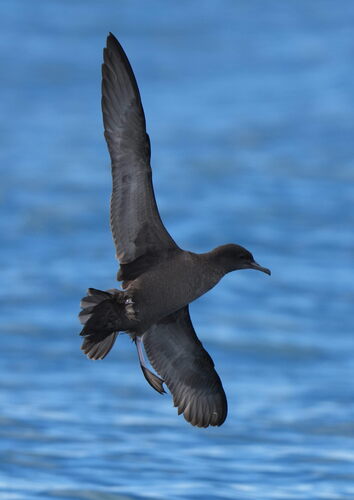 Dunkelsturmtaucher
 Barolosturmtaucher
Kurz gesagt
Die zuverlässigste Methode, um Dunkelsturmtaucher von Barolosturmtaucher zu unterscheiden, ist die Gesamtgröße und Struktur: Dunkel ist ein viel größerer, langflügeliger Vogel, der überall dunkel schokoladenbraun erscheint mit einem silbernen Unterflügelstreifen, während Barolo kompakt, hellgesichtig ist und ein kontrastierendes silbernes Oberflügelpanel zeigt. Im Flug sind die Flügel von Dunkel lang, schmal und steif gehalten, was einen kraftvollen, geraden Flug erinnert an einen kleinen Albatros, während Barolos Flügel kürzer, runder sind und sein Flug schneller und flatteriger ist. Barolos helle Gesicht und blaue Füße sind einzigartig unter den nordatlantischen Sturmtauchern, während Dunkel immer dunkel aussieht und keine hellen Gesichtszüge hat. Selbst aus der Ferne sind die Größe und Dunkelheit von Dunkel im Vergleich zu dem kleineren, helleren und mehr gemusterten Barolo normalerweise klar bei guten Sichtverhältnissen.
Bestimmungstipps
- Größe ist die erste Überprüfung: Dunkelsturmtaucher ist viel größer und langflügeliger als Barolo; wenn der Vogel groß und albatrosähnlich aussieht, ist es Dunkel.
- Unterflügelmuster: Dunkel zeigt einen silbernen Streifen entlang der Mitte des Unterflügels in allen Gefiederarten; Barolo tut dies nicht. Wenn Sie einen hellen Unterflügelstreifen auf einem ansonsten dunklen Vogel sehen, ist es Dunkel.
- Oberflügelpanel: Barolo hat ein silbernes Panel auf dem Oberflügel, das im Flug sichtbar ist; Dunkels Oberflügel ist einheitlich dunkel. Achten Sie auf diesen Kontrast bei gutem Licht.
- Gesichtsfarbe: Barolo hat ein helles Gesicht mit einem dunklen, kontrastierenden Auge; Dunkel hat ein dunkles Gesicht ohne helle Bereiche. Ein helles Gesicht schließt Dunkel aus.
- Gesamtfarbe: Dunkel ist überall dunkel schokoladenbraun bis schwärzlich; Barolo ist viel heller, besonders im Gesicht und an den Unterseiten.
- Flugstil: Dunkel gleitet auf steifen, geraden Flügeln mit wenigen Flügelschlägen; Barolo schlägt häufiger mit den Flügeln, hat einen schnelleren, flatterigeren Flug und kürzere Gleitphasen.
- Flügelform: Dunkels Flügel sind lang und schmal; Barolos sind kürzer und runder.
- Farb der Füße: Barolo hat blaue Füße, die aus nächster Nähe sichtbar sind; Dunkels Füße sind nicht blau.
- Schnabel- und Kopfform: Dunkel hat einen schwereren, robusteren Schnabel und Kopf; Barolos Schnabel ist feiner und der Kopf sieht zarter aus.
- Schwarmgröße: Dunkel wird oft in großen Schwärmen gesehen, besonders während der Migration; Barolo wird eher einzeln oder in kleinen Gruppen gesehen.
- Geografischer Kontext: Dunkel ist sowohl im Pazifik als auch im Atlantik zu finden, oft weit vom Land entfernt; Barolo ist auf den Nordatlantik beschränkt, besonders in der Nähe von Macaronesien.
- Lebensraum: Barolo brütet nur auf den Azoren und Kanaren; Dunkel brütet auf der Südhalbkugel.
- Stimme: Kein zuverlässiges Feldmerkmal auf See; beide sind in der Regel fernab von Brutgebieten still.
- Fallstricke: Bei schlechtem Licht kann Dunkel ganz schwarz erscheinen und Barolo kann dunkler erscheinen als er ist, aber die Unterschiede in Größe und Struktur bleiben bestehen.
- Alter/Saison: Es sind keine altersabhängigen Flügelmuster für beide Arten vermerkt, sodass alle Altersgruppen die oben beschriebenen Hauptfeldmerkmale zeigen.
Größe
Dunkelsturmtaucher ist ein mittelgroßer bis großer Sturmtaucher, 40–51 cm lang mit einer Flügelspannweite von 94–110 cm [wikipedia]. Barolosturmtaucher ist viel kleiner, wird als 'kleiner Sturmtaucher' [wikipedia] beschrieben und ist deutlich kompakter und zarter gebaut. Selbst aus der Ferne erscheint Dunkel langflügelig und schwer, während Barolo merklich kleiner ist, kürzere, rundere Flügel hat und insgesamt stämmiger aussieht.
Gefieder
Altersspezifische Flügelmuster sind für keine der Arten in den Quellen detailliert, aber Erwachsene und Jungvögel des Dunkelsturmtauchers sind einheitlich dunkel schokoladenbraun, erscheinen bei schlechtem Licht fast schwarz, mit einem diagnostischen silbernen Streifen entlang der Mitte des Unterflügels. Dieser helle Unterflügelstreifen ist in allen Gefiederarten sichtbar und ist ein wichtiges Feldmerkmal. Im Gegensatz dazu ist Barolosturmtaucher insgesamt viel heller, mit einem hellen Gesicht, einem dunklen kontrastierenden Auge und einem markanten silbernen Panel auf dem Oberflügel (nicht Unterflügel), das im Flug sichtbar ist. Barolos Oberseite ist dunkel, aber nicht so einheitlich rußig wie der Dunkelsturmtaucher, und das helle Gesicht ist einzigartig unter den nordatlantischen Sturmtauchern. Dunkel zeigt niemals ein helles Gesicht oder Oberflügelpanel. Barolo hat auch blaue Füße, die im Feld selten sichtbar sind, aber aus nächster Nähe diagnostisch sein können.
Verhalten
Dunkelsturmtaucher fliegt mit steifen, geraden Flügeln, schlägt selten mit den Flügeln und gleitet oft niedrig über das Wasser in einer kraftvollen, direkten Weise, die an einen kleinen Albatros erinnert. Er wird oft in großen Schwärmen gesehen, besonders während der Migration. Barolosturmtaucher, der kleiner ist, hat einen schnelleren, flatterigeren Flug mit häufigem Flügelschlagen und kürzeren Gleitphasen. Seine Flügel erscheinen runder und er sieht oft beweglicher und agiler über den Wellen aus. Dunkel ist normalerweise still auf See, während Barolos Verhalten auf See weniger dokumentiert ist, aber nicht als besonders laut vermerkt wird.
Lebensraum
Dunkelsturmtaucher brütet auf Inseln der Südhalbkugel (Neuseeland, Australien, Falklandinseln usw.) und migriert über lange Strecken, erscheint sowohl im Pazifik als auch im Atlantik, manchmal in riesigen Schwärmen. Barolosturmtaucher brütet auf den Azoren und Kanaren (Macaronesien) im Nordatlantik und ist eine strikt nordatlantische Art, die niemals im Pazifik gefunden wird. Daher können Kontext und Standort helfen: Ein kleiner hellgesichtiger Sturmtaucher in Macaronesien ist Barolo, während ein großer, ganz dunkler Sturmtaucher in gemäßigten oder subarktischen Gewässern eines der beiden Ozeane wahrscheinlich Dunkel ist.
Stimme
Dunkelsturmtaucher ist nachts auf den Brutgebieten vokal, mit lauten Gurren und Krächzen, ist aber normalerweise auf See still, es sei denn, er konkurriert um Nahrung. Keine charakteristischen Rufe auf See sind für Barolosturmtaucher in den Quellen vermerkt. Die Stimme ist kein zuverlässiges Feldmerkmal zur Unterscheidung dieser beiden auf See.
Dunkelsturmtaucher · Barolosturmtaucher · Meine schwierigen Vögel