

Eismöwe vs Kamtschatkamöwe
Larus hyperboreus gegen Larus schistisagus
Ein Quiz mit Eismöwe und Kamtschatkamöwe spielen
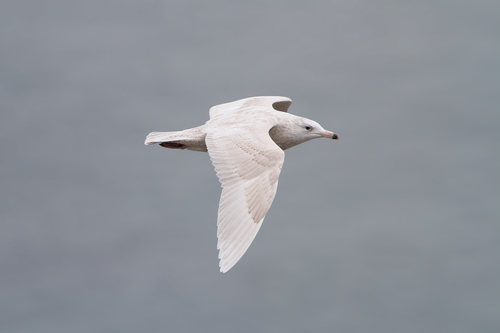 Eismöwe
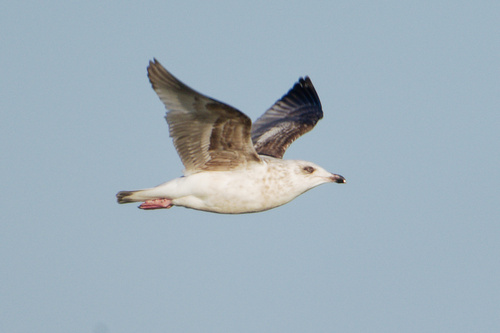 Kamtschatkamöwe
Kurz gesagt
Das zuverlässigeste Feldmerkmal zwischen Eismöwe und Kamtschatkamöwe ist das Flügelmuster: Eismöwe aller Altersstufen zeigt völlig helle Flügelspitzen ohne Schwarz, während die adulte Kamtschatkamöwe dunkle schiefergraue Oberflügel mit schwärzlichen Primärfedern und markanten weißen 'Perlenketten'-Flecken entlang der Hinterkante hat. Juvenile Eismöwen sind insgesamt sehr hell, während unreife Kamtschatkamöwen bräunlich und stärker gemustert sind. Eismöwe ist auch massiver und hat längere Flügel mit einem dickeren Schnabel. Im Flug oder im Ruhezustand konzentrieren Sie sich zuerst auf das Fehlen (Eismöwe) oder Vorhandensein (Kamtschatkamöwe) von Dunkelheit in den Flügelspitzen und die allgemeine Helligkeit oder Dunkelheit des Vogels.
Bestimmungstipps
- Überprüfen Sie die Flügelspitzen in allen Altersstufen: Eismöwe zeigt niemals Schwarz in den Flügelspitzen oder im Schwanz – Erwachsene und Unreife sind immer hell. Adulte Kamtschatkamöwen haben schwärzliche Flügelspitzen mit großen weißen Flecken ('Spiegel') und eine breite weiße Hinterkante; Unreife zeigen dunkle Primärfedern.
- Juvenile/unreife Gesamtfarbe: Juvenile Eismöwen sind sehr hell graugrün oder cremig, oft stechen sie in Schwärmen dunklerer unreifer Möwen hervor. Unreife Kamtschatkamöwen sind bräunlich und gemustert, nicht hell.
- Adulte Oberseite: Adulte Eismöwen sind oben hellgrau, während Kamtschatkamöwen einen deutlich dunkleren, schiefergrauen Rücken und Flügel haben.
- 'Perlenketten'-Effekt: Nur adulte Kamtschatkamöwen zeigen die 'Perlenketten' – eine Reihe von weißen Flecken entlang der Hinterkante des Flügels, besonders im Flug sichtbar.
- Schnabelform: Eismöwe hat einen merklich dickeren, schwereren Schnabel als Kamtschatkamöwe. Beide haben als Erwachsene gelbe Schnäbel mit einem roten Fleck, aber der Schnabel der Eismöwe ist robuster.
- Beine: Beide Arten haben rosa Beine, aber die Beine der Kamtschatkamöwe sind kürzer und der Vogel erscheint bauchiger.
- Größe und Masse: Eismöwe ist im Allgemeinen größer und massiver, manchmal sogar schwerer als Mantelmöwe, während Kamtschatkamöwe groß, aber nicht so massiv ist.
- Kopf und Auge: Kamtschatkamöwe hat gelbe Augen mit lila bis tiefrosa orbitaler Haut; die Augenfarbe der Eismöwe ist in den Notizen weniger auffällig.
- Juveniler Schnabel: Juvenile Eismöwe hat einen rosa Schnabel mit einer schwarzen Spitze; der unreife Schnabel der Kamtschatkamöwe wird weniger deutlich beschrieben, aber nicht als rosa-basiert erwähnt.
- Flugimpression: Im Flug sieht die Eismöwe blass und gespenstisch aus, ohne Schwarz an den Flügeln; Kamtschatkamöwe zeigt starken Kontrast zwischen dunklen Oberflügeln und weißer Hinterkante.
- Schwanz: Beide Erwachsenen haben weiße Schwänze, aber nur die Eismöwe hat nirgendwo im Schwanz oder in den Flügeln Schwarz.
- Habitatkontext: Eismöwe ist wahrscheinlicher in hocharktischen oder subarktischen Lebensräumen, aber beide können im Winter in Küstenschwärmen zusammen vorkommen.
- Vokalisation: Wenn gehört, ist der Ruf der Eismöwe ein tiefes, lachendes Geräusch; die Stimme der Kamtschatkamöwe ist in den Notizen nicht auffällig.
- Vergleich mit anderen Möwen: Wenn Sie einen Vogel sehen, der so groß ist wie Mantelmöwe, aber mit hellen Flügeln und ohne Schwarz, ist es wahrscheinlich Eismöwe; wenn die Oberseite schieferfarben ist und die Flügelspitzen schwärzlich mit weißen Flecken sind, ist es Kamtschatkamöwe.
- Vorsicht vor Verwechslungen: Unreife Kamtschatkamöwen können wie unreife Heringmöwen oder Mantelmöwen aussehen, aber niemals so hell wie Eismöwe.
Größe
Eismöwe ist im Allgemeinen größer und schwerer als Kamtschatkamöwe, mit einer typischen Körpermasse von etwa 1412,5 g (und manchmal viel schwerer) und einer Längenspanne von 55–77 cm im Vergleich zu Kamtschatkamöwes 55–68,5 cm. Beide haben ähnliche Flügelspannweiten (Eismöwe: 132–170 cm, Kamtschatkamöwe: 132–160 cm), aber Eismöwe scheint massiver und schwerer zu sein, insbesondere im direkten Vergleich. Schnabel- und Tarsuslängen überschneiden sich, aber Eismöwe zeigt oft einen dickeren, leistungsfähigeren Schnabel.
Gefieder
- Juvenile/unreife Vögel: Unreife Eismöwen sind insgesamt sehr hell graugrün, mit hellen Oberflügeln und ohne Schwarz an den Flügeln oder im Schwanz. Ihr Schnabel ist rosa mit einer schwarzen Spitze. Im Gegensatz dazu sind unreife Kamtschatkamöwen bräunlich und gemustert, die unreifen Hering- oder Mantelmöwen sehr ähnlich und zeigen Dunkelheit in den Primärfedern und mehr Kontrast im Oberflügel.
- Erwachsene: Adulte Eismöwen sind oben hellgrau mit weißen Flügelspitzen und Schwanz und einem dicken gelben Schnabel. Adulte Kamtschatkamöwen haben einen dunklen schiefergrauen Mantel und Oberflügel, schwärzliche Flügelspitzen mit großen weißen 'Spiegeln' (Flecken) auf den äußeren Primärfedern und eine breite weiße Hinterkante am Flügel ('Perlenketten'-Effekt). Der Schnabel ist gelb mit einem roten Fleck, und die Beine sind rosa, aber kürzer und der Körper bauchiger als bei der Eismöwe.
Verhalten
Beide Arten sind große, kräftige Möwen, die in gemischten Schwärmen dominant erscheinen können. Eismöwe erscheint oft massiver und langsamer, mit einem schwereren, massiveren Körperbau und einem dickeren Schnabel. Kamtschatkamöwe wird als stämmiger und bauchiger beschrieben, mit relativ kurzen Beinen. Im Flug stechen die hellen Flügel der Eismöwe hervor, während die Kamtschatkamöwe einen auffälligen Kontrast zwischen ihren dunklen Oberflügeln und der weißen Hinterkante zeigt.
Lebensraum
Beide Arten sind Küstenvögel, aber Eismöwe ist stärker mit hocharktischen und subarktischen Küsten verbunden und wird oft in kälteren, nördlicheren Umgebungen gefunden. Kamtschatkamöwe brütet im nordöstlichen Paläarktis und wandert im Winter weit umher, manchmal bis in Küstengebiete, die weit von ihrem Brutgebiet entfernt sind. Beide können in gemischten Möwenschwärmen gesehen werden, insbesondere im Winter.
Stimme
Eismöwe gibt einen tiefen, 'lachenden' Ruf von sich, der dem Heringmöwe ähnlich, aber tiefer ist. Für Kamtschatkamöwe wird in den bereitgestellten Quellen keine auffällige Vokalisation erwähnt.