

Yellowhammer vs Common Reed Bunting
Emberiza citrinella versus Emberiza schoeniclus
Play a quiz with Yellowhammer and Common Reed Bunting
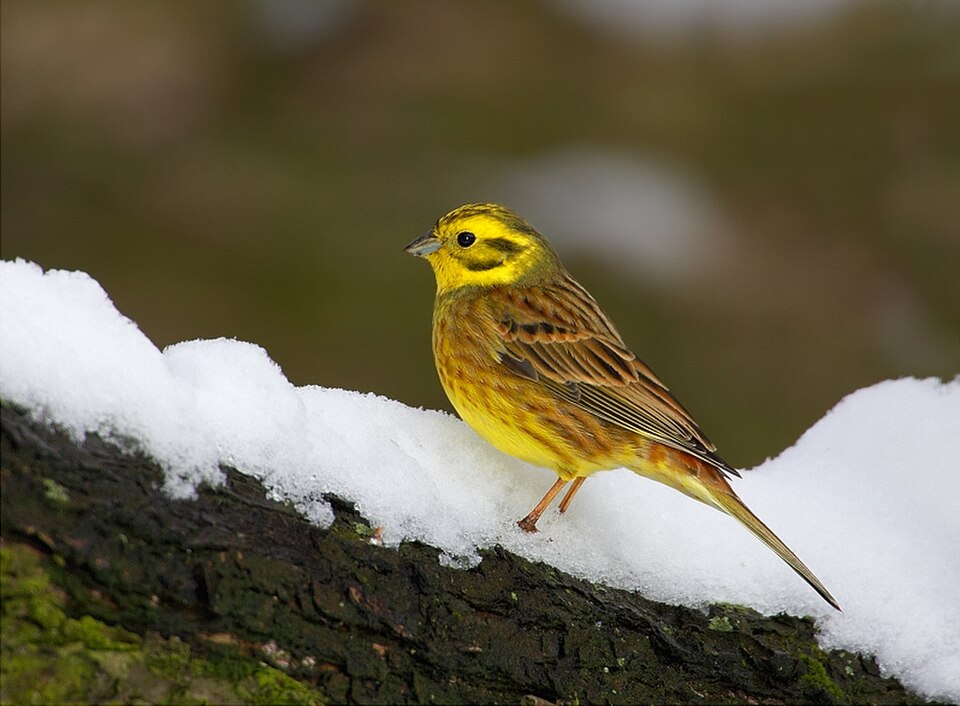 Yellowhammer
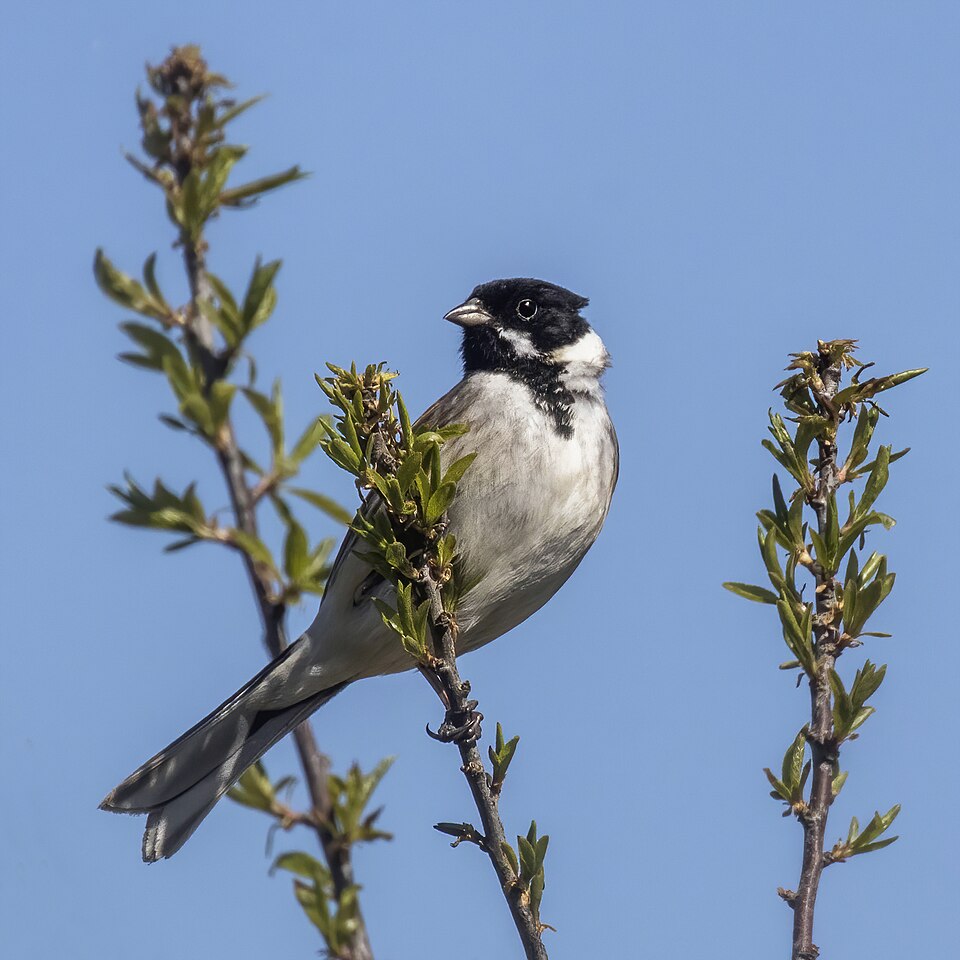 Common Reed Bunting
In short
The most reliable field mark is the male Yellowhammer’s bright yellow head and underparts, which are never matched by Common Reed Bunting of any age or sex. In contrast, male Reed Buntings have a striking black head and throat with a white collar, while females and juveniles of both species are duller and more streaked, making confusion more likely. Juvenile and female Yellowhammers always show at least a yellowish tinge and a rufous rump, while Reed Buntings are colder brown and more heavily streaked below. Size and structure overlap, but Yellowhammer is slightly larger and longer-tailed. When in doubt, focus on head color, rump tone, and underpart brightness, especially in duller birds.
Identification tips
- Male head pattern (breeding season): Male Yellowhammer has a bright yellow head and underparts—never matched by Reed Bunting. Male Reed Bunting has a black head and throat with a white collar and white underparts, never yellow.
- Female and juvenile confusion: Both are streaky and brown, but Yellowhammer always shows at least some yellowish tinge on the face or underparts and a paler rufous rump. Reed Bunting is colder brown, with a streaked brown head and more heavily barred underparts, lacking yellow or rufous.
- Rump color: Yellowhammer (all ages/sexes) shows a chestnut or rufous rump, especially obvious in flight or when perched with tail flicks. Reed Bunting’s rump is grey-brown and not rufous.
- Underpart color: Yellowhammer (especially males) is bright yellow below; females/juveniles are paler but still show a yellowish wash. Reed Bunting is always white or buff below with heavy streaking, never yellow.
- Back and upperparts: Both are streaked brown, but Yellowhammer’s back is more uniform and less heavily barred than Reed Bunting, which is more coarsely streaked.
- Tail pattern: Both have white outer tail feathers, so this is not a reliable separator.
- Bill shape: Both have seed-eating bills, but Reed Bunting’s is described as small but powerful; differences are subtle and not usually diagnostic in the field.
- Song: Yellowhammer’s song is a drawn-out, musical phrase; Reed Bunting’s is a short, repetitive 'srip.' Useful if singing males are present.
- Habitat context: In reedbeds or marshes, Reed Bunting is more likely, especially in breeding season. In open farmland or hedgerows, especially with singing males, Yellowhammer is more probable.
- Seasonal dullness: In winter, both species are less brightly marked, but Yellowhammer still shows yellowish tones and rufous rump, while Reed Bunting remains cold and streaked.
- Size and structure: Yellowhammer is slightly larger and longer-tailed, but overlap means this is only a supporting clue.
- Perched behavior: Yellowhammer often perches high and sings from exposed spots; Reed Bunting is more often seen lower, especially in reeds.
- Flight jizz: Both have undulating flight, but Yellowhammer may appear bulkier and longer-tailed.
- Mixed flocks: In winter, both can occur together in farmland; check each bird carefully for head color, rump, and underpart tones.
- Immature confusion: Juvenile Yellowhammer is dull and less yellow, but always shows some yellowish tinge and rufous rump; Reed Bunting juveniles are cold brown, heavily streaked, and lack yellow or rufous.
Size
Yellowhammer is the larger of the two: 16–16.5 cm in length with a 23–29.5 cm wingspan and weighing 20–36.5 g [wikipedia]. Common Reed Bunting is smaller and lighter: 13.5–15.5 cm long, weighing 10–28 g [wikipedia]. In the field, this translates to Yellowhammer appearing bulkier and longer-tailed, but there is overlap and size alone is not always reliable, especially at distance or in mixed flocks.
Plumage
- Juveniles and Females: Both can be confusingly streaked and dull, but juvenile/female Yellowhammers always show some yellowish tinge, especially on the face and underparts, and a paler rufous rump. Reed Buntings are colder brown, with a streaked brown head and more heavily barred underparts, lacking any yellow tones or rufous rump. Both lack the strong adult male head patterns, so focus on rump and subtle yellow hues for Yellowhammer.
- Adult Males: Yellowhammer males are unmistakable with a bright yellow head, yellow underparts, streaked brown back, and chestnut/rufous rump. Reed Bunting males have a jet-black head and throat, white collar, white underparts, and a heavily streaked brown back—never yellow or rufous.
- Seasonal Variation: Yellowhammer males are less bright outside the breeding season, as dark feather fringes obscure yellow, but still show more yellow than Reed Bunting. Females and juveniles of both species are duller in winter, but Yellowhammer retains yellowish hints and a rufous rump, while Reed Bunting remains cold and streaked.
- Tail: Both species have white outer tail feathers, but this is not diagnostic between them.
Behaviour
Both species are often seen perched on exposed branches or wires, but Yellowhammer males are more likely to sing from prominent perches along hedgerows or woodland edges. Reed Buntings are more often associated with reedbeds and wet habitats, where they may be seen clinging to reeds or low bushes. Flight is undulating in both, but Yellowhammer may appear longer-tailed and bulkier in direct comparison.
Habitat
Yellowhammer favors open countryside with hedgerows, farmland, and woodland edges. Reed Bunting is more closely tied to wet habitats—reedbeds, marshes, wet meadows—but can also be found in farmland and drier scrub, especially outside the breeding season. In winter, both may occur in mixed flocks in farmland, but Reed Bunting is rarely far from some wet or damp habitat.
Voice
Yellowhammer’s song is a distinctive, drawn-out series often rendered as 'a little bit of bread and no cheese,' delivered from a high perch. Reed Bunting’s song is much simpler: a repetitive, short 'srip' or 'zick,' lacking the musical quality of Yellowhammer. Calls are less distinctive in the field, but Yellowhammer’s are softer and more tinkling, while Reed Bunting gives a sharp 'tsip.'