

Motmot

Yellow-browed Warbler vs Two-barred Warbler

Phylloscopus inornatus versus Phylloscopus plumbeitarsus

Play a quiz with Yellow-browed Warbler and Two-barred Warbler
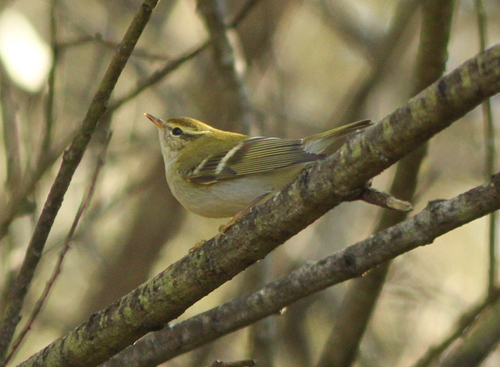
Yellow-browed Warbler (Phylloscopus inornatus) Yellow-browed Warbler
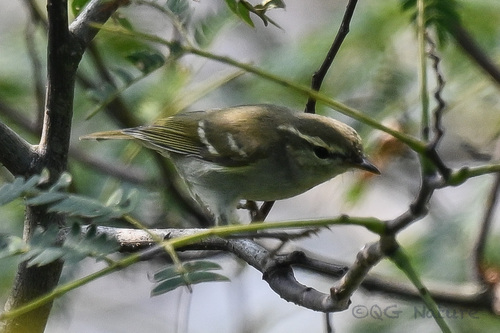
Two-barred Warbler (Phylloscopus plumbeitarsus) Two-barred Warbler

Media

Loading…

In short

The most reliable field mark between Yellow-browed Warbler and Two-barred Warbler is the precise pattern and prominence of the wing bars: Yellow-browed Warbler shows two distinct yellowish-white wing bars (one long, one short) and yellow-edged tertials, while Two-barred Warbler is similar but may differ subtly in the strength and contrast of these bars, especially in fresh plumage. Both species are small, active leaf warblers with greenish upperparts and a long yellowish supercilium, making them very similar at a glance. Structural and behavioral cues are subtle, so careful attention to wing pattern, tertial edges, and supercilium length is essential. Voice is a strong separator if heard, but is not always available in the field. Habitat and range overlap in migration, so are not diagnostic.

Identification tips

  1. Wing bars: Both species show two pale wing bars, but on Yellow-browed Warbler these are typically yellowish-white, with a long bar on the greater coverts and a shorter one on the median coverts. Look for the clarity and length of these bars, especially in fresh plumage. This is the single most important field mark, but beware that Two-barred Warbler can appear very similar.
  2. Tertial edges: Yellow-browed Warbler has yellow-margined tertials, which can be a useful supporting mark if seen well. Two-barred Warbler may also show pale tertial edges, so use this in combination with other marks.
  3. Supercilium: Both species have a long yellow supercilium, but on Yellow-browed Warbler it is often more prominent and extends well behind the eye. If the supercilium appears especially long and bright, this supports Yellow-browed, but the difference is subtle.
  4. Crown stripe: Some Yellow-browed Warblers show a faint pale green central crown stripe, but many do not. Two-barred Warbler is not noted for this feature. If present, it is a weak supporting mark.
  5. Upperparts and underparts: Both species have greenish upperparts and white underparts. This is not a separator.
  6. Leg color: The notes mention that Hume's Leaf Warbler (not Two-barred) has dark legs and lower mandible, so leg color is not helpful here.
  7. Bill structure: No distinctive differences in bill shape or color are noted between these two species.
  8. Flight views: There are no distinctive age-specific upperwing patterns (such as a black 'W' or unique panels) to separate immatures in flight. Both species show the double wing bars in all plumages.
  9. Behavior: Both are very active and arboreal; behavior is not a separator.
  10. Voice: If you hear a loud, piercing, disyllabic 'tseeweest', this is diagnostic for Yellow-browed Warbler. Two-barred's call is not described, but is likely different. Use voice whenever possible.
  11. Habitat and range: Both species overlap in migration and wintering grounds; habitat is not diagnostic in the field.
  12. Size: Both are very similar in size and weight. Do not use size as a separator.
  13. Season and molt: Both adults and juveniles of Two-barred Warbler molt before autumn migration, so fresh birds may show more contrast in wing bars. However, the basic pattern remains similar to Yellow-browed. Use caution with very fresh or very worn birds.
  14. Pitfalls: The two species are extremely similar in most plumage features. Focus on the combination of wing bar prominence, tertial edging, and supercilium length, and use voice if available.
  15. When uncertain: If you cannot get a clear view of the wing bars and tertials, or if the bird is silent, it may not be possible to separate these two species with confidence in the field.

Size

Both species are very similar in size, with Yellow-browed Warbler measuring 9.5–11 cm in length and weighing 4–9 g [wikipedia]. There is no evidence for a significant size difference between the two, and both are distinctly smaller than a chiffchaff but slightly larger than Pallas's Leaf Warbler. Size alone is not a reliable separator in the field.

Plumage

For all ages, Yellow-browed Warbler shows two clear yellowish-white wing bars: a long one on the greater coverts and a shorter one on the median coverts, plus yellow-margined tertials. The supercilium is long and yellow, often more striking than in similar species. Some Yellow-browed individuals may show a faint pale crown stripe, but this is not always visible. Two-barred Warbler also shows two wing bars, but the literature does not provide a detailed contrast in the strength or crispness of these bars compared to Yellow-browed. Both adults and juveniles of Two-barred Warbler molt before autumn migration, so fresh plumage may show more contrast, but the overall pattern is similar. In both species, underparts are whitish and upperparts greenish. There is no mention of distinctive age-specific upperwing patterns (such as a black 'W' or unique panels) that would separate immatures in flight.

Behaviour

Both species are highly active, arboreal, and almost constantly in motion, making prolonged views difficult. Their foraging behavior and jizz are very similar, and both are typically seen flitting through foliage rather than perching in the open. Neither species is notably shy, but their small size and rapid movements can make observation challenging.

Habitat

Habitat is not a reliable separator: both species breed in northern or eastern Palearctic forests (Yellow-browed in the east Palearctic, Two-barred in northern Mongolia, Manchuria, and southern Siberia) and are strongly migratory. In winter, Yellow-browed Warbler is found mainly in tropical South and Southeast Asia, but small numbers winter in western Europe. Both species use lowland and montane forests and can be found in more open woods during migration. Overlap in migration and wintering grounds means habitat is not diagnostic.

Voice

Vocalizations are a strong separator if heard. Yellow-browed Warbler gives a piercing, often disyllabic 'tseeweest' call, which is strikingly loud for its size. Its song is a high-pitched medley of whistles. There is no specific description of Two-barred Warbler's call or song in the provided notes, but by analogy with related species, it may differ subtly. In practice, Yellow-browed's call is distinctive and, if heard, can clinch the identification.

Submit a better description

Use the same sections as the comparison. Your text is published immediately.

The most reliable field mark between Yellow-browed Warbler and Two-barred Warbler is the precise pattern and prominence of the wing bars: Yellow-browed Warbler shows two distinct yellowish-white wing bars (one long, one short) and yellow-edged tertials, while Two-barred Warbler is similar but may differ subtly in the strength and contrast of these bars, especially in fresh plumage. Both species are small, active leaf warblers with greenish upperparts and a long yellowish supercilium, making them very similar at a glance. Structural and behavioral cues are subtle, so careful attention to wing pattern, tertial edges, and supercilium length is essential. Voice is a strong separator if heard, but is not always available in the field. Habitat and range overlap in migration, so are not diagnostic.

  1. Wing bars: Both species show two pale wing bars, but on Yellow-browed Warbler these are typically yellowish-white, with a long bar on the greater coverts and a shorter one on the median coverts. Look for the clarity and length of these bars, especially in fresh plumage. This is the single most important field mark, but beware that Two-barred Warbler can appear very similar.
  2. Tertial edges: Yellow-browed Warbler has yellow-margined tertials, which can be a useful supporting mark if seen well. Two-barred Warbler may also show pale tertial edges, so use this in combination with other marks.
  3. Supercilium: Both species have a long yellow supercilium, but on Yellow-browed Warbler it is often more prominent and extends well behind the eye. If the supercilium appears especially long and bright, this supports Yellow-browed, but the difference is subtle.
  4. Crown stripe: Some Yellow-browed Warblers show a faint pale green central crown stripe, but many do not. Two-barred Warbler is not noted for this feature. If present, it is a weak supporting mark.
  5. Upperparts and underparts: Both species have greenish upperparts and white underparts. This is not a separator.
  6. Leg color: The notes mention that Hume's Leaf Warbler (not Two-barred) has dark legs and lower mandible, so leg color is not helpful here.
  7. Bill structure: No distinctive differences in bill shape or color are noted between these two species.
  8. Flight views: There are no distinctive age-specific upperwing patterns (such as a black 'W' or unique panels) to separate immatures in flight. Both species show the double wing bars in all plumages.
  9. Behavior: Both are very active and arboreal; behavior is not a separator.
  10. Voice: If you hear a loud, piercing, disyllabic 'tseeweest', this is diagnostic for Yellow-browed Warbler. Two-barred's call is not described, but is likely different. Use voice whenever possible.
  11. Habitat and range: Both species overlap in migration and wintering grounds; habitat is not diagnostic in the field.
  12. Size: Both are very similar in size and weight. Do not use size as a separator.
  13. Season and molt: Both adults and juveniles of Two-barred Warbler molt before autumn migration, so fresh birds may show more contrast in wing bars. However, the basic pattern remains similar to Yellow-browed. Use caution with very fresh or very worn birds.
  14. Pitfalls: The two species are extremely similar in most plumage features. Focus on the combination of wing bar prominence, tertial edging, and supercilium length, and use voice if available.
  15. When uncertain: If you cannot get a clear view of the wing bars and tertials, or if the bird is silent, it may not be possible to separate these two species with confidence in the field.

Both species are very similar in size, with Yellow-browed Warbler measuring 9.5–11 cm in length and weighing 4–9 g [wikipedia]. There is no evidence for a significant size difference between the two, and both are distinctly smaller than a chiffchaff but slightly larger than Pallas's Leaf Warbler. Size alone is not a reliable separator in the field.

For all ages, Yellow-browed Warbler shows two clear yellowish-white wing bars: a long one on the greater coverts and a shorter one on the median coverts, plus yellow-margined tertials. The supercilium is long and yellow, often more striking than in similar species. Some Yellow-browed individuals may show a faint pale crown stripe, but this is not always visible. Two-barred Warbler also shows two wing bars, but the literature does not provide a detailed contrast in the strength or crispness of these bars compared to Yellow-browed. Both adults and juveniles of Two-barred Warbler molt before autumn migration, so fresh plumage may show more contrast, but the overall pattern is similar. In both species, underparts are whitish and upperparts greenish. There is no mention of distinctive age-specific upperwing patterns (such as a black 'W' or unique panels) that would separate immatures in flight.

Both species are highly active, arboreal, and almost constantly in motion, making prolonged views difficult. Their foraging behavior and jizz are very similar, and both are typically seen flitting through foliage rather than perching in the open. Neither species is notably shy, but their small size and rapid movements can make observation challenging.

Habitat is not a reliable separator: both species breed in northern or eastern Palearctic forests (Yellow-browed in the east Palearctic, Two-barred in northern Mongolia, Manchuria, and southern Siberia) and are strongly migratory. In winter, Yellow-browed Warbler is found mainly in tropical South and Southeast Asia, but small numbers winter in western Europe. Both species use lowland and montane forests and can be found in more open woods during migration. Overlap in migration and wintering grounds means habitat is not diagnostic.

Vocalizations are a strong separator if heard. Yellow-browed Warbler gives a piercing, often disyllabic 'tseeweest' call, which is strikingly loud for its size. Its song is a high-pitched medley of whistles. There is no specific description of Two-barred Warbler's call or song in the provided notes, but by analogy with related species, it may differ subtly. In practice, Yellow-browed's call is distinctive and, if heard, can clinch the identification.

Discard your changes?

You have unsaved edits. If you leave now, those changes will be lost.

Yellow-browed Warbler · Two-barred Warbler · My Tricky Birds