

felosa-listada vs felosa-verde-listada
Phylloscopus inornatus versus Phylloscopus plumbeitarsus
Jogue um quiz com felosa-listada e felosa-verde-listada
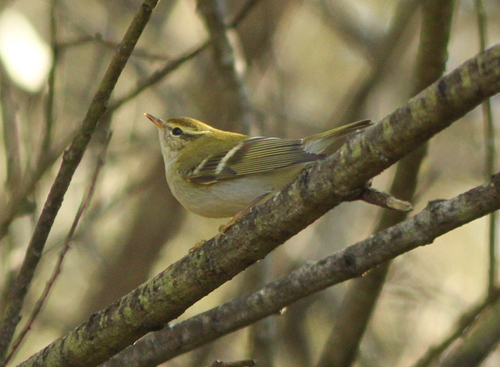 felosa-listada
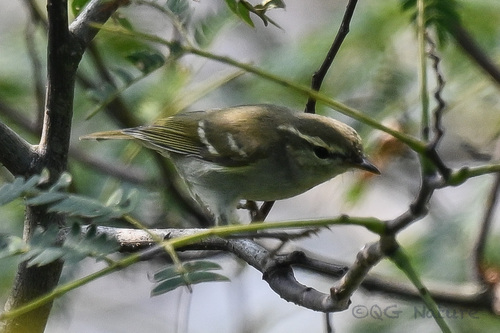 felosa-verde-listada
Em resumo
A marca de campo mais confiável entre a felosa-listada e a felosa-verde-listada é o padrão preciso e a proeminência das faixas das asas: a felosa-listada apresenta duas faixas de asas amarelo-esbranquiçadas distintas (uma longa, uma curta) e tertiais com bordas amarelas, enquanto a felosa-verde-listada é semelhante, mas pode diferir sutilmente na força e contraste dessas faixas, especialmente em plumagem fresca. Ambas as espécies são pequenas, ativas e possuem partes superiores esverdeadas e um longo supercílio amarelo, tornando-as muito semelhantes à primeira vista. As pistas estruturais e comportamentais são sutis, então a atenção cuidadosa ao padrão das asas, bordas das tertiais e comprimento do supercílio é essencial. A voz é um separador forte se ouvida, mas nem sempre está disponível em campo. O habitat e a distribuição se sobrepõem na migração, portanto, não são diagnósticos.
Dicas de identificação
- Faixas das asas: Ambas as espécies apresentam duas faixas de asas pálidas, mas na felosa-listada essas são tipicamente amarelo-esbranquiçadas, com uma faixa longa nas coberturas maiores e uma mais curta nas coberturas medianas. Procure pela clareza e comprimento dessas faixas, especialmente em plumagem fresca. Esta é a marca de campo mais importante, mas tenha cuidado, pois a felosa-verde-listada pode parecer muito semelhante.
- Bordas das tertiais: A felosa-listada possui tertiais com bordas amarelas, que podem ser uma marca de apoio útil se vistas bem. A felosa-verde-listada também pode apresentar bordas de tertiais pálidas, então use isso em combinação com outras marcas.
- Supercílio: Ambas as espécies têm um longo supercílio amarelo, mas na felosa-listada ele é frequentemente mais proeminente e se estende bem atrás do olho. Se o supercílio parecer especialmente longo e brilhante, isso apoia a identificação da felosa-listada, mas a diferença é sutil.
- Faixa na coroa: Algumas felosas-listadas mostram uma fraca faixa central verde pálido na coroa, mas muitas não. A felosa-verde-listada não é notada por essa característica. Se presente, é uma marca de apoio fraca.
- Partes superiores e inferiores: Ambas as espécies têm partes superiores esverdeadas e partes inferiores brancas. Isso não é um separador.
- Cor das pernas: As notas mencionam que a felosa-de-Hume (não a felosa-verde-listada) tem pernas escuras e mandíbula inferior, então a cor das pernas não é útil aqui.
- Estrutura do bico: Nenhuma diferença distintiva na forma ou cor do bico é notada entre essas duas espécies.
- Visões em voo: Não há padrões de asas superiores específicos por idade (como um 'W' preto ou painéis únicos) para separar imaturos em voo. Ambas as espécies mostram as faixas duplas nas asas em todas as plumagens.
- Comportamento: Ambas são muito ativas e arbóreas; o comportamento não é um separador.
- Voz: Se você ouvir um chamado alto, penetrante e dissilábico 'tseeweest', isso é diagnóstico para a felosa-listada. O chamado da felosa-verde-listada não é descrito, mas provavelmente é diferente. Use a voz sempre que possível.
- Habitat e distribuição: Ambas as espécies se sobrepõem na migração e nos locais de invernada; o habitat não é diagnóstico em campo.
- Tamanho: Ambas são muito semelhantes em tamanho e peso. Não use o tamanho como um separador.
- Estação e muda: Tanto os adultos quanto os juvenis da felosa-verde-listada trocam de penas antes da migração de outono, então aves frescas podem mostrar mais contraste nas faixas das asas. No entanto, o padrão básico permanece semelhante ao da felosa-listada. Use cautela com aves muito frescas ou muito desgastadas.
- Armadilhas: As duas espécies são extremamente semelhantes na maioria das características de plumagem. Foque na combinação da proeminência das faixas das asas, bordas das tertiais e comprimento do supercílio, e use a voz se disponível.
- Quando incerto: Se você não conseguir obter uma visão clara das faixas das asas e das tertiais, ou se a ave estiver silenciosa, pode não ser possível separar essas duas espécies com confiança em campo.
Tamanho
Ambas as espécies são muito semelhantes em tamanho, com a felosa-listada medindo 9,5–11 cm de comprimento e pesando 4–9 g [wikipedia]. Não há evidências de uma diferença de tamanho significativa entre as duas, e ambas são distintamente menores que uma felosa-comum, mas ligeiramente maiores que a felosa-de-Pallas. O tamanho sozinho não é um separador confiável em campo.
Plumagem
Para todas as idades, a felosa-listada apresenta duas faixas de asas amarelo-esbranquiçadas claras: uma longa nas coberturas maiores e uma mais curta nas coberturas medianas, além de tertiais com bordas amarelas. O supercílio é longo e amarelo, frequentemente mais marcante do que em espécies semelhantes. Alguns indivíduos de felosa-listada podem mostrar uma fraca faixa pálida na coroa, mas isso nem sempre é visível. A felosa-verde-listada também apresenta duas faixas de asas, mas a literatura não fornece um contraste detalhado na força ou nitidez dessas faixas em comparação com a felosa-listada. Tanto os adultos quanto os juvenis da felosa-verde-listada trocam de penas antes da migração de outono, então plumagens frescas podem mostrar mais contraste, mas o padrão geral é semelhante. Em ambas as espécies, as partes inferiores são esbranquiçadas e as partes superiores são esverdeadas. Não há menção de padrões de asas superiores específicos por idade (como um 'W' preto ou painéis únicos) que separariam imaturos em voo.
Comportamento
Ambas as espécies são altamente ativas, arbóreas e quase constantemente em movimento, tornando as observações prolongadas difíceis. Seu comportamento de forrageio e a aparência são muito semelhantes, e ambas são tipicamente vistas voando entre a folhagem em vez de pousar em locais abertos. Nenhuma das espécies é notavelmente tímida, mas seu pequeno tamanho e movimentos rápidos podem dificultar a observação.
Habitat
O habitat não é um separador confiável: ambas as espécies se reproduzem em florestas do Paleártico setentrional ou oriental (a felosa-listada no Paleártico oriental, a felosa-verde-listada no norte da Mongólia, Manchúria e sul da Sibéria) e são fortemente migratórias. No inverno, a felosa-listada é encontrada principalmente no sul e sudeste da Ásia tropical, mas pequenos números invernam na Europa ocidental. Ambas as espécies utilizam florestas de planície e montanha e podem ser encontradas em florestas mais abertas durante a migração. A sobreposição na migração e nos locais de invernada significa que o habitat não é diagnóstico.
Voz
As vocalizações são um forte separador se ouvidas. A felosa-listada emite um chamado penetrante, frequentemente dissilábico 'tseeweest', que é surpreendentemente alto para seu tamanho. Sua canção é uma mistura de assobios agudos. Não há descrição específica do chamado ou canção da felosa-verde-listada nas notas fornecidas, mas por analogia com espécies relacionadas, pode diferir sutilmente. Na prática, o chamado da felosa-listada é distintivo e, se ouvido, pode confirmar a identificação.
felosa-listada · felosa-verde-listada · Minhas aves difíceis