

Motmot

Yellow-billed Egret vs Grey Heron

Ardea brachyrhyncha versus Ardea cinerea

Play a quiz with Yellow-billed Egret and Grey Heron

Yellow-billed Egret (Ardea brachyrhyncha) Yellow-billed Egret
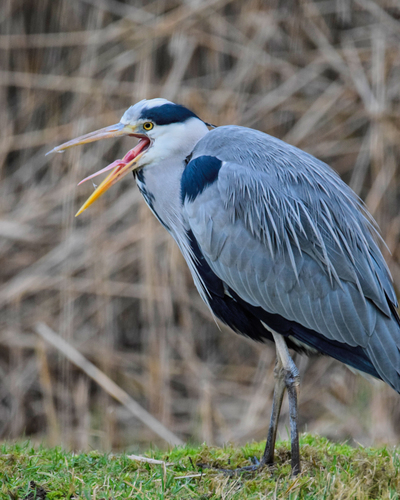
Grey Heron (Ardea cinerea) Grey Heron

Media

Loading…

In short

The most reliable field mark to separate Yellow-billed Egret from Grey Heron is overall color: Yellow-billed Egret is entirely white at all ages, while Grey Heron is mostly ashy-grey above and greyish-white below, never pure white. In flight or at rest, Grey Heron's bold black head stripe and grey upperparts are unmistakable against the egret's all-white plumage. Bill color is also key: Yellow-billed Egret has a yellow (sometimes orange-red in breeding) bill, while Grey Heron's bill is pinkish-yellow and heavier. Size and structure differ markedly, with Grey Heron being much larger and bulkier. These differences hold for all ages and seasons, making confusion rare except in poor light or at great distance.

Identification tips

  1. Overall color is diagnostic: Yellow-billed Egret is pure white at all ages and seasons; Grey Heron is always grey above and greyish-white below, never white overall.
  2. Head pattern: Grey Heron adults have a bold black supercilium and crest on a white head; Yellow-billed Egret has an entirely white head with no black or grey markings. Juvenile Grey Herons have a duller, grey head stripe but still show contrast with the egret's plain white head.
  3. Bill color and shape: Yellow-billed Egret has a slender yellow bill (orange-red in breeding, sometimes with a black tip outside breeding); Grey Heron's bill is heavier, pinkish-yellow, and never orange-red. Bill size is proportionally smaller in the egret.
  4. Leg color: Yellow-billed Egret's lower legs and toes are dusky, with paler tibia (pinkish-red briefly in courtship, then yellow in breeding); Grey Heron's legs are brown and very long, with no seasonal color change as striking as the egret's.
  5. Size and structure: Grey Heron is much larger, taller, and bulkier, with a long neck and legs. Yellow-billed Egret is medium-sized, more compact and slender.
  6. Flight silhouette: Grey Heron shows broad, rounded wings with grey upperparts and a long neck retracted in flight; Yellow-billed Egret's wings are all white, and it appears smaller and more agile.
  7. Juvenile confusion: Even juvenile Grey Herons are grey above and lack the egret's all-white look. No age of Grey Heron is ever white enough to be confused with the egret in good light.
  8. Breeding plumes: In breeding, Yellow-billed Egret grows long white plumes on back and breast and shows bright bare part colors (orange-red bill, pinkish-red tibia, green lores, red eyes); Grey Heron has some elongated scapular and neck feathers but never develops the egret's ornate plumes or vivid bare part colors.
  9. Habitat overlap: Both can occur in African wetlands, but Yellow-billed Egret is more likely in shallow, grassy marshes; Grey Heron prefers deeper water and is more widespread, including coasts.
  10. Association with other species: Yellow-billed Egret often mixes with other egrets; Grey Heron is usually solitary or with conspecifics, rarely with egrets except at large roosts.
  11. Perched posture: Grey Heron stands tall and upright, often hunched with neck retracted; Yellow-billed Egret is more upright and slender, with a shorter neck relative to body size.
  12. Bill-to-eye gape: Yellow-billed Egret's gape does not extend beyond the eye; Grey Heron's gape is longer, matching its heavier bill.
  13. Contextual clues: In Africa, a large, grey-backed heron is almost certainly Grey Heron; a medium-sized, all-white heron is Yellow-billed Egret if Intermediate Egret is excluded by range.
  14. Plumage pitfalls: Poor light or distance may make Grey Heron look paler, but close views always reveal grey upperparts and head markings.
  15. No vocal differences provided: Calls are not described in the notes, so rely on visual marks.

Size

Grey Heron is substantially larger and heavier than Yellow-billed Egret. Grey Heron stands up to 100 cm tall, with a body length of 84–102 cm and a wingspan of 155–195 cm, weighing 1.02–2.08 kg. In contrast, Yellow-billed Egret is medium-sized for a heron, at 61–69 cm in length (no wingspan or weight provided, but clearly much smaller and lighter than Grey Heron). In the field, Grey Heron appears tall, long-necked, and robust, while Yellow-billed Egret is more slender and compact.

Plumage

At all ages, Yellow-billed Egret is entirely white, lacking any grey or black on the body, wings, or head. In breeding season, it shows long plumes on back and breast, and its bill turns orange-red, but the white body remains unchanged. Outside breeding, the bill is yellow with possible black tip. Grey Heron, by contrast, is never white: adults are ashy-grey above and greyish-white below, with a striking white head and neck, a broad black supercilium and crest, and bluish-black streaks on the neck. Juvenile Grey Herons are duller, with a grey head stripe and paler face, but still show grey upperparts and lack the pure white of the egret. No age or season brings the Grey Heron close to the egret's all-white appearance. In flight, Grey Heron's upperwings are grey, while Yellow-billed Egret's are white throughout.

Behaviour

Both species are often seen in wetland habitats and may occur singly or in loose flocks. Yellow-billed Egret can be gregarious, sometimes in groups of 15–20, and often associates with other egrets. Grey Heron is more solitary or found in small groups, especially outside breeding colonies. Both nest colonially, but Grey Heron colonies ('heronries') are often larger and more conspicuous, sometimes including other heron species. Both species roost in trees or reedbeds near water.

Habitat

Yellow-billed Egret is restricted to Sub-Saharan Africa, favoring seasonally inundated wetlands, grasslands, shallow lake and river edges, salt pans, and estuaries. Grey Heron is much more widespread, found throughout Europe, Asia, and most of Africa, including but not limited to the egret's range. Grey Heron uses a wide array of wetland habitats, from lakes and rivers to marshes and even coastal areas. In Africa, their ranges overlap, but Grey Heron is more likely in larger, deeper wetlands and coastal sites, while Yellow-billed Egret prefers shallower, grassy wetlands.

Submit a better description

Use the same sections as the comparison. Your text is published immediately.

The most reliable field mark to separate Yellow-billed Egret from Grey Heron is overall color: Yellow-billed Egret is entirely white at all ages, while Grey Heron is mostly ashy-grey above and greyish-white below, never pure white. In flight or at rest, Grey Heron's bold black head stripe and grey upperparts are unmistakable against the egret's all-white plumage. Bill color is also key: Yellow-billed Egret has a yellow (sometimes orange-red in breeding) bill, while Grey Heron's bill is pinkish-yellow and heavier. Size and structure differ markedly, with Grey Heron being much larger and bulkier. These differences hold for all ages and seasons, making confusion rare except in poor light or at great distance.

  1. Overall color is diagnostic: Yellow-billed Egret is pure white at all ages and seasons; Grey Heron is always grey above and greyish-white below, never white overall.
  2. Head pattern: Grey Heron adults have a bold black supercilium and crest on a white head; Yellow-billed Egret has an entirely white head with no black or grey markings. Juvenile Grey Herons have a duller, grey head stripe but still show contrast with the egret's plain white head.
  3. Bill color and shape: Yellow-billed Egret has a slender yellow bill (orange-red in breeding, sometimes with a black tip outside breeding); Grey Heron's bill is heavier, pinkish-yellow, and never orange-red. Bill size is proportionally smaller in the egret.
  4. Leg color: Yellow-billed Egret's lower legs and toes are dusky, with paler tibia (pinkish-red briefly in courtship, then yellow in breeding); Grey Heron's legs are brown and very long, with no seasonal color change as striking as the egret's.
  5. Size and structure: Grey Heron is much larger, taller, and bulkier, with a long neck and legs. Yellow-billed Egret is medium-sized, more compact and slender.
  6. Flight silhouette: Grey Heron shows broad, rounded wings with grey upperparts and a long neck retracted in flight; Yellow-billed Egret's wings are all white, and it appears smaller and more agile.
  7. Juvenile confusion: Even juvenile Grey Herons are grey above and lack the egret's all-white look. No age of Grey Heron is ever white enough to be confused with the egret in good light.
  8. Breeding plumes: In breeding, Yellow-billed Egret grows long white plumes on back and breast and shows bright bare part colors (orange-red bill, pinkish-red tibia, green lores, red eyes); Grey Heron has some elongated scapular and neck feathers but never develops the egret's ornate plumes or vivid bare part colors.
  9. Habitat overlap: Both can occur in African wetlands, but Yellow-billed Egret is more likely in shallow, grassy marshes; Grey Heron prefers deeper water and is more widespread, including coasts.
  10. Association with other species: Yellow-billed Egret often mixes with other egrets; Grey Heron is usually solitary or with conspecifics, rarely with egrets except at large roosts.
  11. Perched posture: Grey Heron stands tall and upright, often hunched with neck retracted; Yellow-billed Egret is more upright and slender, with a shorter neck relative to body size.
  12. Bill-to-eye gape: Yellow-billed Egret's gape does not extend beyond the eye; Grey Heron's gape is longer, matching its heavier bill.
  13. Contextual clues: In Africa, a large, grey-backed heron is almost certainly Grey Heron; a medium-sized, all-white heron is Yellow-billed Egret if Intermediate Egret is excluded by range.
  14. Plumage pitfalls: Poor light or distance may make Grey Heron look paler, but close views always reveal grey upperparts and head markings.
  15. No vocal differences provided: Calls are not described in the notes, so rely on visual marks.

Grey Heron is substantially larger and heavier than Yellow-billed Egret. Grey Heron stands up to 100 cm tall, with a body length of 84–102 cm and a wingspan of 155–195 cm, weighing 1.02–2.08 kg. In contrast, Yellow-billed Egret is medium-sized for a heron, at 61–69 cm in length (no wingspan or weight provided, but clearly much smaller and lighter than Grey Heron). In the field, Grey Heron appears tall, long-necked, and robust, while Yellow-billed Egret is more slender and compact.

At all ages, Yellow-billed Egret is entirely white, lacking any grey or black on the body, wings, or head. In breeding season, it shows long plumes on back and breast, and its bill turns orange-red, but the white body remains unchanged. Outside breeding, the bill is yellow with possible black tip. Grey Heron, by contrast, is never white: adults are ashy-grey above and greyish-white below, with a striking white head and neck, a broad black supercilium and crest, and bluish-black streaks on the neck. Juvenile Grey Herons are duller, with a grey head stripe and paler face, but still show grey upperparts and lack the pure white of the egret. No age or season brings the Grey Heron close to the egret's all-white appearance. In flight, Grey Heron's upperwings are grey, while Yellow-billed Egret's are white throughout.

Both species are often seen in wetland habitats and may occur singly or in loose flocks. Yellow-billed Egret can be gregarious, sometimes in groups of 15–20, and often associates with other egrets. Grey Heron is more solitary or found in small groups, especially outside breeding colonies. Both nest colonially, but Grey Heron colonies ('heronries') are often larger and more conspicuous, sometimes including other heron species. Both species roost in trees or reedbeds near water.

Yellow-billed Egret is restricted to Sub-Saharan Africa, favoring seasonally inundated wetlands, grasslands, shallow lake and river edges, salt pans, and estuaries. Grey Heron is much more widespread, found throughout Europe, Asia, and most of Africa, including but not limited to the egret's range. Grey Heron uses a wide array of wetland habitats, from lakes and rivers to marshes and even coastal areas. In Africa, their ranges overlap, but Grey Heron is more likely in larger, deeper wetlands and coastal sites, while Yellow-billed Egret prefers shallower, grassy wetlands.

Discard your changes?

You have unsaved edits. If you leave now, those changes will be lost.

Yellow-billed Egret · Grey Heron · My Tricky Birds