

Motmot

Yellow-bellied Warbler vs Manchurian Bush Warbler

Abroscopus superciliaris versus Horornis canturians

Play a quiz with Yellow-bellied Warbler and Manchurian Bush Warbler

Yellow-bellied Warbler (Abroscopus superciliaris) Yellow-bellied Warbler
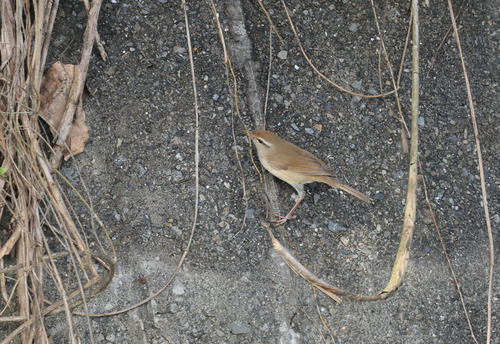
Manchurian Bush Warbler (Horornis canturians) Manchurian Bush Warbler

Media

Loading…

In short

The most reliable field mark between Yellow-bellied Warbler and Manchurian Bush Warbler is the underparts color: Yellow-bellied Warbler has distinctly yellow underparts, while Manchurian Bush Warbler shows darker, buff-suffused flanks and undertail coverts. Both species have a pale supercilium, but Manchurian Bush Warbler is overall more rufous, especially on the crown, and has a slenderer build. If you see a bird with a bright yellow belly, it's Yellow-bellied; if the underparts are buffy or washed with brown and the crown is rufous, it's Manchurian. Structure and subtle plumage differences are important in duller or backlit views.

Identification tips

  1. Underparts color is key: Yellow-bellied Warbler shows bright yellow underparts in all plumages; Manchurian Bush Warbler has underparts with a dark buff suffusion, especially on the flanks and undertail coverts. This is the most reliable field mark in most views.
  2. Crown color: Manchurian Bush Warbler has a rufescent (reddish-brown) crown, which is absent in Yellow-bellied Warbler. Look for this in good light or when the bird is perched.
  3. Overall tone: Manchurian Bush Warbler is generally more rufous or brownish above, while Yellow-bellied Warbler is less so and appears brighter due to its yellow underparts.
  4. Pale supercilium: Both species have a pale supercilium, so this feature alone does not separate them. However, in Manchurian Bush Warbler, the supercilium may contrast more with the rufous crown.
  5. Structure: Manchurian Bush Warbler is described as slenderer than similar bush warblers. Yellow-bellied Warbler is also small and delicate, but structure is subtle and best used in combination with plumage.
  6. Undertail coverts: Manchurian Bush Warbler has buffy undertail coverts, while Yellow-bellied Warbler's are yellow. Check this area if the belly is obscured.
  7. Flank color: The buff suffusion on the flanks of Manchurian Bush Warbler is a good separator from the clean yellow flanks of Yellow-bellied Warbler.
  8. Habitat and range: If you are in northeastern China, Manchurian Bush Warbler is possible; elsewhere in South or Southeast Asia, Yellow-bellied Warbler is far more likely. Always confirm with plumage.
  9. No distinctive wing patterns: Neither species has a unique juvenile or immature wing pattern useful for separation in flight.
  10. No strong sexual dimorphism: Both species are not described as sexually dimorphic in these notes, so use the same marks for all individuals.
  11. No song or call differences provided: Do not rely on voice for separation based on current information.
  12. Beware backlit or shadowed views: In poor light, both can look dull; focus on the undertail and flanks for color clues.
  13. Perched vs. moving: Both species skulk in dense vegetation, so patience may be needed to see the key marks.
  14. Confusion with other bush warblers: Manchurian Bush Warbler is sometimes confused with Japanese or Broad-billed Warbler, but compared to Yellow-bellied, the rufous and buff tones are most important.
  15. Juvenile/immature birds: No specific juvenile marks are described, so use the same underparts and crown color differences for all ages.

Size

Yellow-bellied Warbler is very small, with a body mass of about 6.5 grams [wikidata]. Manchurian Bush Warbler is described as smaller and more slender than Broad-billed Warbler, but no direct mass data is available for comparison. Both are small bush warblers, but Yellow-bellied is likely at the lighter end of the spectrum. In the field, size alone is not a reliable separator between these two.

Plumage

No age-specific wing or flight pattern marks are described for either species. For all ages, focus on underparts and crown color: Yellow-bellied Warbler always shows bright yellow underparts, while Manchurian Bush Warbler has underparts with a dark buff suffusion on the flanks and undertail coverts. Manchurian Bush Warbler also has a more rufous crown and generally more rufescent tones overall. Both have a pale supercilium, but it is not unique to either. If you see a bird with a yellow belly, it's Yellow-bellied; if the underparts are buffy or washed with brown and the crown is rufous, it's Manchurian. No distinctive juvenile or immature upperwing patterns are reported for either species.

Behaviour

Both species are bush warblers in the family Cettiidae and likely share similar skulking, low-in-vegetation habits. No behavioral differences are described in the available notes, so behavior is not a reliable separator.

Habitat

Yellow-bellied Warbler is widespread across South and Southeast Asia, including the Himalayan foothills and Southeast Asian lowlands. Manchurian Bush Warbler is restricted to northeastern China and breeds there. If you are outside northeastern China, especially in the Himalayas or Southeast Asia, you are much more likely to encounter Yellow-bellied Warbler. However, habitat overlap is possible in some migratory or edge zones, so always confirm with plumage.

Submit a better description

Use the same sections as the comparison. Your text is published immediately.

The most reliable field mark between Yellow-bellied Warbler and Manchurian Bush Warbler is the underparts color: Yellow-bellied Warbler has distinctly yellow underparts, while Manchurian Bush Warbler shows darker, buff-suffused flanks and undertail coverts. Both species have a pale supercilium, but Manchurian Bush Warbler is overall more rufous, especially on the crown, and has a slenderer build. If you see a bird with a bright yellow belly, it's Yellow-bellied; if the underparts are buffy or washed with brown and the crown is rufous, it's Manchurian. Structure and subtle plumage differences are important in duller or backlit views.

  1. Underparts color is key: Yellow-bellied Warbler shows bright yellow underparts in all plumages; Manchurian Bush Warbler has underparts with a dark buff suffusion, especially on the flanks and undertail coverts. This is the most reliable field mark in most views.
  2. Crown color: Manchurian Bush Warbler has a rufescent (reddish-brown) crown, which is absent in Yellow-bellied Warbler. Look for this in good light or when the bird is perched.
  3. Overall tone: Manchurian Bush Warbler is generally more rufous or brownish above, while Yellow-bellied Warbler is less so and appears brighter due to its yellow underparts.
  4. Pale supercilium: Both species have a pale supercilium, so this feature alone does not separate them. However, in Manchurian Bush Warbler, the supercilium may contrast more with the rufous crown.
  5. Structure: Manchurian Bush Warbler is described as slenderer than similar bush warblers. Yellow-bellied Warbler is also small and delicate, but structure is subtle and best used in combination with plumage.
  6. Undertail coverts: Manchurian Bush Warbler has buffy undertail coverts, while Yellow-bellied Warbler's are yellow. Check this area if the belly is obscured.
  7. Flank color: The buff suffusion on the flanks of Manchurian Bush Warbler is a good separator from the clean yellow flanks of Yellow-bellied Warbler.
  8. Habitat and range: If you are in northeastern China, Manchurian Bush Warbler is possible; elsewhere in South or Southeast Asia, Yellow-bellied Warbler is far more likely. Always confirm with plumage.
  9. No distinctive wing patterns: Neither species has a unique juvenile or immature wing pattern useful for separation in flight.
  10. No strong sexual dimorphism: Both species are not described as sexually dimorphic in these notes, so use the same marks for all individuals.
  11. No song or call differences provided: Do not rely on voice for separation based on current information.
  12. Beware backlit or shadowed views: In poor light, both can look dull; focus on the undertail and flanks for color clues.
  13. Perched vs. moving: Both species skulk in dense vegetation, so patience may be needed to see the key marks.
  14. Confusion with other bush warblers: Manchurian Bush Warbler is sometimes confused with Japanese or Broad-billed Warbler, but compared to Yellow-bellied, the rufous and buff tones are most important.
  15. Juvenile/immature birds: No specific juvenile marks are described, so use the same underparts and crown color differences for all ages.

Yellow-bellied Warbler is very small, with a body mass of about 6.5 grams [wikidata]. Manchurian Bush Warbler is described as smaller and more slender than Broad-billed Warbler, but no direct mass data is available for comparison. Both are small bush warblers, but Yellow-bellied is likely at the lighter end of the spectrum. In the field, size alone is not a reliable separator between these two.

No age-specific wing or flight pattern marks are described for either species. For all ages, focus on underparts and crown color: Yellow-bellied Warbler always shows bright yellow underparts, while Manchurian Bush Warbler has underparts with a dark buff suffusion on the flanks and undertail coverts. Manchurian Bush Warbler also has a more rufous crown and generally more rufescent tones overall. Both have a pale supercilium, but it is not unique to either. If you see a bird with a yellow belly, it's Yellow-bellied; if the underparts are buffy or washed with brown and the crown is rufous, it's Manchurian. No distinctive juvenile or immature upperwing patterns are reported for either species.

Both species are bush warblers in the family Cettiidae and likely share similar skulking, low-in-vegetation habits. No behavioral differences are described in the available notes, so behavior is not a reliable separator.

Yellow-bellied Warbler is widespread across South and Southeast Asia, including the Himalayan foothills and Southeast Asian lowlands. Manchurian Bush Warbler is restricted to northeastern China and breeds there. If you are outside northeastern China, especially in the Himalayas or Southeast Asia, you are much more likely to encounter Yellow-bellied Warbler. However, habitat overlap is possible in some migratory or edge zones, so always confirm with plumage.

Discard your changes?

You have unsaved edits. If you leave now, those changes will be lost.

Yellow-bellied Warbler · Manchurian Bush Warbler · My Tricky Birds