

Motmot

Yellow-bellied Prinia vs Brown-throated Sunbird

Prinia flaviventris versus Anthreptes malacensis

Play a quiz with Yellow-bellied Prinia and Brown-throated Sunbird
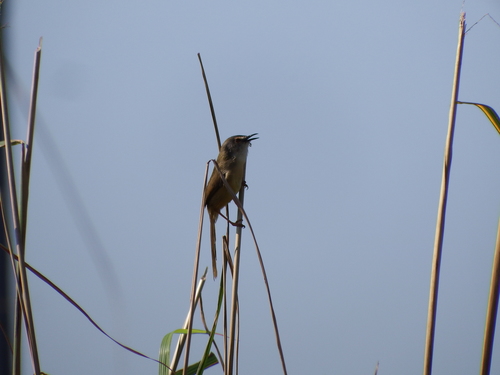
Yellow-bellied Prinia (Prinia flaviventris) Yellow-bellied Prinia
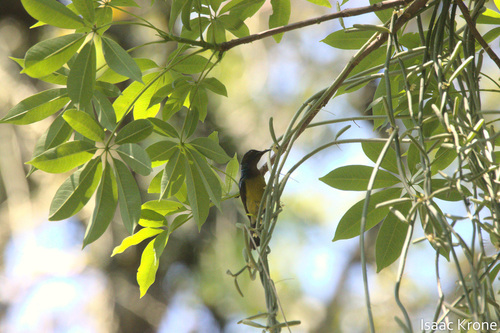
Brown-throated Sunbird (Anthreptes malacensis) Brown-throated Sunbird

Media

Loading…

In short

The most reliable way to separate Yellow-bellied Prinia from Brown-throated Sunbird is by overall structure and bill shape: prinias are slim, long-tailed birds with a fine, straight bill, while sunbirds are chunkier with a noticeably thick, curved bill. Adult male Brown-throated Sunbirds are unmistakable with their iridescent green and purple upperparts and chestnut wing patches, but females and immatures can be confused with prinias due to their yellowish underparts. Look for the prinia’s plain face, long tail, and more delicate build, versus the sunbird’s heavier body and short tail. In flight or perched, the sunbird’s thick, decurved bill and bulkier silhouette are decisive, even when plumage is subdued.

Identification tips

  1. Bill shape: The sunbird has a thick, decurved bill, ideal for nectar feeding; the prinia’s bill is fine, straight, and insectivorous. This is the most consistent structural difference, visible at all ages and sexes.
  2. Tail length and shape: Yellow-bellied Prinia has a long, often cocked tail, sometimes with a graduated tip. Brown-throated Sunbird’s tail is shorter and more squared, never as prominent as the prinia’s.
  3. Body structure: Prinia is slim and elongated, with a delicate build. Sunbird is compact, heavy-bodied, and has a larger head relative to body size.
  4. Adult male plumage: Male Brown-throated Sunbird is unmistakable with its iridescent green and purple upperparts, chestnut wing patches, and bright yellow underparts. No prinia shows iridescence or chestnut.
  5. Female/immature plumage: Female and immature sunbirds are olive-green above and yellowish below, but still show a plain face, thick bill, and short tail. Prinia is duller above, with a longer tail and finer bill.
  6. Face pattern: Both species have plain faces, but the sunbird’s face looks heavier due to the thick bill and larger head; the prinia’s face is finer and more delicate.
  7. Wing pattern: Neither species has distinctive age-specific upperwing or flight marks, so do not rely on wing panels or contrasting edges.
  8. Foraging behavior: Prinia is restless, often flicking its tail and moving through low vegetation. Sunbird is more deliberate, often seen feeding at flowers or hanging from branches.
  9. Habitat context: Prinia is most often in grasslands, reeds, or scrub; sunbird prefers gardens, forest edges, and areas with flowering plants.
  10. Flight style: Prinia’s flight is fluttery and light; sunbird’s is more direct and heavier.
  11. Size impression: Sunbird feels bulkier and heavier, especially when seen side-by-side with a prinia.
  12. Sexual dimorphism: Only the sunbird shows strong sexual dimorphism (males iridescent, females duller); prinia sexes are similar.
  13. Feeding behavior: Sunbird may be seen probing flowers for nectar or eating fruit; prinia sticks to insects and rarely visits flowers.
  14. Perching posture: Prinia often perches upright with tail cocked; sunbird perches more horizontally, tail down, and may hang from branches.
  15. Mistaken identity pitfalls: Female/immature sunbirds and prinias can both appear olive above and yellow below—always check bill thickness, tail length, and overall structure to avoid confusion.

Size

Yellow-bellied Prinia is a small, light bird (about 7.6 g), slim and elongated, with a long tail. Brown-throated Sunbird is generally heavier (7.4–13.5 g, with males averaging larger), and noticeably longer at about 14 cm. The sunbird appears more robust and compact, with a shorter tail relative to body length. In the field, the sunbird’s thicker proportions and heavier bill are usually obvious when compared directly to the more delicate prinia.

Plumage

No distinctive age-specific upperwing or flight marks are described for either species, so focus is on body and head plumage. Adult male Brown-throated Sunbird is highly distinctive: iridescent green and purple upperparts, chestnut wing-coverts and scapulars, and bright yellow underparts. Females and immatures are olive-green above and yellowish below, lacking the male’s iridescence and chestnut, but still show a plain, unstreaked face and a short tail. Yellow-bellied Prinia is much plainer: upperparts are dull olive or greyish, underparts yellow, with a long tail and a fine, straight bill. Both species can appear yellow below, but only the sunbird (especially males) shows iridescence or chestnut in the wing. The prinia’s face is plain and lacks the sunbird’s thick bill and heavy head. No seasonal or age-specific wing patterns are noted for either species.

Behaviour

Yellow-bellied Prinia typically moves through low vegetation, often flicking its long tail and foraging for insects. It is active, restless, and usually seen singly or in pairs. Brown-throated Sunbird is more often seen feeding on nectar in flowering shrubs or trees, sometimes hanging upside-down, and may also take small fruits or insects. Sunbirds are more likely to visit gardens and open areas with flowering plants, and their foraging is often more deliberate and less fidgety than the prinia’s. In flight, the sunbird appears heavier and less fluttery than the prinia.

Habitat

Both species overlap in Southeast Asia, but their preferred habitats differ. Yellow-bellied Prinia favors grasslands, reedbeds, and scrubby edges, often near water or in open country. Brown-throated Sunbird is found in a wider range of semi-open habitats, including gardens, parks, forest edges, and mangroves, wherever flowering plants are abundant. If you see a bird in tall grass or reeds, it is more likely a prinia; in gardens or among flowering shrubs and trees, the sunbird is more probable.

Submit a better description

Use the same sections as the comparison. Your text is published immediately.

The most reliable way to separate Yellow-bellied Prinia from Brown-throated Sunbird is by overall structure and bill shape: prinias are slim, long-tailed birds with a fine, straight bill, while sunbirds are chunkier with a noticeably thick, curved bill. Adult male Brown-throated Sunbirds are unmistakable with their iridescent green and purple upperparts and chestnut wing patches, but females and immatures can be confused with prinias due to their yellowish underparts. Look for the prinia’s plain face, long tail, and more delicate build, versus the sunbird’s heavier body and short tail. In flight or perched, the sunbird’s thick, decurved bill and bulkier silhouette are decisive, even when plumage is subdued.

  1. Bill shape: The sunbird has a thick, decurved bill, ideal for nectar feeding; the prinia’s bill is fine, straight, and insectivorous. This is the most consistent structural difference, visible at all ages and sexes.
  2. Tail length and shape: Yellow-bellied Prinia has a long, often cocked tail, sometimes with a graduated tip. Brown-throated Sunbird’s tail is shorter and more squared, never as prominent as the prinia’s.
  3. Body structure: Prinia is slim and elongated, with a delicate build. Sunbird is compact, heavy-bodied, and has a larger head relative to body size.
  4. Adult male plumage: Male Brown-throated Sunbird is unmistakable with its iridescent green and purple upperparts, chestnut wing patches, and bright yellow underparts. No prinia shows iridescence or chestnut.
  5. Female/immature plumage: Female and immature sunbirds are olive-green above and yellowish below, but still show a plain face, thick bill, and short tail. Prinia is duller above, with a longer tail and finer bill.
  6. Face pattern: Both species have plain faces, but the sunbird’s face looks heavier due to the thick bill and larger head; the prinia’s face is finer and more delicate.
  7. Wing pattern: Neither species has distinctive age-specific upperwing or flight marks, so do not rely on wing panels or contrasting edges.
  8. Foraging behavior: Prinia is restless, often flicking its tail and moving through low vegetation. Sunbird is more deliberate, often seen feeding at flowers or hanging from branches.
  9. Habitat context: Prinia is most often in grasslands, reeds, or scrub; sunbird prefers gardens, forest edges, and areas with flowering plants.
  10. Flight style: Prinia’s flight is fluttery and light; sunbird’s is more direct and heavier.
  11. Size impression: Sunbird feels bulkier and heavier, especially when seen side-by-side with a prinia.
  12. Sexual dimorphism: Only the sunbird shows strong sexual dimorphism (males iridescent, females duller); prinia sexes are similar.
  13. Feeding behavior: Sunbird may be seen probing flowers for nectar or eating fruit; prinia sticks to insects and rarely visits flowers.
  14. Perching posture: Prinia often perches upright with tail cocked; sunbird perches more horizontally, tail down, and may hang from branches.
  15. Mistaken identity pitfalls: Female/immature sunbirds and prinias can both appear olive above and yellow below—always check bill thickness, tail length, and overall structure to avoid confusion.

Yellow-bellied Prinia is a small, light bird (about 7.6 g), slim and elongated, with a long tail. Brown-throated Sunbird is generally heavier (7.4–13.5 g, with males averaging larger), and noticeably longer at about 14 cm. The sunbird appears more robust and compact, with a shorter tail relative to body length. In the field, the sunbird’s thicker proportions and heavier bill are usually obvious when compared directly to the more delicate prinia.

No distinctive age-specific upperwing or flight marks are described for either species, so focus is on body and head plumage. Adult male Brown-throated Sunbird is highly distinctive: iridescent green and purple upperparts, chestnut wing-coverts and scapulars, and bright yellow underparts. Females and immatures are olive-green above and yellowish below, lacking the male’s iridescence and chestnut, but still show a plain, unstreaked face and a short tail. Yellow-bellied Prinia is much plainer: upperparts are dull olive or greyish, underparts yellow, with a long tail and a fine, straight bill. Both species can appear yellow below, but only the sunbird (especially males) shows iridescence or chestnut in the wing. The prinia’s face is plain and lacks the sunbird’s thick bill and heavy head. No seasonal or age-specific wing patterns are noted for either species.

Yellow-bellied Prinia typically moves through low vegetation, often flicking its long tail and foraging for insects. It is active, restless, and usually seen singly or in pairs. Brown-throated Sunbird is more often seen feeding on nectar in flowering shrubs or trees, sometimes hanging upside-down, and may also take small fruits or insects. Sunbirds are more likely to visit gardens and open areas with flowering plants, and their foraging is often more deliberate and less fidgety than the prinia’s. In flight, the sunbird appears heavier and less fluttery than the prinia.

Both species overlap in Southeast Asia, but their preferred habitats differ. Yellow-bellied Prinia favors grasslands, reedbeds, and scrubby edges, often near water or in open country. Brown-throated Sunbird is found in a wider range of semi-open habitats, including gardens, parks, forest edges, and mangroves, wherever flowering plants are abundant. If you see a bird in tall grass or reeds, it is more likely a prinia; in gardens or among flowering shrubs and trees, the sunbird is more probable.

Discard your changes?

You have unsaved edits. If you leave now, those changes will be lost.

Yellow-bellied Prinia · Brown-throated Sunbird · My Tricky Birds