

Motmot

Woodlark vs Thekla's Lark

Lullula arborea versus Galerida theklae

Play a quiz with Woodlark and Thekla's Lark
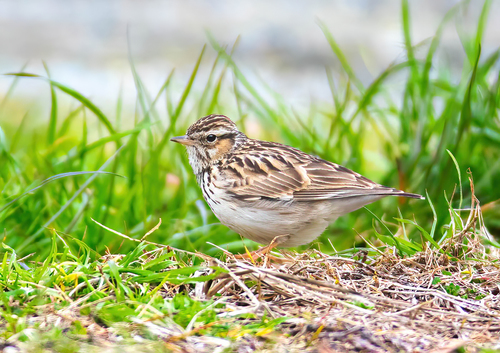
Woodlark (Lullula arborea) Woodlark
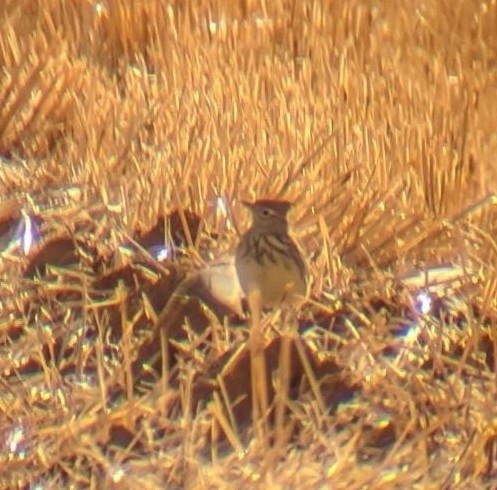
Thekla's Lark (Galerida theklae) Thekla's Lark

Media

Loading…

In short

The most reliable field mark to separate Woodlark from Thekla's Lark is the Woodlark's distinctive white supercilium that meets at the nape, forming a pale 'eyebrow band'—a feature Thekla's Lark never shows. In flight, Woodlark has a noticeably short tail with a white tip, but lacks white along the tail sides or rear wing edge, while Thekla's Lark shows no white in the tail or wings. Structurally, Woodlark is compact with a short tail and small, often inconspicuous crest, whereas Thekla's Lark is longer-tailed with a prominent, spiky crest. Both are brownish above and pale below, but Thekla's Lark is more heavily streaked on the breast and greyer overall. Habitat also helps: Woodlark prefers open heaths and clearings, while Thekla's Lark favors dry, stony uplands.

Identification tips

  1. Supercilium meeting at nape (Woodlark only): Look for the bold white eyebrow stripe that joins at the nape, forming a pale 'collar'—unique to Woodlark and visible in all plumages.
  2. Crest shape and size: Woodlark's crest is small and usually inconspicuous; Thekla's Lark has a long, spiky, erectile crest, often obvious when perched or alert.
  3. Tail shape and pattern in flight: Woodlark has a short, square tail with a white tip but no white on the tail sides or rear wing edge. Thekla's Lark has a longer tail with no white in the tail or wings.
  4. Overall structure (jizz): Woodlark is compact and dumpy with short tail and wings; Thekla's Lark is longer-tailed and less compact, with a more upright stance when alert.
  5. Breast streaking: Thekla's Lark shows heavy black streaking on the breast; Woodlark is paler below with less distinct streaking.
  6. Upperpart color: Thekla's Lark is greyer above with more pronounced dark streaks; Woodlark is browner and less streaked.
  7. Underwing color (in flight): Thekla's Lark has grey underwings; Woodlark's underwing color is not distinctive, but lack of reddish or strong contrast helps rule out confusion with Crested Lark.
  8. Bill: Thekla's Lark has a shorter, stubbier bill than Crested Lark, but bill shape is not a strong separator from Woodlark in the field.
  9. Song and display: Woodlark's song is musical and fluting, often given in a fluttering, circling song flight. Thekla's Lark's song is less musical and not described here.
  10. Habitat context: Woodlark is found in open heaths, clearings, and pine plantations; Thekla's Lark prefers dry, stony, or semi-arid uplands, often at altitude.
  11. Behavior when flushed: Woodlark typically rises with fluttering, undulating flight; Thekla's Lark flies more directly and may show its crest when landing.
  12. Seasonality: Woodlark may be resident or migratory depending on region, but both species are present year-round in parts of their range; timing is not a strong separator.
  13. Sex and age: Both sexes are similar in each species; no strong age-related differences in field marks are noted for these two.
  14. Common pitfalls: Beware confusing Woodlark with Skylark (which has white tail edges and longer tail) or Thekla's Lark with Crested Lark (which has reddish underwings and longer bill). For this pair, focus on the nape supercilium and crest shape.
  15. Local abundance: In western Europe, Woodlark is more widespread in heathland and clearings, while Thekla's Lark is more localized to the Iberian Peninsula and North Africa.

Size

Both species are smaller than Eurasian Skylark, but Woodlark is slightly shorter (13.5–15 cm) and more compact, with a notably short tail. Thekla's Lark is also smallish, but appears a bit longer-tailed and less compact than Woodlark. There is no direct mass comparison in the notes, but both are similar in size, with Woodlark being the more diminutive and dumpier of the two.

Plumage

For all ages, Woodlark stands out by its bold white supercilium that wraps around to meet at the nape, forming a pale 'collar'—this is visible both perched and in flight. Thekla's Lark never shows this feature, instead having a plain face with a strong, spiky crest. In flight, Woodlark shows a short, square tail with a white tip but no white on the tail sides or rear wing edge, while Thekla's Lark lacks any white in the tail or wings. Thekla's Lark is overall greyer above with heavier black streaking on the breast, and its underwings are grey (not reddish as in Crested Lark, nor pale as in Woodlark). Woodlark is browner above, paler below, and less heavily streaked on the breast. Both sexes are similar in each species; no strong seasonal or age-related differences are noted for these marks.

Behaviour

Woodlark often sings in fluttering, spiraling song flights, rising and circling at a fairly constant height, or sings from the ground or a perch. Its flight is undulating with short, rounded wings and a short tail. Thekla's Lark is more terrestrial, usually seen walking or running on the ground in open, stony habitats, and is less likely to perform showy song flights. When flushed, Thekla's Lark flies with a more direct, bounding flight, and its long, spiky crest is often raised when perched.

Habitat

Woodlark prefers open habitats with scattered trees, such as heathland, clearings in pine forests, and newly planted areas with saplings—especially in western and central Europe. It is more associated with sandy heaths and clearings than with rocky or arid ground. Thekla's Lark, by contrast, is a classic bird of dry, open country, often at altitude, and is especially common in stony, scrubby, or semi-arid landscapes of the Iberian Peninsula and North Africa. It avoids dense woodland and is rarely found in the more vegetated, moist habitats favored by Woodlark.

Voice

Woodlark's song is a melodious, warbling series often described as 'lu-lu-lu' or 'toolooeet', delivered in flight or from a perch. Thekla's Lark's song is not described in the notes, but is generally less musical and more scratchy or chattering than Woodlark's. Woodlark starts singing early in the season (from February in Britain), and its song flight is a key behavioral clue.

Submit a better description

Use the same sections as the comparison. Your text is published immediately.

The most reliable field mark to separate Woodlark from Thekla's Lark is the Woodlark's distinctive white supercilium that meets at the nape, forming a pale 'eyebrow band'—a feature Thekla's Lark never shows. In flight, Woodlark has a noticeably short tail with a white tip, but lacks white along the tail sides or rear wing edge, while Thekla's Lark shows no white in the tail or wings. Structurally, Woodlark is compact with a short tail and small, often inconspicuous crest, whereas Thekla's Lark is longer-tailed with a prominent, spiky crest. Both are brownish above and pale below, but Thekla's Lark is more heavily streaked on the breast and greyer overall. Habitat also helps: Woodlark prefers open heaths and clearings, while Thekla's Lark favors dry, stony uplands.

  1. Supercilium meeting at nape (Woodlark only): Look for the bold white eyebrow stripe that joins at the nape, forming a pale 'collar'—unique to Woodlark and visible in all plumages.
  2. Crest shape and size: Woodlark's crest is small and usually inconspicuous; Thekla's Lark has a long, spiky, erectile crest, often obvious when perched or alert.
  3. Tail shape and pattern in flight: Woodlark has a short, square tail with a white tip but no white on the tail sides or rear wing edge. Thekla's Lark has a longer tail with no white in the tail or wings.
  4. Overall structure (jizz): Woodlark is compact and dumpy with short tail and wings; Thekla's Lark is longer-tailed and less compact, with a more upright stance when alert.
  5. Breast streaking: Thekla's Lark shows heavy black streaking on the breast; Woodlark is paler below with less distinct streaking.
  6. Upperpart color: Thekla's Lark is greyer above with more pronounced dark streaks; Woodlark is browner and less streaked.
  7. Underwing color (in flight): Thekla's Lark has grey underwings; Woodlark's underwing color is not distinctive, but lack of reddish or strong contrast helps rule out confusion with Crested Lark.
  8. Bill: Thekla's Lark has a shorter, stubbier bill than Crested Lark, but bill shape is not a strong separator from Woodlark in the field.
  9. Song and display: Woodlark's song is musical and fluting, often given in a fluttering, circling song flight. Thekla's Lark's song is less musical and not described here.
  10. Habitat context: Woodlark is found in open heaths, clearings, and pine plantations; Thekla's Lark prefers dry, stony, or semi-arid uplands, often at altitude.
  11. Behavior when flushed: Woodlark typically rises with fluttering, undulating flight; Thekla's Lark flies more directly and may show its crest when landing.
  12. Seasonality: Woodlark may be resident or migratory depending on region, but both species are present year-round in parts of their range; timing is not a strong separator.
  13. Sex and age: Both sexes are similar in each species; no strong age-related differences in field marks are noted for these two.
  14. Common pitfalls: Beware confusing Woodlark with Skylark (which has white tail edges and longer tail) or Thekla's Lark with Crested Lark (which has reddish underwings and longer bill). For this pair, focus on the nape supercilium and crest shape.
  15. Local abundance: In western Europe, Woodlark is more widespread in heathland and clearings, while Thekla's Lark is more localized to the Iberian Peninsula and North Africa.

Both species are smaller than Eurasian Skylark, but Woodlark is slightly shorter (13.5–15 cm) and more compact, with a notably short tail. Thekla's Lark is also smallish, but appears a bit longer-tailed and less compact than Woodlark. There is no direct mass comparison in the notes, but both are similar in size, with Woodlark being the more diminutive and dumpier of the two.

For all ages, Woodlark stands out by its bold white supercilium that wraps around to meet at the nape, forming a pale 'collar'—this is visible both perched and in flight. Thekla's Lark never shows this feature, instead having a plain face with a strong, spiky crest. In flight, Woodlark shows a short, square tail with a white tip but no white on the tail sides or rear wing edge, while Thekla's Lark lacks any white in the tail or wings. Thekla's Lark is overall greyer above with heavier black streaking on the breast, and its underwings are grey (not reddish as in Crested Lark, nor pale as in Woodlark). Woodlark is browner above, paler below, and less heavily streaked on the breast. Both sexes are similar in each species; no strong seasonal or age-related differences are noted for these marks.

Woodlark often sings in fluttering, spiraling song flights, rising and circling at a fairly constant height, or sings from the ground or a perch. Its flight is undulating with short, rounded wings and a short tail. Thekla's Lark is more terrestrial, usually seen walking or running on the ground in open, stony habitats, and is less likely to perform showy song flights. When flushed, Thekla's Lark flies with a more direct, bounding flight, and its long, spiky crest is often raised when perched.

Woodlark prefers open habitats with scattered trees, such as heathland, clearings in pine forests, and newly planted areas with saplings—especially in western and central Europe. It is more associated with sandy heaths and clearings than with rocky or arid ground. Thekla's Lark, by contrast, is a classic bird of dry, open country, often at altitude, and is especially common in stony, scrubby, or semi-arid landscapes of the Iberian Peninsula and North Africa. It avoids dense woodland and is rarely found in the more vegetated, moist habitats favored by Woodlark.

Woodlark's song is a melodious, warbling series often described as 'lu-lu-lu' or 'toolooeet', delivered in flight or from a perch. Thekla's Lark's song is not described in the notes, but is generally less musical and more scratchy or chattering than Woodlark's. Woodlark starts singing early in the season (from February in Britain), and its song flight is a key behavioral clue.

Discard your changes?

You have unsaved edits. If you leave now, those changes will be lost.

Woodlark · Thekla's Lark · My Tricky Birds