

Motmot

モリヒバリ 対 コバシカンムリヒバリ

Lullula arborea 対 Galerida theklae

モリヒバリとコバシカンムリヒバリのクイズ
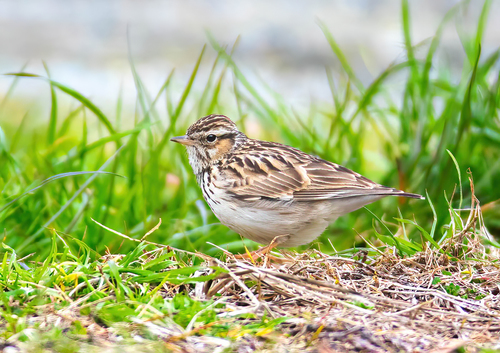
モリヒバリ (Lullula arborea) モリヒバリ
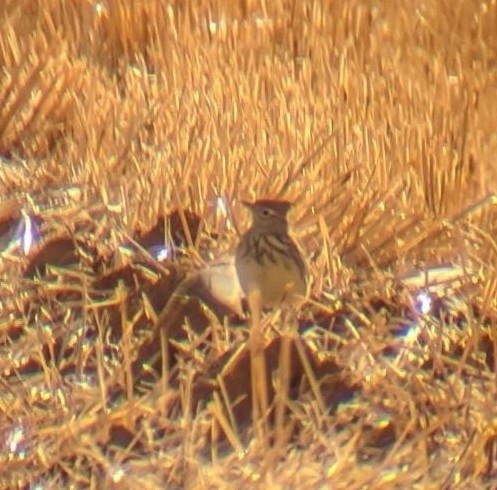
コバシカンムリヒバリ (Galerida theklae) コバシカンムリヒバリ

メディア

読み込み中…

要点

モリヒバリとコバシカンムリヒバリを区別する最も信頼できるフィールドマークは、モリヒバリの特徴的な白いスーペルシリウムで、後頭部で合流し、淡い「眉バンド」を形成することです—これはコバシカンムリヒバリには見られません。飛行中、モリヒバリは白い先端を持つ目立つ短い尾を持っていますが、尾の側面や後ろの翼の端には白がありません。一方、コバシカンムリヒバリは尾や翼に白がありません。構造的には、モリヒバリはコンパクトで短い尾と小さく、しばしば目立たない冠羽を持っていますが、コバシカンムリヒバリは尾が長く、目立つトゲトゲの冠羽を持っています。両者は上面が茶色がかり、下面が淡いですが、コバシカンムリヒバリは胸により重い縞模様があり、全体的に灰色です。生息地も役立ちます:モリヒバリは開けたヒースやクリアリングを好み、コバシカンムリヒバリは乾燥した石の多い高地を好みます。

識別のコツ

  1. スーペルシリウムが後頭部で合流(モリヒバリのみ): 後頭部で合流する太い白い眉のストライプを探してください。これはモリヒバリに特有で、すべての羽色で見られます。
  2. 冠羽の形とサイズ: モリヒバリの冠羽は小さく、通常目立たないです;コバシカンムリヒバリは長く、トゲトゲの立ち上がる冠羽を持ち、止まっている時や警戒している時にしばしば目立ちます。
  3. 尾の形と飛行中のパターン: モリヒバリは白い先端を持つ短い四角い尾を持っていますが、尾の側面や後ろの翼の端には白がありません。コバシカンムリヒバリは尾が長く、尾や翼に白がありません。
  4. 全体的な構造(ジズ): モリヒバリは短い尾と翼を持つコンパクトでずんぐりした体型です;コバシカンムリヒバリは尾が長く、コンパクトさが少なく、警戒している時により直立した姿勢を持っています。
  5. 胸の縞模様: コバシカンムリヒバリは胸に重い黒い縞模様を示します;モリヒバリは下面がより淡く、縞模様があまり目立ちません。
  6. 上面の色: コバシカンムリヒバリは上面がより灰色で、暗い縞模様がより目立ちます;モリヒバリは茶色がかりで、縞模様が少ないです。
  7. 飛行中の翼の下の色: コバシカンムリヒバリは灰色の翼の下を持っています;モリヒバリの翼の下の色は目立たないですが、赤みや強いコントラストがないため、カンムリヒバリとの混同を防ぎます。
  8. くちばし: コバシカンムリヒバリはカンムリヒバリよりも短くて太いくちばしを持っていますが、くちばしの形はフィールドでモリヒバリと強く区別するものではありません。
  9. 歌とディスプレイ: モリヒバリの歌は音楽的でフルーティーで、しばしばフラッタリングで円を描く歌の飛行中に歌われます。コバシカンムリヒバリの歌は音楽的ではなく、ここでは説明されていません。
  10. 生息地の文脈: モリヒバリは開けたヒース、クリアリング、松の植林地に見られます;コバシカンムリヒバリは乾燥した石の多い高地を好み、しばしば高所にいます。
  11. フラッシュされた時の行動: モリヒバリは通常、フラッタリングで波打つように上昇します;コバシカンムリヒバリはより直接的に飛び、着陸時に冠羽を見せることがあります。
  12. 季節性: モリヒバリは地域によっては定住または移動性ですが、両種はその範囲の一部に年間を通じて存在します;タイミングは強い区別要因ではありません。
  13. 性別と年齢: 両種の両性は似ています;これら二つのフィールドマークにおいて強い年齢関連の違いは指摘されていません。
  14. 一般的な落とし穴: モリヒバリをヒバリ(白い尾の端と長い尾を持つ)やコバシカンムリヒバリをカンムリヒバリ(赤い翼の下と長いくちばしを持つ)と混同しないように注意してください。このペアでは、後頭部のスーペルシリウムと冠羽の形に焦点を当ててください。
  15. 地域の豊富さ: 西ヨーロッパでは、モリヒバリはヒース地やクリアリングでより広く分布していますが、コバシカンムリヒバリはイベリア半島や北アフリカにより局所的です。

大きさ

両種はヒバリよりも小さいですが、モリヒバリはわずかに短く(13.5–15 cm)よりコンパクトで、特に短い尾を持っています。コバシカンムリヒバリも小柄ですが、モリヒバリよりも尾が少し長く、コンパクトさが少ないように見えます。メモには直接的な質量比較はありませんが、両者はサイズが似ており、モリヒバリが二つの中でより小柄でずんぐりしています。

羽色

すべての年齢において、モリヒバリは後頭部で合流する太い白いスーペルシリウムによって際立っており、淡い「襟」を形成します—これは止まっている時と飛行中の両方で見られます。コバシカンムリヒバリはこの特徴を示さず、代わりに平坦な顔と強いトゲトゲの冠羽を持っています。飛行中、モリヒバリは白い先端を持つ短い四角い尾を示しますが、尾の側面や後ろの翼の端には白がありません。一方、コバシカンムリヒバリは尾や翼に白がありません。コバシカンムリヒバリは全体的に上面が灰色で、胸に重い黒い縞模様があり、翼の下は灰色です(カンムリヒバリのような赤みはなく、モリヒバリのような淡さもありません)。モリヒバリは上面が茶色がかり、下面が淡く、胸の縞模様があまり目立ちません。両性は各種で似ており、これらのマークにおいて強い季節的または年齢関連の違いは指摘されていません。

行動

モリヒバリはしばしばフラッタリングで渦巻く歌の飛行中に歌い、かなり一定の高さで上昇し、円を描きます。または地面や止まり木から歌います。飛行は波打ち、短い丸い翼と短い尾を持っています。コバシカンムリヒバリはより地上性で、通常は開けた石の多い生息地で地面を歩いたり走ったりしているのが見られ、派手な歌の飛行を行う可能性は低いです。フラッシュされた時、コバシカンムリヒバリはより直接的で跳ねるような飛行をし、止まっている時には長くトゲトゲの冠羽がしばしば立てられます。

生息環境

モリヒバリは散在する木々のある開けた生息地を好み、ヒース地、松林のクリアリング、新しく植えられた苗木のある地域—特に西ヨーロッパや中央ヨーロッパで見られます。モリヒバリは岩の多い地面や乾燥した地面よりも砂地のヒースやクリアリングにより関連しています。一方、コバシカンムリヒバリは乾燥した開けた国の典型的な鳥で、しばしば高所に生息し、特にイベリア半島や北アフリカの石の多い、低木の生い茂った、または半乾燥の風景で一般的です。コバシカンムリヒバリは密な森林を避け、モリヒバリが好むより植生が豊かで湿った生息地ではめったに見られません。

声

モリヒバリの歌はメロディックで、しばしば「ルー・ルー・ルー」または「トゥールーイート」と表現されるさえずりの連続で、飛行中または止まり木から歌われます。コバシカンムリヒバリの歌はメモに記載されていませんが、一般的にモリヒバリよりも音楽的ではなく、よりざらざらしたりおしゃべりなものです。モリヒバリはシーズンの早い時期(イギリスでは2月から)に歌い始め、その歌の飛行は重要な行動の手がかりです。

より良い説明を送る

比較と同じ項目を使ってください。文章はすぐに公開されます。

The most reliable field mark to separate Woodlark from Thekla's Lark is the Woodlark's distinctive white supercilium that meets at the nape, forming a pale 'eyebrow band'—a feature Thekla's Lark never shows. In flight, Woodlark has a noticeably short tail with a white tip, but lacks white along the tail sides or rear wing edge, while Thekla's Lark shows no white in the tail or wings. Structurally, Woodlark is compact with a short tail and small, often inconspicuous crest, whereas Thekla's Lark is longer-tailed with a prominent, spiky crest. Both are brownish above and pale below, but Thekla's Lark is more heavily streaked on the breast and greyer overall. Habitat also helps: Woodlark prefers open heaths and clearings, while Thekla's Lark favors dry, stony uplands.

  1. Supercilium meeting at nape (Woodlark only): Look for the bold white eyebrow stripe that joins at the nape, forming a pale 'collar'—unique to Woodlark and visible in all plumages.
  2. Crest shape and size: Woodlark's crest is small and usually inconspicuous; Thekla's Lark has a long, spiky, erectile crest, often obvious when perched or alert.
  3. Tail shape and pattern in flight: Woodlark has a short, square tail with a white tip but no white on the tail sides or rear wing edge. Thekla's Lark has a longer tail with no white in the tail or wings.
  4. Overall structure (jizz): Woodlark is compact and dumpy with short tail and wings; Thekla's Lark is longer-tailed and less compact, with a more upright stance when alert.
  5. Breast streaking: Thekla's Lark shows heavy black streaking on the breast; Woodlark is paler below with less distinct streaking.
  6. Upperpart color: Thekla's Lark is greyer above with more pronounced dark streaks; Woodlark is browner and less streaked.
  7. Underwing color (in flight): Thekla's Lark has grey underwings; Woodlark's underwing color is not distinctive, but lack of reddish or strong contrast helps rule out confusion with Crested Lark.
  8. Bill: Thekla's Lark has a shorter, stubbier bill than Crested Lark, but bill shape is not a strong separator from Woodlark in the field.
  9. Song and display: Woodlark's song is musical and fluting, often given in a fluttering, circling song flight. Thekla's Lark's song is less musical and not described here.
  10. Habitat context: Woodlark is found in open heaths, clearings, and pine plantations; Thekla's Lark prefers dry, stony, or semi-arid uplands, often at altitude.
  11. Behavior when flushed: Woodlark typically rises with fluttering, undulating flight; Thekla's Lark flies more directly and may show its crest when landing.
  12. Seasonality: Woodlark may be resident or migratory depending on region, but both species are present year-round in parts of their range; timing is not a strong separator.
  13. Sex and age: Both sexes are similar in each species; no strong age-related differences in field marks are noted for these two.
  14. Common pitfalls: Beware confusing Woodlark with Skylark (which has white tail edges and longer tail) or Thekla's Lark with Crested Lark (which has reddish underwings and longer bill). For this pair, focus on the nape supercilium and crest shape.
  15. Local abundance: In western Europe, Woodlark is more widespread in heathland and clearings, while Thekla's Lark is more localized to the Iberian Peninsula and North Africa.

Both species are smaller than Eurasian Skylark, but Woodlark is slightly shorter (13.5–15 cm) and more compact, with a notably short tail. Thekla's Lark is also smallish, but appears a bit longer-tailed and less compact than Woodlark. There is no direct mass comparison in the notes, but both are similar in size, with Woodlark being the more diminutive and dumpier of the two.

For all ages, Woodlark stands out by its bold white supercilium that wraps around to meet at the nape, forming a pale 'collar'—this is visible both perched and in flight. Thekla's Lark never shows this feature, instead having a plain face with a strong, spiky crest. In flight, Woodlark shows a short, square tail with a white tip but no white on the tail sides or rear wing edge, while Thekla's Lark lacks any white in the tail or wings. Thekla's Lark is overall greyer above with heavier black streaking on the breast, and its underwings are grey (not reddish as in Crested Lark, nor pale as in Woodlark). Woodlark is browner above, paler below, and less heavily streaked on the breast. Both sexes are similar in each species; no strong seasonal or age-related differences are noted for these marks.

Woodlark often sings in fluttering, spiraling song flights, rising and circling at a fairly constant height, or sings from the ground or a perch. Its flight is undulating with short, rounded wings and a short tail. Thekla's Lark is more terrestrial, usually seen walking or running on the ground in open, stony habitats, and is less likely to perform showy song flights. When flushed, Thekla's Lark flies with a more direct, bounding flight, and its long, spiky crest is often raised when perched.

Woodlark prefers open habitats with scattered trees, such as heathland, clearings in pine forests, and newly planted areas with saplings—especially in western and central Europe. It is more associated with sandy heaths and clearings than with rocky or arid ground. Thekla's Lark, by contrast, is a classic bird of dry, open country, often at altitude, and is especially common in stony, scrubby, or semi-arid landscapes of the Iberian Peninsula and North Africa. It avoids dense woodland and is rarely found in the more vegetated, moist habitats favored by Woodlark.

Woodlark's song is a melodious, warbling series often described as 'lu-lu-lu' or 'toolooeet', delivered in flight or from a perch. Thekla's Lark's song is not described in the notes, but is generally less musical and more scratchy or chattering than Woodlark's. Woodlark starts singing early in the season (from February in Britain), and its song flight is a key behavioral clue.

変更を破棄しますか?

保存していない編集があります。今離れると失われます。

モリヒバリ · コバシカンムリヒバリ · 苦手な鳥