

Wing-banded Hornero vs River Tyrannulet
Furnarius figulus versus Serpophaga hypoleuca
Play a quiz with Wing-banded Hornero and River Tyrannulet
 Wing-banded Hornero
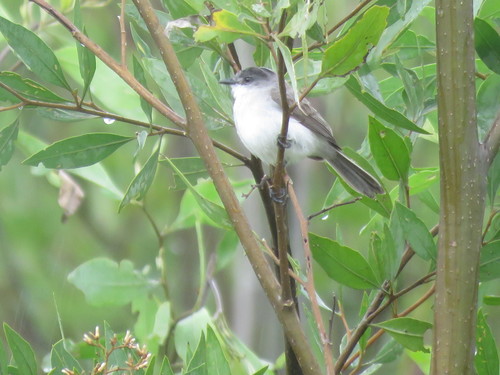 River Tyrannulet
In short
The most reliable field mark to separate Wing-banded Hornero from River Tyrannulet is the hornero’s rufous wings with two dark rufous bands, visible in all ages and especially obvious in flight. River Tyrannulet, by contrast, has plain dusky brownish gray wings without any rufous or banding. The hornero is also much larger and bulkier, with a longer, straighter bill and a chestnut-rufous crown, while the tyrannulet is a tiny, slim flycatcher with a blackish crown and white face. Both species can show a pale supercilium, but their overall structure, wing pattern, and coloration are very different. Even at a distance, the hornero’s warm rufous tones and size stand out against the tyrannulet’s gray and white palette.
Identification tips
- Rufous wing bands (all ages, perched or in flight): Only Wing-banded Hornero shows two dark rufous bands across the primaries, with rufous coverts and secondaries. River Tyrannulet’s wings are plain dusky brownish gray with no rufous or banding.
- Overall size and structure: Hornero is much larger and bulkier (15–16 cm, ~28 g) with a long, nearly straight bill; tyrannulet is tiny (10.5–12.5 cm, ~6 g), slim, and has a short, fine bill. If the bird looks small and delicate, it is not a hornero.
- Crown color: Hornero has a chestnut-rufous crown (darker in some subspecies), while tyrannulet has a black crown with hidden white central feathers. The difference is visible even at a distance.
- Tail color and shape: Hornero’s tail is chestnut-rufous with brownish black tips; tyrannulet’s tail is long, slim, and plain dusky, never rufous.
- Facial pattern: Both can show a pale supercilium, but hornero’s is broad and white above a dark eye-stripe, with dingy rufous lores and dull rufous ear coverts. Tyrannulet’s face is mostly white with a black eye-stripe and white lores, creating a more contrasting, sharp look.
- Underparts: Hornero’s underparts are pale tawny-brown with a whitish throat and belly center; tyrannulet’s are white with a pale gray breast wash, never tawny or brownish.
- Bill color: Hornero’s bill is brownish; tyrannulet’s is black. This can help at close range.
- Leg color: Hornero’s legs and feet are brownish; tyrannulet’s are dark gray. Useful if seen well.
- Behavior: Hornero is usually on the ground or low, walking or running; tyrannulet is more aerial, sallying out from low perches to catch insects.
- Habitat context: Hornero can be found in open areas, pastures, and even urban parks; tyrannulet is almost always in dense riverside shrubs or low branches near water.
- Vocalization: Hornero’s song is a loud, mechanical, staccato series; tyrannulet’s voice is not described here, but it will not match the hornero’s volume or rhythm.
- Geographic range: Hornero is endemic to Brazil (with two subspecies in different regions); tyrannulet is found in a wider range across northern South America. If outside Brazil, hornero is unlikely.
- Sex and age: Both species have similar plumage in both sexes and all ages, so sex is not a separator. Juvenile tyrannulets look like adults; hornero’s wing bands are present in all ages.
- Common pitfalls: Do not rely solely on the pale supercilium or white throat—both can show these. Always check for rufous tones and wing banding for hornero, and the cold gray/white pattern for tyrannulet.
- When in doubt: If the bird is tiny, plain gray and white, and actively flycatching near water, it is a River Tyrannulet. If it is larger, rufous, and walking on the ground or perched in an open area, it is a Wing-banded Hornero.
Size
Wing-banded Hornero is much larger (15–16 cm long, ~28 g) compared to the diminutive River Tyrannulet (10.5–12.5 cm, 5.5–6.7 g). The hornero appears stocky and robust, with a long, nearly straight bill, while the tyrannulet is tiny, slim, and delicate, with a short, fine bill. Even without direct comparison, the hornero’s size is closer to a thrush or small robin, while the tyrannulet is closer to a kinglet or small warbler. This size gap is obvious in the field, especially if both are seen near the same watercourse.
Plumage
- Juvenile/Immature/Adult (all ages):
- Wing-banded Hornero: Shows rufous wing coverts and secondaries, with primaries that are fuscous but crossed by two distinct dark rufous bands—these bands are visible both perched and in flight. The tail is chestnut-rufous with brownish black tips on the inner webs. The crown is chestnut-rufous, back and rump paler rufous, and the underparts are pale tawny-brown with a whitish throat and belly center. A broad white supercilium is present above a dark eye-stripe.
- River Tyrannulet: Wings are plain dusky brownish gray, lacking any rufous or banding. The tail is long and dusky, not rufous. The crown is black with hidden white central feathers, the face is mostly white with a black eye-stripe, and the upperparts are brownish gray. Underparts are white with a pale gray breast wash. No rufous or chestnut anywhere on the bird. Juveniles are like adults.
- Key contrast: The hornero’s rufous wing bands and overall warm coloration are unique; the tyrannulet is cold gray and white with no rufous tones.
Behaviour
Wing-banded Hornero is typically seen foraging on or near the ground, often walking or running with a purposeful, upright stance. It may be seen in pairs, sometimes near water or open areas. River Tyrannulet is much more active and aerial, often sallying out from low perches to catch insects, and usually found in shrubs or low branches close to water. The tyrannulet’s flycatching behavior and quick, darting movements contrast with the hornero’s deliberate, ground-based foraging.
Habitat
Both species are often found near water, but their habitat preferences differ in detail. Wing-banded Hornero favors semi-open to open landscapes such as woodlands, scrub, pastures, marsh edges, and even urban parks, usually near rivers or watercourses in Brazil. River Tyrannulet is more strictly tied to riparian habitats—shrubby or wooded edges of rivers and streams—across a wider range in northern South America. The hornero may be seen in drier or more open areas, while the tyrannulet is almost always close to dense riverside vegetation.
Voice
Wing-banded Hornero gives a loud, high, staccato series of 3–20 notes that decelerate and descend in pitch, often sung in duet. Calls include harsh 'djeep-djeep' and short notes like 'chibit' or 'kwee-eh'. River Tyrannulet’s voice is not described in the sources provided, so vocal differences are not diagnostic here. In practice, the hornero’s song is much louder and more mechanical than any small tyrannulet.