

Willet vs Greater Yellowlegs
Tringa semipalmata versus Tringa melanoleuca
Play a quiz with Willet and Greater Yellowlegs
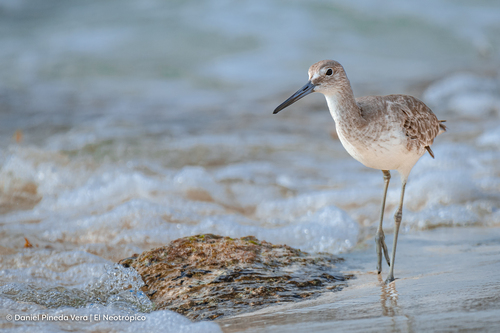 Willet
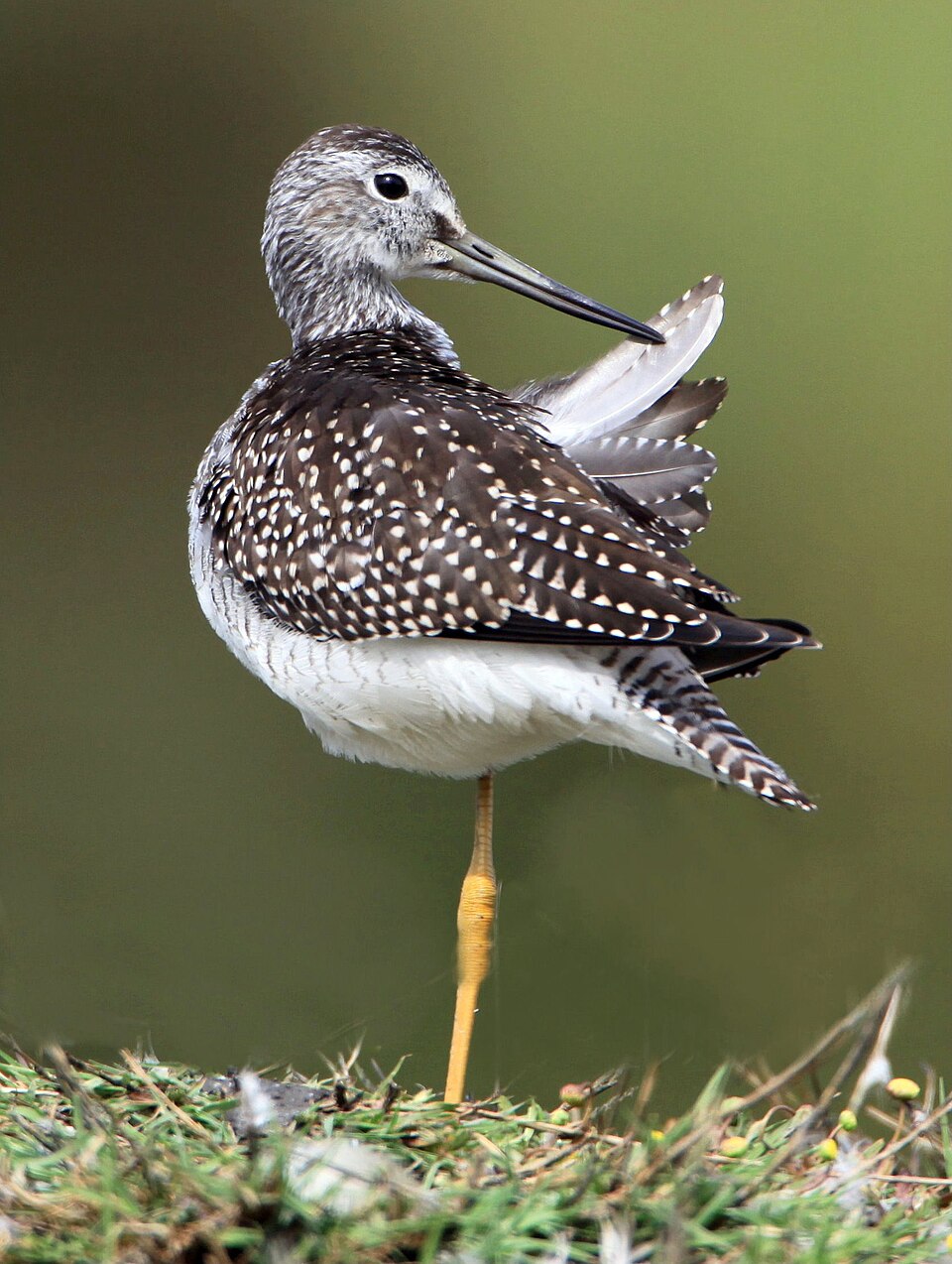 Greater Yellowlegs
In short
The most reliable field mark to separate Willet from Greater Yellowlegs is the bold black-and-white wing pattern of the Willet in flight, which is absent in Greater Yellowlegs. Willets are bulkier, with a heavier, straight bill and gray legs, while Greater Yellowlegs are slimmer, with long, bright yellow legs and a longer, slightly upturned bill. On the ground, Willets appear plain gray above and white below, while Greater Yellowlegs show more streaking and spotting on the neck and breast. Both species are large Tringa sandpipers, but Willet is noticeably heavier and more robust. Flight and structure are key, especially for immatures and non-breeding birds.
Identification tips
- In flight (all ages): Look for the Willet's bold black-and-white wing pattern: black primaries and coverts, broad white band, and white secondaries. Greater Yellowlegs lacks any wing pattern—its wings are plain gray-brown above.
- Rump and tail: Willet has a white rump with a gray tail band; Greater Yellowlegs has a white rump with no contrasting tail band.
- Bill shape: Willet's bill is straight, thick, and relatively short for its size. Greater Yellowlegs has a longer, thinner, slightly upturned bill that is longer than the head.
- Leg color: Willet has gray legs; Greater Yellowlegs has bright yellow legs. This is reliable when birds are close and lighting is good.
- Structure: Willet is bulkier, with a thick neck, deep chest, and a heavier build. Greater Yellowlegs is more slender, with longer legs and a more upright stance.
- Perched plumage (breeding): Willet is plain gray above with some brown barring, white below, and a pale face with a narrow eye ring. Greater Yellowlegs is gray-brown above with heavy, crisp dark streaks and spots on the neck and breast.
- Perched plumage (non-breeding/immature): Willet becomes plainer, but still lacks the neck and breast streaking of Greater Yellowlegs. Greater Yellowlegs always looks more patterned.
- Face pattern: Willet shows a white area above the lores and a narrow whitish eye ring, giving a 'spectacled' look. Greater Yellowlegs lacks this feature.
- Leg length: Even when standing, Greater Yellowlegs' legs look longer in proportion to body size.
- Feeding behavior: Willets often walk steadily and may wade deeply; Greater Yellowlegs is more active, often stirring water with its bill.
- Vocalizations: Greater Yellowlegs gives a loud, clear three-note whistle in flight; Willet's call is less sharp and more ringing.
- Group size: Willets may form loose groups, especially in winter; Greater Yellowlegs are more often solitary or in small flocks.
- Habitat context: Willets are more likely on saltmarshes and coastal flats; Greater Yellowlegs are common in freshwater and brackish habitats, but this is not diagnostic where ranges overlap.
- Size impression: If both species are together, Willet's greater bulk and heavier structure are obvious. Otherwise, use structure and plumage, not length, for ID.
- Common pitfalls: Immature and non-breeding Willets can appear plain and may be mistaken for yellowlegs if the wing pattern is not seen. Always try to see birds in flight for confirmation.
Size
Willet is significantly heavier and more robust than Greater Yellowlegs (Willet average mass: 287 g; Greater Yellowlegs: 170 g [wikidata]). Willets look stocky and thick-necked, with a shorter, heavier bill and shorter legs in proportion to body size. Greater Yellowlegs are slimmer, longer-legged, and have a more graceful, upright stance. Both species are similar in length (Willet: 31–41 cm; Greater Yellowlegs: 29–40 cm), but Willet's bulk is obvious in direct comparison.
Plumage
-
In flight (all ages): Willet shows a striking black-and-white wing pattern: black primaries and primary coverts, broad white wing band, white secondaries, white rump, and a gray tail band. This bold contrast is visible in all plumages and is unique among North American shorebirds. Greater Yellowlegs lacks any such wing pattern; its wings are plain gray-brown above with no white band or black panels, and the rump is white but not set off by contrasting tail or wing marks.
-
Perched (adults, breeding): Willet is plain gray above with brown barring in breeding plumage, white below, and a narrow whitish eye ring. Greater Yellowlegs is gray-brown above with heavy, crisp dark streaks and spots on the neck and breast, and a white belly. Both have white rumps, but only Willet has a gray tail band.
-
Non-breeding/immature: Willet becomes plainer, losing most barring, but still appears gray and white with a pale face. Greater Yellowlegs retains some streaking and is always more patterned on the neck and breast. No distinctive juvenile upperwing pattern is noted for either species beyond the Willet's adult-like wing band.
Behaviour
Willets are more robust and often feed by walking steadily and pecking or probing, sometimes wading up to their bellies. They can be vigilant and often perch on rocks, posts, or trees. Greater Yellowlegs also forage by wading and sometimes stir water with their bills, but appear more active and graceful, often moving quickly through shallows. Willets tend to form loose groups, while Greater Yellowlegs are often seen singly or in small flocks.
Habitat
Both species use similar wetland habitats, but Willets are more often found in saltmarshes, coastal mudflats, and beaches, especially in the east, while Greater Yellowlegs are more widespread in freshwater and brackish habitats, including inland marshes, ponds, and flooded fields. Overlap is common on migration and wintering grounds, so habitat alone is not diagnostic.
Voice
Greater Yellowlegs gives a loud, clear, three-syllable whistle in flight, with the third note lower in pitch. Willet's call is not described in detail here, but is generally less sharp and more ringing. Voice can help, but is less reliable than visual marks for these two.