

Motmot

White-winged Widowbird vs Grosbeak Weaver

Euplectes albonotatus versus Amblyospiza albifrons

Play a quiz with White-winged Widowbird and Grosbeak Weaver
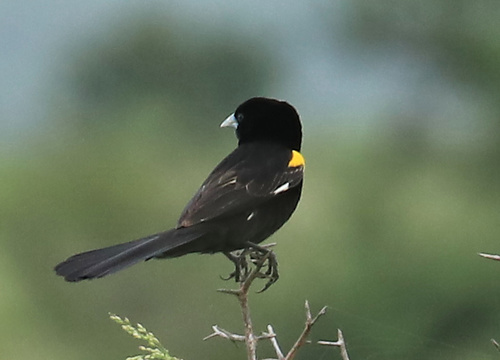
White-winged Widowbird (Euplectes albonotatus) White-winged Widowbird
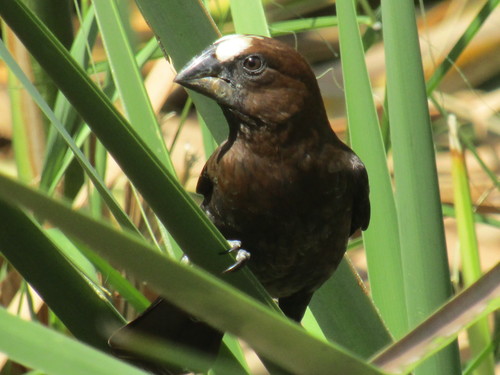
Grosbeak Weaver (Amblyospiza albifrons) Grosbeak Weaver

Media

Loading…

In short

The most reliable way to separate White-winged Widowbird from Grosbeak Weaver is by structure: the widowbird has a slender, short bill and, in breeding males, a short tail with bold white wing coverts, while the weaver is instantly recognized by its massive, conical bill and more robust, thickset appearance. In all plumages, Grosbeak Weaver lacks the white wing patches of male widowbirds and instead shows a uniform wing. Female and non-breeding widowbirds are much paler below than any Grosbeak Weaver. In flight or perched, focus first on bill size and wing pattern, then check for tail length and shape, and finally consider habitat and flocking behavior for context.

Identification tips

  1. Bill size and shape: Grosbeak Weaver has a massive, thick, conical bill—much larger and blunter than the slender, pointed bill of White-winged Widowbird. This is the single most reliable field mark at any distance or angle.
  2. Wing pattern (breeding males): Only breeding male White-winged Widowbirds show bold white patches on the wing coverts; Grosbeak Weaver never has white in the wing. If you see a short-tailed black bird with white in the wing, it's a widowbird.
  3. Tail length and shape: Breeding male widowbirds have a short tail (for a widowbird), while Grosbeak Weaver has a normal, square tail. Both lack the extremely long tails of some other widowbirds, but the weaver's tail is never as short as the widowbird's in display.
  4. Underparts color (females/immatures): Female and immature White-winged Widowbirds are pale below, while Grosbeak Weaver is more uniformly colored with little contrast between upperparts and underparts. If the belly is distinctly paler, suspect widowbird.
  5. Overall structure: Widowbirds are slimmer and more delicate, with longer legs and a lighter build. Grosbeak Weavers are thickset and heavy-bodied, with a strong, bull-headed look.
  6. Behavior: Grosbeak Weavers often fan and flick their tails, especially when perched. This behavior is less typical of widowbirds.
  7. Habitat: Grosbeak Weavers are strongly tied to reedbeds and marshes, often seen among reeds or at the edge of wetlands. White-winged Widowbirds are more flexible, using open grasslands, savannas, and even cultivated fields.
  8. Nest type (if visible): Grosbeak Weaver builds a globular nest suspended between reeds, with a side entrance near the top. Widowbird nests are oval and placed in trees or shrubs.
  9. Flocking: Both species can be seen in groups, but widowbirds are more likely to form large flocks in open country, while weavers are more colonial in dense reedbeds.
  10. Vocalizations: Listen for a harsh, unmusical song from the weaver; widowbird calls are simpler and more repetitive.
  11. Sexual dimorphism: Breeding male widowbirds are dramatically different from females and immatures, turning dark with white wing patches. Grosbeak Weaver shows less dramatic sexual dimorphism.
  12. Seasonal context: If you see a black, short-tailed bird with white in the wing during the breeding season, it's a male widowbird. Out of season, focus on bill size and underparts color.
  13. Potential confusion: Female and immature widowbirds can be confused with weavers, but always check for bill size (slender in widowbird, thick in weaver) and underparts color (pale in widowbird, uniform in weaver).
  14. Geographic overlap: Both species overlap widely in southern and eastern Africa, so do not rely on range alone.
  15. Hybridization: Not relevant for field ID between these two species; hybrids with bishops are only noted in widowbirds.

Size

White-winged Widowbird is a medium-sized weaver at about 21 g, while Grosbeak Weaver is similar or slightly heavier (precise mass not given, but it is a robust, thickset bird). Structurally, the widowbird is more slender with a finer bill and shorter tail (except in breeding males, where the tail is still short for a widowbird), while the weaver is bulkier, with a very large, thick, conical bill that is immediately obvious even at a distance. The widowbird's proportions are more delicate overall.

Plumage

Juvenile and non-breeding White-winged Widowbirds are pale below and lack the bold white wing coverts of breeding males, but always show a finer bill and paler underparts than any Grosbeak Weaver. Breeding male widowbirds are unique in their region for the combination of a short tail and prominent white on the wing coverts. Grosbeak Weaver, in all ages and sexes, lacks any white on the wing and is more uniformly colored, with no strong contrast between upperparts and underparts. Female and immature widowbirds may be confused with weavers, but their paler bellies and more slender bills are key. The weaver's plumage is less contrasting and its bill is always thick and blunt.

Behaviour

White-winged Widowbirds are often seen in flocks, especially outside the breeding season, and males are highly polygynous, displaying to several females. They build oval nests in trees or shrubs. Grosbeak Weavers also breed polygynously but are more often found in small colonies in reedbeds, where they construct distinctive, globular nests suspended between reeds. The weaver habitually fans and flicks its tail, a behavior less typical of widowbirds. Both species may be seen in groups, but the weaver is more likely to be in dense reedbeds, while widowbirds use a wider range of open habitats.

Habitat

White-winged Widowbird prefers savanna, grasslands, wetlands, and sometimes cultivated land—generally open country with scattered trees or shrubs. Grosbeak Weaver is strongly associated with reedy wetlands and marshes, and outside the breeding season may be found at forest edges or in suburban wetlands. If the bird is deep in a reedbed, especially among colonies of globular nests, Grosbeak Weaver is more likely; in open grassland or scattered bush, especially with flocks, expect White-winged Widowbird.

Voice

White-winged Widowbird gives a 'zeh-zeh-zeh' and 'witz-witz-witz' call, which is fairly simple. Grosbeak Weaver's song is described as unmusical and harsh, generally more grating and less melodic than the widowbird's calls. If you hear a harsh, unmusical series of notes, suspect Grosbeak Weaver; if the call is simpler and more repetitive, White-winged Widowbird is more likely.

Submit a better description

Use the same sections as the comparison. Your text is published immediately.

The most reliable way to separate White-winged Widowbird from Grosbeak Weaver is by structure: the widowbird has a slender, short bill and, in breeding males, a short tail with bold white wing coverts, while the weaver is instantly recognized by its massive, conical bill and more robust, thickset appearance. In all plumages, Grosbeak Weaver lacks the white wing patches of male widowbirds and instead shows a uniform wing. Female and non-breeding widowbirds are much paler below than any Grosbeak Weaver. In flight or perched, focus first on bill size and wing pattern, then check for tail length and shape, and finally consider habitat and flocking behavior for context.

  1. Bill size and shape: Grosbeak Weaver has a massive, thick, conical bill—much larger and blunter than the slender, pointed bill of White-winged Widowbird. This is the single most reliable field mark at any distance or angle.
  2. Wing pattern (breeding males): Only breeding male White-winged Widowbirds show bold white patches on the wing coverts; Grosbeak Weaver never has white in the wing. If you see a short-tailed black bird with white in the wing, it's a widowbird.
  3. Tail length and shape: Breeding male widowbirds have a short tail (for a widowbird), while Grosbeak Weaver has a normal, square tail. Both lack the extremely long tails of some other widowbirds, but the weaver's tail is never as short as the widowbird's in display.
  4. Underparts color (females/immatures): Female and immature White-winged Widowbirds are pale below, while Grosbeak Weaver is more uniformly colored with little contrast between upperparts and underparts. If the belly is distinctly paler, suspect widowbird.
  5. Overall structure: Widowbirds are slimmer and more delicate, with longer legs and a lighter build. Grosbeak Weavers are thickset and heavy-bodied, with a strong, bull-headed look.
  6. Behavior: Grosbeak Weavers often fan and flick their tails, especially when perched. This behavior is less typical of widowbirds.
  7. Habitat: Grosbeak Weavers are strongly tied to reedbeds and marshes, often seen among reeds or at the edge of wetlands. White-winged Widowbirds are more flexible, using open grasslands, savannas, and even cultivated fields.
  8. Nest type (if visible): Grosbeak Weaver builds a globular nest suspended between reeds, with a side entrance near the top. Widowbird nests are oval and placed in trees or shrubs.
  9. Flocking: Both species can be seen in groups, but widowbirds are more likely to form large flocks in open country, while weavers are more colonial in dense reedbeds.
  10. Vocalizations: Listen for a harsh, unmusical song from the weaver; widowbird calls are simpler and more repetitive.
  11. Sexual dimorphism: Breeding male widowbirds are dramatically different from females and immatures, turning dark with white wing patches. Grosbeak Weaver shows less dramatic sexual dimorphism.
  12. Seasonal context: If you see a black, short-tailed bird with white in the wing during the breeding season, it's a male widowbird. Out of season, focus on bill size and underparts color.
  13. Potential confusion: Female and immature widowbirds can be confused with weavers, but always check for bill size (slender in widowbird, thick in weaver) and underparts color (pale in widowbird, uniform in weaver).
  14. Geographic overlap: Both species overlap widely in southern and eastern Africa, so do not rely on range alone.
  15. Hybridization: Not relevant for field ID between these two species; hybrids with bishops are only noted in widowbirds.

White-winged Widowbird is a medium-sized weaver at about 21 g, while Grosbeak Weaver is similar or slightly heavier (precise mass not given, but it is a robust, thickset bird). Structurally, the widowbird is more slender with a finer bill and shorter tail (except in breeding males, where the tail is still short for a widowbird), while the weaver is bulkier, with a very large, thick, conical bill that is immediately obvious even at a distance. The widowbird's proportions are more delicate overall.

Juvenile and non-breeding White-winged Widowbirds are pale below and lack the bold white wing coverts of breeding males, but always show a finer bill and paler underparts than any Grosbeak Weaver. Breeding male widowbirds are unique in their region for the combination of a short tail and prominent white on the wing coverts. Grosbeak Weaver, in all ages and sexes, lacks any white on the wing and is more uniformly colored, with no strong contrast between upperparts and underparts. Female and immature widowbirds may be confused with weavers, but their paler bellies and more slender bills are key. The weaver's plumage is less contrasting and its bill is always thick and blunt.

White-winged Widowbirds are often seen in flocks, especially outside the breeding season, and males are highly polygynous, displaying to several females. They build oval nests in trees or shrubs. Grosbeak Weavers also breed polygynously but are more often found in small colonies in reedbeds, where they construct distinctive, globular nests suspended between reeds. The weaver habitually fans and flicks its tail, a behavior less typical of widowbirds. Both species may be seen in groups, but the weaver is more likely to be in dense reedbeds, while widowbirds use a wider range of open habitats.

White-winged Widowbird prefers savanna, grasslands, wetlands, and sometimes cultivated land—generally open country with scattered trees or shrubs. Grosbeak Weaver is strongly associated with reedy wetlands and marshes, and outside the breeding season may be found at forest edges or in suburban wetlands. If the bird is deep in a reedbed, especially among colonies of globular nests, Grosbeak Weaver is more likely; in open grassland or scattered bush, especially with flocks, expect White-winged Widowbird.

White-winged Widowbird gives a 'zeh-zeh-zeh' and 'witz-witz-witz' call, which is fairly simple. Grosbeak Weaver's song is described as unmusical and harsh, generally more grating and less melodic than the widowbird's calls. If you hear a harsh, unmusical series of notes, suspect Grosbeak Weaver; if the call is simpler and more repetitive, White-winged Widowbird is more likely.

Discard your changes?

You have unsaved edits. If you leave now, those changes will be lost.

White-winged Widowbird · Grosbeak Weaver · My Tricky Birds