

White-winged Scoter vs Stejneger's Scoter
Melanitta deglandi versus Melanitta stejnegeri
Play a quiz with White-winged Scoter and Stejneger's Scoter
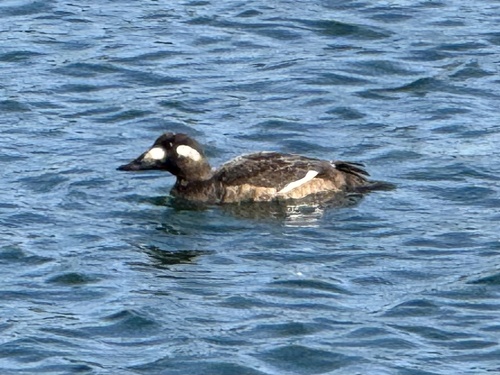 White-winged Scoter
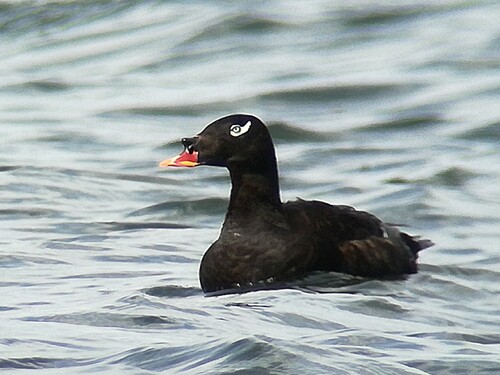 Stejneger's Scoter
In short
The most reliable field mark between White-winged Scoter and Stejneger's Scoter is the head and bill shape: White-winged shows a stepped profile with a right-angled feathering at the base of the bill, while Stejneger's has a long, sloping 'Roman nose' and an acute angle of feathering. Adult males also differ in bill knob height and color, but these marks can be subtle at distance. Females and immatures are extremely similar, but the head profile and the angle of feathering along the upper mandible remain the best clues. In flight, both species show a white secondary patch, so wing pattern is not a strong separator. Be cautious: young females and juveniles are especially challenging and often only safely identified with close, prolonged views.
Identification tips
- Head and Bill Shape (All Ages/Sexes): White-winged Scoter has a 'two-stepped' profile between the bill and forehead, with the feathering at the base of the upper mandible forming a right angle. Stejneger's Scoter shows a long, sloping 'Roman nose' profile, with feathering forming an acute angle. This is the most consistent field mark in all plumages.
- Bill Knob (Adult Males): White-winged Scoter males have a lower, less prominent bill knob, and the bill is mostly dark yellow with some orange and red. Stejneger's males have a very tall, prominent knob at the base of a mostly orange-yellow bill. This is best seen at close range or in good light.
- Flank Color (Adult Males): White-winged Scoter males have browner flanks compared to Stejneger's, which are darker overall. This is subtle and can be affected by light and posture.
- White Speculum (All Ages): Both species show a white secondary patch in the wing, visible in flight. This mark does not separate the two.
- Facial Pattern (Females/Juveniles): Both species' females and immatures can show white spots in front of and behind the eye, especially when young. The extent and presence of these spots is highly variable and overlaps; do not rely on this mark.
- Body Shape (Females): White-winged females tend to look bulkier with a more angular head, while Stejneger's appear longer-headed and sleeker, but this is subtle and subjective.
- Bill Feathering Angle (All Ages): At close range, look for the angle where the feathering meets the bill: right angle (White-winged), acute angle (Stejneger's). This can be hard to judge unless the bird is close and the bill is unobstructed.
- Juvenile Upperwing (Both): No diagnostic difference in the white wing patch; both show white secondaries in flight, so do not use this mark for separation.
- Sex Differences (Both): Second-year male White-winged Scoters resemble adults but have reduced eye markings and browner flanks; similar-aged Stejneger's males are not described in detail but are likely very similar.
- Seasonal Variation (Females): Adult females of both species can appear plain chocolate brown in winter, losing most facial contrast. Head shape and bill feathering remain the best clues.
- Range (North America): If seen outside Alaska or the Bering Sea region, Stejneger's Scoter is extremely rare, so geographic probability should be considered, but not relied upon for a positive ID.
- Flock Structure and Behavior: Both species form large, tight flocks and take off together; behavior does not help separate them.
- Size: Both are large scoters; size is not a reliable field mark.
- Voice: No distinctive vocal differences are described or diagnostic in the field.
- Pitfalls: Most mix-ups occur with females and immatures; even with good views, some birds may remain unidentifiable without close, detailed study. When in doubt, document the head and bill profile carefully.
Size
Both species are large sea ducks and are very similar in size, with White-winged Scoter being the largest North American scoter. Adult male White-winged Scoters average about 55 cm in length and 1,380 g, while females average 52.3 cm and 1,180 g. Stejneger's Scoter is also a large scoter, but no direct comparative measurements are provided; in the field, size is not a reliable separator between these two.
Plumage
For all ages and sexes, both species show a white secondary patch in the wing, visible in flight but often hidden when swimming. This patch is not diagnostic between the two. Juvenile male White-winged Scoters may show more extensive white on the greater secondary coverts than juvenile females, but this does not help separate them from Stejneger's. In adult males, White-winged Scoters have browner flanks and a mostly dark yellow bill with a lower, less prominent knob, while Stejneger's males have a taller, more pronounced knob at the base of a mostly orange-yellow bill. Female and immature plumage is highly variable in both, with White-winged tending to have a more 'stepped' head profile and Stejneger's a longer, sloping profile. Facial white spots in young females and juveniles are variable and overlap between species, so are not reliable. Adult females of both can appear plain brown in winter.
Behaviour
Both species are sea ducks that form large, tightly packed flocks on coastal waters. Their flight style and flocking behavior are similar, and both may take off together in groups. There are no strong behavioral differences to separate them in the field.
Habitat
White-winged Scoter breeds in North America near lakes, rivers, and coastal areas, while Stejneger's Scoter breeds in northern Asia and winters further south in Asia. In North America, Stejneger's is a rare visitor, mostly in Alaska. Both species use similar aquatic habitats when present, so habitat is not a reliable separator except in areas where Stejneger's is a vagrant.