

Motmot

White-throated Woodcreeper vs Lesser Woodcreeper

Xiphocolaptes albicollis versus Xiphorhynchus fuscus

Play a quiz with White-throated Woodcreeper and Lesser Woodcreeper
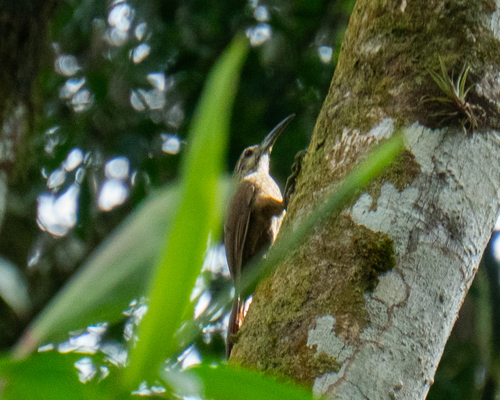
White-throated Woodcreeper (Xiphocolaptes albicollis) White-throated Woodcreeper
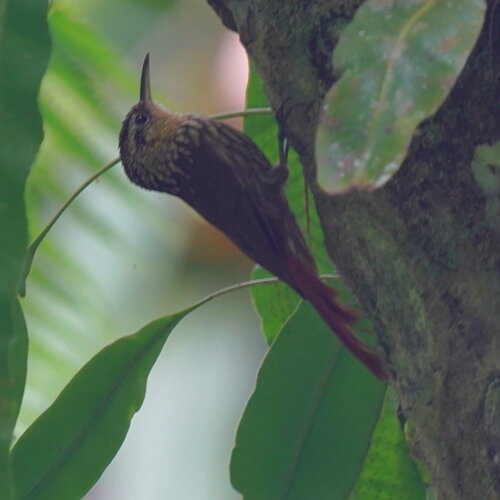
Lesser Woodcreeper (Xiphorhynchus fuscus) Lesser Woodcreeper

Media

Loading…

In short

The most reliable field mark between these two woodcreepers is their dramatic size difference: White-throated Woodcreeper is a massive, heavy-bodied bird, while Lesser Woodcreeper is slim and much smaller. If you see a woodcreeper with a long, thick, decurved bill and a bulky frame, it's White-throated; a slender bird with a finer, slightly decurved bill is Lesser. Juveniles of both are similar to adults, but White-throated juveniles show rusty-yellow crown spots, while Lesser juveniles have weaker underpart spotting. In perched or flight views, focus on overall bulk, bill shape, and throat color for quick separation.

Identification tips

  1. Size is the most immediate clue: White-throated Woodcreeper is huge and heavy-bodied (27.5–33 cm, 120 g), while Lesser Woodcreeper is small and slim (15–18.5 cm, 19.4 g). If you see two woodcreepers together, the size gap is unmistakable.
  2. Bill structure: White-throated has a thick, long, strongly decurved bill; Lesser has a much slimmer, slightly decurved bill. This is visible even at a distance or in silhouette.
  3. Throat color: White-throated shows a white to buffy white throat, contrasting with the darker face and underparts; Lesser has a plain creamy yellow throat, less contrasting with the rest of the underparts.
  4. Crown pattern: On White-throated, look for strong cream or buff streaks on a black crown; Lesser has smaller yellowish buff to cinnamon spots on a blackish brown crown. Juvenile White-throateds have rusty-yellow crown spots.
  5. Breast and belly markings: White-throated's breast and sides have bold pale streaks with dark edges, and the belly, thighs, and undertail coverts are distinctly barred. Lesser's underparts are smoky brown with a scaly look from dark-edged buff spots, not streaks or bars.
  6. Back and rump color: White-throated has a brownish olive back with a rusty-chestnut rump; Lesser's back is olive-brown to reddish brown, with a rufous-chestnut rump and tail.
  7. Tail color: Both have chestnut/rufous tails, but White-throated's is darker chestnut with darker shafts, while Lesser's is rufous-chestnut and matches the rump and flight feathers more closely.
  8. Supercilium and face: Both have a pale supercilium, but it is wider and more obvious in some White-throated subspecies. Both have dark faces, but White-throated's is more patterned (dark stripe behind eye, blackish cheek stripe).
  9. Juvenile differences: Juvenile White-throateds have rusty-yellow crown spots and a shorter bill; juvenile Lessers have weaker underpart spotting but otherwise look like adults.
  10. Flight and posture: White-throated appears heavy and slow in flight, with a shortish tail; Lesser is more agile and quick, with a longer-looking tail relative to its body.
  11. Leg and foot color: White-throated's legs and feet are variable but generally dark; Lesser's are olive-gray to bluish gray. This is a minor mark, best seen in photos or close views.
  12. Iris color: White-throated's iris is red to brown; Lesser's is dark brown. This is subtle and rarely diagnostic in the field.
  13. Bill color: White-throated's bill is black, sometimes with a horn-colored mandible; Lesser's maxilla is blackish brown to dark horn, mandible pinkish to white, sometimes with a darker tip.
  14. Subspecies variation: Some White-throated subspecies are paler overall, with weaker barring or streaking, but still much larger and bulkier than any Lesser.
  15. Habitat overlap: Both species can occur together, so do not rely on location or habitat alone for identification.

Size

White-throated Woodcreeper is exceptionally large for a woodcreeper, weighing about 120 g and measuring 27.5–33 cm in length. Its body is heavy, with a shortish tail and a thick, long, decurved bill. In contrast, Lesser Woodcreeper is much smaller and lighter, at only 19.4 g and 15–18.5 cm long. It is noticeably slim, with a longish but much finer bill. Even at a distance or in poor light, the size gap is striking—White-throated is nearly twice as long and over six times as heavy as Lesser.

Plumage

Juvenile White-throated Woodcreeper shows rusty-yellow spots on the crown, while juveniles of Lesser Woodcreeper have weaker spotting on the underparts but otherwise resemble adults. For adults, White-throated has a white to buffy white throat, bold pale streaks with dark edges on the breast and sides, and distinct barring on the belly, thighs, and undertail coverts. Its back is brownish olive with a rusty-chestnut rump, and the tail is dark chestnut. Lesser Woodcreeper adults have a plain creamy yellow throat, a scaly appearance on the breast and belly from dark-edged buff spots (not streaks), and cinnamon undertail and underwing coverts. Their back is olive-brown to reddish brown, with rufous-chestnut flight feathers, rump, and tail. The supercilium is wide and creamy to yellowish buff in both, but more obvious in some White-throated subspecies. Crown patterning differs: White-throated has strong cream to buff streaks on a black crown, while Lesser has small yellowish buff to cinnamon spots on a blackish brown crown.

Behaviour

Both species forage by climbing tree trunks and branches, but White-throated Woodcreeper's large size and heavy build give it a slower, more deliberate movement compared to the nimble, quick Lesser Woodcreeper. In flight, White-throated appears bulkier and less agile, while Lesser is more likely to move rapidly between perches. These behavioral differences are subtle and best used in combination with structural and plumage cues.

Habitat

Both species occur in Argentina, Brazil, and Paraguay, often within overlapping forested habitats. Habitat alone is not diagnostic between the two, as both can be found in similar environments within their shared range.

Submit a better description

Use the same sections as the comparison. Your text is published immediately.

The most reliable field mark between these two woodcreepers is their dramatic size difference: White-throated Woodcreeper is a massive, heavy-bodied bird, while Lesser Woodcreeper is slim and much smaller. If you see a woodcreeper with a long, thick, decurved bill and a bulky frame, it's White-throated; a slender bird with a finer, slightly decurved bill is Lesser. Juveniles of both are similar to adults, but White-throated juveniles show rusty-yellow crown spots, while Lesser juveniles have weaker underpart spotting. In perched or flight views, focus on overall bulk, bill shape, and throat color for quick separation.

  1. Size is the most immediate clue: White-throated Woodcreeper is huge and heavy-bodied (27.5–33 cm, 120 g), while Lesser Woodcreeper is small and slim (15–18.5 cm, 19.4 g). If you see two woodcreepers together, the size gap is unmistakable.
  2. Bill structure: White-throated has a thick, long, strongly decurved bill; Lesser has a much slimmer, slightly decurved bill. This is visible even at a distance or in silhouette.
  3. Throat color: White-throated shows a white to buffy white throat, contrasting with the darker face and underparts; Lesser has a plain creamy yellow throat, less contrasting with the rest of the underparts.
  4. Crown pattern: On White-throated, look for strong cream or buff streaks on a black crown; Lesser has smaller yellowish buff to cinnamon spots on a blackish brown crown. Juvenile White-throateds have rusty-yellow crown spots.
  5. Breast and belly markings: White-throated's breast and sides have bold pale streaks with dark edges, and the belly, thighs, and undertail coverts are distinctly barred. Lesser's underparts are smoky brown with a scaly look from dark-edged buff spots, not streaks or bars.
  6. Back and rump color: White-throated has a brownish olive back with a rusty-chestnut rump; Lesser's back is olive-brown to reddish brown, with a rufous-chestnut rump and tail.
  7. Tail color: Both have chestnut/rufous tails, but White-throated's is darker chestnut with darker shafts, while Lesser's is rufous-chestnut and matches the rump and flight feathers more closely.
  8. Supercilium and face: Both have a pale supercilium, but it is wider and more obvious in some White-throated subspecies. Both have dark faces, but White-throated's is more patterned (dark stripe behind eye, blackish cheek stripe).
  9. Juvenile differences: Juvenile White-throateds have rusty-yellow crown spots and a shorter bill; juvenile Lessers have weaker underpart spotting but otherwise look like adults.
  10. Flight and posture: White-throated appears heavy and slow in flight, with a shortish tail; Lesser is more agile and quick, with a longer-looking tail relative to its body.
  11. Leg and foot color: White-throated's legs and feet are variable but generally dark; Lesser's are olive-gray to bluish gray. This is a minor mark, best seen in photos or close views.
  12. Iris color: White-throated's iris is red to brown; Lesser's is dark brown. This is subtle and rarely diagnostic in the field.
  13. Bill color: White-throated's bill is black, sometimes with a horn-colored mandible; Lesser's maxilla is blackish brown to dark horn, mandible pinkish to white, sometimes with a darker tip.
  14. Subspecies variation: Some White-throated subspecies are paler overall, with weaker barring or streaking, but still much larger and bulkier than any Lesser.
  15. Habitat overlap: Both species can occur together, so do not rely on location or habitat alone for identification.

White-throated Woodcreeper is exceptionally large for a woodcreeper, weighing about 120 g and measuring 27.5–33 cm in length. Its body is heavy, with a shortish tail and a thick, long, decurved bill. In contrast, Lesser Woodcreeper is much smaller and lighter, at only 19.4 g and 15–18.5 cm long. It is noticeably slim, with a longish but much finer bill. Even at a distance or in poor light, the size gap is striking—White-throated is nearly twice as long and over six times as heavy as Lesser.

Juvenile White-throated Woodcreeper shows rusty-yellow spots on the crown, while juveniles of Lesser Woodcreeper have weaker spotting on the underparts but otherwise resemble adults. For adults, White-throated has a white to buffy white throat, bold pale streaks with dark edges on the breast and sides, and distinct barring on the belly, thighs, and undertail coverts. Its back is brownish olive with a rusty-chestnut rump, and the tail is dark chestnut. Lesser Woodcreeper adults have a plain creamy yellow throat, a scaly appearance on the breast and belly from dark-edged buff spots (not streaks), and cinnamon undertail and underwing coverts. Their back is olive-brown to reddish brown, with rufous-chestnut flight feathers, rump, and tail. The supercilium is wide and creamy to yellowish buff in both, but more obvious in some White-throated subspecies. Crown patterning differs: White-throated has strong cream to buff streaks on a black crown, while Lesser has small yellowish buff to cinnamon spots on a blackish brown crown.

Both species forage by climbing tree trunks and branches, but White-throated Woodcreeper's large size and heavy build give it a slower, more deliberate movement compared to the nimble, quick Lesser Woodcreeper. In flight, White-throated appears bulkier and less agile, while Lesser is more likely to move rapidly between perches. These behavioral differences are subtle and best used in combination with structural and plumage cues.

Both species occur in Argentina, Brazil, and Paraguay, often within overlapping forested habitats. Habitat alone is not diagnostic between the two, as both can be found in similar environments within their shared range.

Discard your changes?

You have unsaved edits. If you leave now, those changes will be lost.

White-throated Woodcreeper · Lesser Woodcreeper · My Tricky Birds