

White-throated Woodcreeper vs Lesser Woodcreeper
Xiphocolaptes albicollis contro Xiphorhynchus fuscus
Fai un quiz con White-throated Woodcreeper e Lesser Woodcreeper
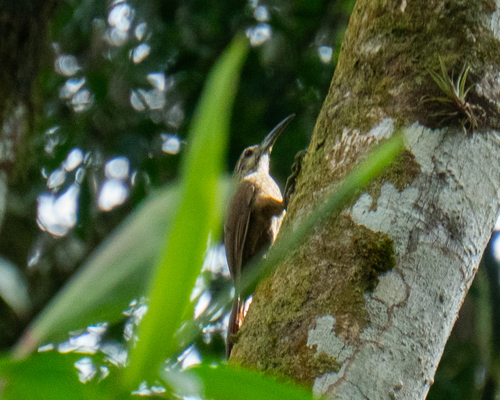 White-throated Woodcreeper
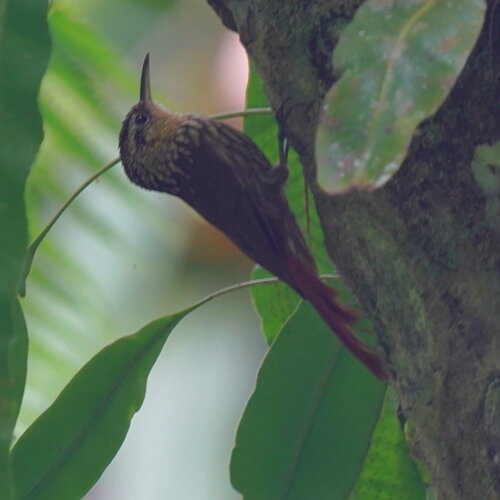 Lesser Woodcreeper
In breve
Il segno di campo più affidabile tra questi due woodcreeper è la loro drammatica differenza di dimensioni: il White-throated Woodcreeper è un uccello massiccio e pesante, mentre il Lesser Woodcreeper è snello e molto più piccolo. Se vedi un woodcreeper con un becco lungo, spesso e ricurvo e un corpo massiccio, è un White-throated; un uccello snello con un becco più fine e leggermente ricurvo è un Lesser. I giovani di entrambi sono simili agli adulti, ma i giovani White-throated mostrano macchie di corona giallo-rossicce, mentre i giovani Lesser hanno macchie più deboli nelle parti inferiori. In posizioni perpendicolari o in volo, concentrati sulla massa complessiva, sulla forma del becco e sul colore della gola per una separazione rapida.
Consigli di identificazione
- La dimensione è l'indizio più immediato: il White-throated Woodcreeper è enorme e pesante (27.5–33 cm, 120 g), mentre il Lesser Woodcreeper è piccolo e snello (15–18.5 cm, 19.4 g). Se vedi due woodcreeper insieme, il divario di dimensioni è inconfondibile.
- Struttura del becco: il White-throated ha un becco spesso, lungo e fortemente ricurvo; il Lesser ha un becco molto più snello e leggermente ricurvo. Questo è visibile anche da lontano o in silhouette.
- Colore della gola: il White-throated mostra una gola bianca a bianco sporco, in contrasto con il viso e le parti inferiori più scure; il Lesser ha una gola di un giallo crema uniforme, meno in contrasto con il resto delle parti inferiori.
- Motivo della corona: sul White-throated, cerca forti strisce crema o color sabbia su una corona nera; il Lesser ha piccole macchie giallo-sabbiose a cannella su una corona marrone scuro. I giovani White-throated hanno macchie di corona giallo-rossicce.
- Marcature del petto e dell'addome: il petto e i lati del White-throated hanno forti strisce chiare con bordi scuri, e l'addome, le cosce e le copritrici della coda sono distintamente barrati. Le parti inferiori del Lesser sono di un marrone fumoso con un aspetto squamoso da macchie di buff scure, non strisce o barre.
- Colore della schiena e del coda: il White-throated ha una schiena di un oliva marrone con un posteriore castano-rossiccio; la schiena del Lesser è di un marrone oliva a marrone rossiccio, con un posteriore e una coda color rufous-castano.
- Colore della coda: entrambi hanno code castano/rufous, ma quella del White-throated è di un castano più scuro con fusti più scuri, mentre quella del Lesser è castano-rufous e corrisponde più da vicino al posteriore e alle piume di volo.
- Supercilium e viso: entrambi hanno un supercilium chiaro, ma è più ampio e più evidente in alcune sottospecie di White-throated. Entrambi hanno visi scuri, ma quello del White-throated è più decorato (striscia scura dietro l'occhio, striscia nera sulla guancia).
- Differenze nei giovani: i giovani White-throated hanno macchie di corona giallo-rossicce e un becco più corto; i giovani Lesser hanno macchie più deboli nelle parti inferiori ma altrimenti assomigliano agli adulti.
- Volo e postura: il White-throated appare pesante e lento in volo, con una coda piuttosto corta; il Lesser è più agile e veloce, con una coda che appare più lunga rispetto al suo corpo.
- Colore delle gambe e dei piedi: le gambe e i piedi del White-throated sono variabili ma generalmente scuri; quelli del Lesser sono di un grigio oliva a grigio bluastro. Questo è un segno minore, meglio visibile in foto o in vista ravvicinata.
- Colore dell'iride: l'iride del White-throated è rossa a marrone; quella del Lesser è marrone scuro. Questo è sottile e raramente diagnostico sul campo.
- Colore del becco: il becco del White-throated è nero, a volte con una mandibola color corno; il mascellare del Lesser è marrone scuro a corno scuro, la mandibola è rosata a bianca, a volte con una punta più scura.
- Variazione delle sottospecie: alcune sottospecie di White-throated sono complessivamente più chiare, con barrature o striature più deboli, ma sono comunque molto più grandi e massicce di qualsiasi Lesser.
- Sovrapposizione dell'habitat: entrambe le specie possono verificarsi insieme, quindi non fare affidamento solo sulla posizione o sull'habitat per l'identificazione.
Taglia
Il White-throated Woodcreeper è eccezionalmente grande per un woodcreeper, pesando circa 120 g e misurando 27.5–33 cm di lunghezza. Il suo corpo è pesante, con una coda piuttosto corta e un becco spesso, lungo e ricurvo. Al contrario, il Lesser Woodcreeper è molto più piccolo e leggero, pesando solo 19.4 g e lungo 15–18.5 cm. È notevolmente snello, con un becco lungo ma molto più fine. Anche da lontano o in scarsa illuminazione, il divario di dimensioni è sorprendente: il White-throated è quasi due volte più lungo e oltre sei volte più pesante del Lesser.
Piumaggio
Il giovane White-throated Woodcreeper mostra macchie giallo-rossicce sulla corona, mentre i giovani del Lesser Woodcreeper hanno macchie più deboli sulle parti inferiori ma altrimenti assomigliano agli adulti. Per gli adulti, il White-throated ha una gola bianca a bianco sporco, forti strisce chiare con bordi scuri sul petto e sui lati, e barrature distinte sull'addome, le cosce e le copritrici della coda. La sua schiena è di un oliva marrone con un posteriore castano-rossiccio, e la coda è di un castano scuro. Gli adulti del Lesser Woodcreeper hanno una gola di un giallo crema uniforme, un aspetto squamoso sul petto e sull'addome da macchie di buff scure (non strisce), e copritrici della coda e dell'ala color cannella. La loro schiena è di un marrone oliva a marrone rossiccio, con piume di volo, posteriore e coda color rufous-castano. Il supercilium è ampio e di un crema a giallo chiaro in entrambi, ma più evidente in alcune sottospecie di White-throated. Il motivo della corona differisce: il White-throated ha forti strisce crema a sabbia su una corona nera, mentre il Lesser ha piccole macchie giallo-sabbiose a cannella su una corona marrone scuro.
Comportamento
Entrambe le specie si nutrono arrampicandosi sui tronchi e sui rami degli alberi, ma la grande dimensione e la struttura pesante del White-throated Woodcreeper gli conferiscono un movimento più lento e deliberato rispetto al nimble e veloce Lesser Woodcreeper. In volo, il White-throated appare più massiccio e meno agile, mentre il Lesser è più propenso a muoversi rapidamente tra i posatoi. Queste differenze comportamentali sono sottili e meglio utilizzate in combinazione con indizi strutturali e di piumaggio.
Habitat
Entrambe le specie si trovano in Argentina, Brasile e Paraguay, spesso all'interno di habitat forestali sovrapposti. L'habitat da solo non è diagnostico tra i due, poiché entrambi possono essere trovati in ambienti simili all'interno della loro area condivisa.
White-throated Woodcreeper · Lesser Woodcreeper · I miei uccelli difficili