

Motmot

White-tailed Ptarmigan vs Willow Ptarmigan

Lagopus leucura versus Lagopus lagopus

Play a quiz with White-tailed Ptarmigan and Willow Ptarmigan
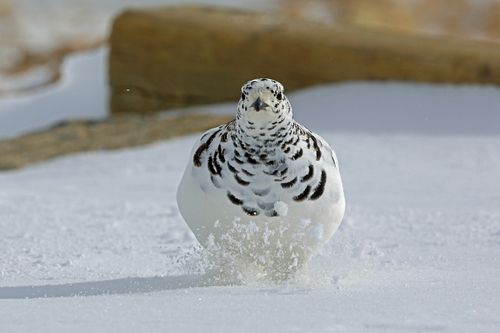
White-tailed Ptarmigan (Lagopus leucura) White-tailed Ptarmigan
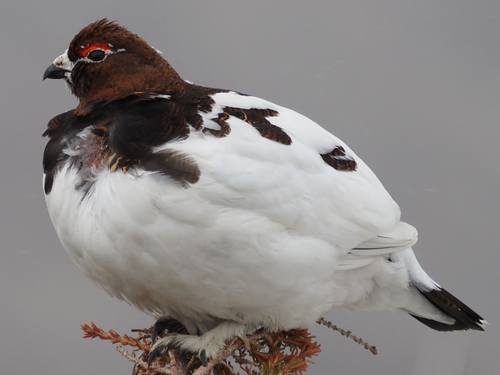
Willow Ptarmigan (Lagopus lagopus) Willow Ptarmigan

Media

Loading…

In short

The most reliable field mark between White-tailed Ptarmigan and Willow Ptarmigan is the tail: White-tailed Ptarmigan always shows an entirely white tail and white wings in all plumages, while Willow Ptarmigan has a black tail (except for the two central feathers) and white wings. In summer, White-tailed is finely barred grayish-brown above with a white belly and tail, contrasting with Willow's much browner, reddish-toned upperparts and black tail. White-tailed is much smaller and more compact, with a shorter bill and a preference for high alpine terrain above treeline, while Willow is larger, heavier, and found in lower, shrubbier habitats. These differences hold for all ages and seasons, but are especially apparent in flight or when the birds are flushed.

Identification tips

  1. Tail color is the single most reliable mark: White-tailed Ptarmigan always has an all-white tail, while Willow Ptarmigan has a black tail with only the central two feathers white. This is visible in flight, when flushed, or when the tail is fanned.
  2. Wing color: Both species have white wings year-round, but the combination of white wings and white tail is unique to White-tailed.
  3. Overall size and structure: Willow Ptarmigan is much larger and heavier, with a deep chest, longer neck, and broader bill. White-tailed is smaller, rounder, and more compact, with a shorter, finer bill.
  4. Bill size: Willow's bill is noticeably thicker and broader, especially when seen head-on or in profile.
  5. Summer upperparts: White-tailed has finely barred grayish-brown upperparts with a white belly and tail. Willow is much browner and redder above, with a reddish neck and breast.
  6. Winter plumage: Both species become mostly white, but Willow retains its black tail feathers, while White-tailed is entirely white.
  7. Female and immature plumage: Female Willow Ptarmigan has brown feathers mixed into the white belly, while female White-tailed has a clean white belly. Immature birds of both species resemble adults, but tail and wing patterns remain diagnostic.
  8. Habitat: White-tailed is only found in high alpine zones above treeline; Willow is found in lower, shrubbier, or moorland habitats, often near willows or birches.
  9. Behavior: White-tailed is more likely to be seen sitting quietly or walking among rocks and snow, rarely flying unless flushed. Willow is more likely to be seen in family groups or flocks, especially in late summer and fall.
  10. Eye combs: Both males have red eye combs, but this is not a reliable separation mark between these two species.
  11. Leg and foot feathering: Both species have feathered legs and feet, but this is not a useful separation mark.
  12. Flight jizz: In flight, White-tailed appears more compact and rounded, with a shorter tail and smaller wingspan relative to body size. Willow appears bulkier and longer-winged.
  13. Context: If you are above treeline in the Rockies or high mountains of western North America, White-tailed is far more likely. In shrubby tundra, moorland, or boreal forest edge, Willow is expected.
  14. Pitfall: In winter, both species can appear very similar at a distance, but the black tail of Willow is always present and diagnostic.
  15. When in doubt: Focus on the tail color and habitat—these two marks will separate all ages and sexes in the field.

Size

Willow Ptarmigan is substantially larger and heavier than White-tailed Ptarmigan. Willow averages about 650 g (range 430–810 g), with a length of 35–44 cm, making it the largest ptarmigan. White-tailed is the smallest grouse in North America, averaging 325 g and measuring 31–34 cm in length. In the field, White-tailed appears noticeably more compact and round-bodied, with a smaller, finer bill and shorter legs relative to body size. Willow is deep-chested, longer-necked, and has a broader bill.

Plumage

For all ages and seasons, White-tailed Ptarmigan has a completely white tail and white wings, even in summer and transitional plumages. Willow Ptarmigan always shows a black tail (except for the two central tail feathers, which are white) and white wings. In summer, White-tailed is finely barred grayish-brown above with a white belly, tail, and wings, and the pattern is achieved by light-brown marginal bands and small internal spots on the dark upperparts. Willow is much browner and redder above, with a reddish neck and breast, a black tail, and white wings and underparts; the female Willow has brown feathers scattered among the white belly. In winter, both species become mostly white, but Willow retains its black tail feathers, while White-tailed is entirely white. Immature birds of both species resemble adults, but the tail and upperwing pattern remain consistent and diagnostic.

Behaviour

White-tailed Ptarmigan is more sedentary, often avoiding flight and preferring to roost in snowbanks during winter. It is adapted to high alpine environments and tends to be less conspicuous, relying on cryptic coloration and stillness for camouflage. Willow Ptarmigan is more likely to be seen in family flocks in late summer and fall, and males are territorial and aggressive during the breeding season. Willow may migrate short distances to lower elevations in winter, while White-tailed remains resident in alpine zones year-round.

Habitat

White-tailed Ptarmigan is strictly an alpine species, found on or above the treeline in mountainous regions of western North America, including Alaska, western Canada, and the Rockies. It is rarely found below treeline. Willow Ptarmigan occupies lower elevations, breeding in birch and willow thickets, moorlands, and tundra across northern Eurasia and North America, including Newfoundland, Labrador, and Quebec. Willow is not typically found in the high, barren alpine habitats favored by White-tailed.

Voice

Both species are generally quiet, but White-tailed Ptarmigan is especially silent, sometimes giving low hoots or soft clucking. Willow Ptarmigan is also not noted for distinctive vocalizations in the provided notes, and voice is not a reliable field mark for separation.

Submit a better description

Use the same sections as the comparison. Your text is published immediately.

The most reliable field mark between White-tailed Ptarmigan and Willow Ptarmigan is the tail: White-tailed Ptarmigan always shows an entirely white tail and white wings in all plumages, while Willow Ptarmigan has a black tail (except for the two central feathers) and white wings. In summer, White-tailed is finely barred grayish-brown above with a white belly and tail, contrasting with Willow's much browner, reddish-toned upperparts and black tail. White-tailed is much smaller and more compact, with a shorter bill and a preference for high alpine terrain above treeline, while Willow is larger, heavier, and found in lower, shrubbier habitats. These differences hold for all ages and seasons, but are especially apparent in flight or when the birds are flushed.

  1. Tail color is the single most reliable mark: White-tailed Ptarmigan always has an all-white tail, while Willow Ptarmigan has a black tail with only the central two feathers white. This is visible in flight, when flushed, or when the tail is fanned.
  2. Wing color: Both species have white wings year-round, but the combination of white wings and white tail is unique to White-tailed.
  3. Overall size and structure: Willow Ptarmigan is much larger and heavier, with a deep chest, longer neck, and broader bill. White-tailed is smaller, rounder, and more compact, with a shorter, finer bill.
  4. Bill size: Willow's bill is noticeably thicker and broader, especially when seen head-on or in profile.
  5. Summer upperparts: White-tailed has finely barred grayish-brown upperparts with a white belly and tail. Willow is much browner and redder above, with a reddish neck and breast.
  6. Winter plumage: Both species become mostly white, but Willow retains its black tail feathers, while White-tailed is entirely white.
  7. Female and immature plumage: Female Willow Ptarmigan has brown feathers mixed into the white belly, while female White-tailed has a clean white belly. Immature birds of both species resemble adults, but tail and wing patterns remain diagnostic.
  8. Habitat: White-tailed is only found in high alpine zones above treeline; Willow is found in lower, shrubbier, or moorland habitats, often near willows or birches.
  9. Behavior: White-tailed is more likely to be seen sitting quietly or walking among rocks and snow, rarely flying unless flushed. Willow is more likely to be seen in family groups or flocks, especially in late summer and fall.
  10. Eye combs: Both males have red eye combs, but this is not a reliable separation mark between these two species.
  11. Leg and foot feathering: Both species have feathered legs and feet, but this is not a useful separation mark.
  12. Flight jizz: In flight, White-tailed appears more compact and rounded, with a shorter tail and smaller wingspan relative to body size. Willow appears bulkier and longer-winged.
  13. Context: If you are above treeline in the Rockies or high mountains of western North America, White-tailed is far more likely. In shrubby tundra, moorland, or boreal forest edge, Willow is expected.
  14. Pitfall: In winter, both species can appear very similar at a distance, but the black tail of Willow is always present and diagnostic.
  15. When in doubt: Focus on the tail color and habitat—these two marks will separate all ages and sexes in the field.

Willow Ptarmigan is substantially larger and heavier than White-tailed Ptarmigan. Willow averages about 650 g (range 430–810 g), with a length of 35–44 cm, making it the largest ptarmigan. White-tailed is the smallest grouse in North America, averaging 325 g and measuring 31–34 cm in length. In the field, White-tailed appears noticeably more compact and round-bodied, with a smaller, finer bill and shorter legs relative to body size. Willow is deep-chested, longer-necked, and has a broader bill.

For all ages and seasons, White-tailed Ptarmigan has a completely white tail and white wings, even in summer and transitional plumages. Willow Ptarmigan always shows a black tail (except for the two central tail feathers, which are white) and white wings. In summer, White-tailed is finely barred grayish-brown above with a white belly, tail, and wings, and the pattern is achieved by light-brown marginal bands and small internal spots on the dark upperparts. Willow is much browner and redder above, with a reddish neck and breast, a black tail, and white wings and underparts; the female Willow has brown feathers scattered among the white belly. In winter, both species become mostly white, but Willow retains its black tail feathers, while White-tailed is entirely white. Immature birds of both species resemble adults, but the tail and upperwing pattern remain consistent and diagnostic.

White-tailed Ptarmigan is more sedentary, often avoiding flight and preferring to roost in snowbanks during winter. It is adapted to high alpine environments and tends to be less conspicuous, relying on cryptic coloration and stillness for camouflage. Willow Ptarmigan is more likely to be seen in family flocks in late summer and fall, and males are territorial and aggressive during the breeding season. Willow may migrate short distances to lower elevations in winter, while White-tailed remains resident in alpine zones year-round.

White-tailed Ptarmigan is strictly an alpine species, found on or above the treeline in mountainous regions of western North America, including Alaska, western Canada, and the Rockies. It is rarely found below treeline. Willow Ptarmigan occupies lower elevations, breeding in birch and willow thickets, moorlands, and tundra across northern Eurasia and North America, including Newfoundland, Labrador, and Quebec. Willow is not typically found in the high, barren alpine habitats favored by White-tailed.

Both species are generally quiet, but White-tailed Ptarmigan is especially silent, sometimes giving low hoots or soft clucking. Willow Ptarmigan is also not noted for distinctive vocalizations in the provided notes, and voice is not a reliable field mark for separation.

Discard your changes?

You have unsaved edits. If you leave now, those changes will be lost.

White-tailed Ptarmigan · Willow Ptarmigan · My Tricky Birds