
Motmot

White-necked Jacobin vs Bronzy Hermit

Florisuga mellivora versus Glaucis aeneus

Play a quiz with White-necked Jacobin and Bronzy Hermit
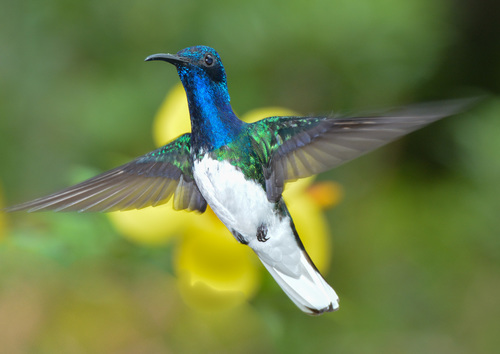
White-necked Jacobin (Florisuga mellivora) White-necked Jacobin
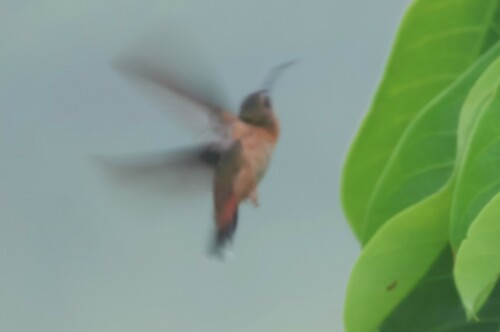
Bronzy Hermit (Glaucis aeneus) Bronzy Hermit

Media

Loading…

In short

The most reliable field mark to separate White-necked Jacobin from Bronzy Hermit is the jacobin male's striking blue head, white belly, and white tail with black tips—features never shown by the bronzy, which is uniformly bronzy-green above with a buffy underside and a distinctive white moustache. Females and immatures of the jacobin are more variable and can show green upperparts and a white belly, but still lack the bronzy's facial pattern and always have a much shorter, straighter bill. Bronzy Hermit is smaller, with a decurved bill, bronzy upperparts, and a buffy throat and belly, plus a white-tipped tail and a dusky face with a bold white moustache. Bill shape and facial pattern are crucial for separating females and immatures, especially in poor light or when colors are muted.

Identification tips

  1. Adult male jacobin is diagnostic: Deep blue head and chest, white belly, and white tail with black tips are unique—never matched by bronzy hermit of any age or sex.
  2. Bill shape is a key separator: Bronzy hermit always has a long, strongly decurved bill (especially in females), while jacobin's bill is straight and shorter. This is visible even at a distance or in silhouette.
  3. Facial pattern: Bronzy hermit shows a bold white moustache on a dusky face, lacking in jacobin of any age or sex. If you see a white facial stripe, it's bronzy.
  4. Underparts color: Bronzy hermit has a deep buff throat and breast with a pale buff belly, while jacobin (except some immatures) shows a white belly and blue or blue-green throat/chest (males/females). Immature jacobins may have bronzy tones but never the uniform buff of bronzy.
  5. Tail pattern: Jacobin males have a white tail with black tips; females and immatures have more green and blue but still lack the bronzy's tail pattern. Bronzy hermit has a gray-green tail above with white tips, and the underside is reddish at the base, blackish in the middle, and white at the tip—never all white or blue.
  6. Upperparts: Jacobin males have a bright green back, while bronzy is bronzy or coppery green above. Female jacobins are green above but lack the bronzy or coppery sheen.
  7. Size and structure: Jacobin is larger and bulkier, with a longer tail and more robust appearance. Bronzy is smaller and more delicate, with a slender body and proportionally longer, curved bill.
  8. Behavior at flowers: Jacobin may feed in groups and be aggressive, often high in the canopy or at edges. Bronzy hermit is solitary, traplining low in the understory.
  9. Perched posture: Jacobin often perches upright and exposed; bronzy hermit is more likely to perch low and hidden.
  10. Habitat context: In gardens, clearings, or high edges, jacobin is more likely; in dense, humid forest understory, bronzy is more probable.
  11. Female/immature confusion: Female jacobin can resemble a duller version of the male or even bronzy in poor light, but always lacks the white moustache and has a straighter bill. Immature jacobins may be bronzier on the throat/chest but never show the bronzy's uniform buff underparts or facial pattern.
  12. Tail in flight: Bronzy hermit's tail is less contrasting and shows a unique color pattern underneath; jacobin's tail (especially male) is brighter and more contrasting, especially from below.
  13. Voice: If you hear a series of high-pitched 'tseee' notes, it's jacobin. Bronzy's calls are not described here, so rely on visual marks.
  14. Sex differences: Bronzy hermit sexes look alike except for bill curvature (female more curved); jacobin sexes differ, but females are variable and can resemble immatures.
  15. Pitfall: Immature jacobins can be confusingly bronzy or greenish, but will always lack the bronzy's white moustache and decurved bill. Focus on face and bill for tough birds.

Size

White-necked Jacobin is noticeably larger, measuring 11–12 cm in length and weighing 6–9.2 g (males slightly heavier than females). Bronzy Hermit is smaller and lighter at 9–10 cm and 3–6.5 g. In the field, jacobin often looks more robust and longer-tailed, while bronzy appears compact and slender, partly due to its shorter overall length and more delicate build. The jacobin's size difference is most apparent when both species are seen together at feeders or flowering trees.

Plumage

No age-specific upperwing or flight pattern marks are described for either species, so focus is on body and tail plumage. Adult male White-necked Jacobin is unmistakable: deep blue head and chest, sharply white belly, and a white tail with black tips. A white nape band sets off the blue head from the bright green back. Female jacobins are variable but usually have green upperparts, a blue-green scaled throat, white belly, and a mostly green tail with blue at the end; some can resemble immatures or even dull males. Immature males may look like females but tend to show more white in the tail, while immature females are bronzier on the throat/chest and have less white in the tail. Bronzy Hermit of all ages and sexes is much plainer: bronzy or coppery green above, deep buff throat and breast, pale buff belly, and a face with a bold white moustache on a dusky background. The tail is gray-green above with white tips, and underneath shows reddish at the base, blackish in the middle, and white at the tip. The bronzy never shows the jacobin's blue, white, or sharply contrasting pattern.

Behaviour

White-necked Jacobin is often seen feeding at flowers high in the canopy or at forest edges, sometimes in small, aggressive groups. It is not highly territorial except at rich food sources. Both sexes will sally for insects from perches. Bronzy Hermit is more likely to be seen low in the understory, moving quickly between flowers, often along a regular route (traplining). Its flight is typically more direct and less showy than the jacobin's, and it rarely joins aggressive feeding groups. In perched birds, jacobin often sits more upright and exposed, while bronzy hermit tends to be more skulking and hidden.

Habitat

White-necked Jacobin uses a wide range of habitats from Mexico to northern South America, including forest edges, clearings, and gardens, and is also found on Trinidad and Tobago. Bronzy Hermit is more restricted to humid lowland forests and edges in Central and northwestern South America, and is less likely to be found in open or disturbed habitats. If you are in dense forest understory, bronzy is more likely; at higher, more open edges or gardens, jacobin is more probable.

Voice

White-necked Jacobin is not highly vocal, but its song is a long series of high-pitched single notes ('tseee...tseee...'), and calls include short 'tsik' and longer 'sweet' notes, plus a descending 'swee-swee-swee' in aggressive encounters. Bronzy Hermit vocalizations are not detailed in the notes, so voice is not a reliable separator unless the jacobin's distinctive song is heard.

Submit a better description

Use the same sections as the comparison. Your text is published immediately.

The most reliable field mark to separate White-necked Jacobin from Bronzy Hermit is the jacobin male's striking blue head, white belly, and white tail with black tips—features never shown by the bronzy, which is uniformly bronzy-green above with a buffy underside and a distinctive white moustache. Females and immatures of the jacobin are more variable and can show green upperparts and a white belly, but still lack the bronzy's facial pattern and always have a much shorter, straighter bill. Bronzy Hermit is smaller, with a decurved bill, bronzy upperparts, and a buffy throat and belly, plus a white-tipped tail and a dusky face with a bold white moustache. Bill shape and facial pattern are crucial for separating females and immatures, especially in poor light or when colors are muted.

  1. Adult male jacobin is diagnostic: Deep blue head and chest, white belly, and white tail with black tips are unique—never matched by bronzy hermit of any age or sex.
  2. Bill shape is a key separator: Bronzy hermit always has a long, strongly decurved bill (especially in females), while jacobin's bill is straight and shorter. This is visible even at a distance or in silhouette.
  3. Facial pattern: Bronzy hermit shows a bold white moustache on a dusky face, lacking in jacobin of any age or sex. If you see a white facial stripe, it's bronzy.
  4. Underparts color: Bronzy hermit has a deep buff throat and breast with a pale buff belly, while jacobin (except some immatures) shows a white belly and blue or blue-green throat/chest (males/females). Immature jacobins may have bronzy tones but never the uniform buff of bronzy.
  5. Tail pattern: Jacobin males have a white tail with black tips; females and immatures have more green and blue but still lack the bronzy's tail pattern. Bronzy hermit has a gray-green tail above with white tips, and the underside is reddish at the base, blackish in the middle, and white at the tip—never all white or blue.
  6. Upperparts: Jacobin males have a bright green back, while bronzy is bronzy or coppery green above. Female jacobins are green above but lack the bronzy or coppery sheen.
  7. Size and structure: Jacobin is larger and bulkier, with a longer tail and more robust appearance. Bronzy is smaller and more delicate, with a slender body and proportionally longer, curved bill.
  8. Behavior at flowers: Jacobin may feed in groups and be aggressive, often high in the canopy or at edges. Bronzy hermit is solitary, traplining low in the understory.
  9. Perched posture: Jacobin often perches upright and exposed; bronzy hermit is more likely to perch low and hidden.
  10. Habitat context: In gardens, clearings, or high edges, jacobin is more likely; in dense, humid forest understory, bronzy is more probable.
  11. Female/immature confusion: Female jacobin can resemble a duller version of the male or even bronzy in poor light, but always lacks the white moustache and has a straighter bill. Immature jacobins may be bronzier on the throat/chest but never show the bronzy's uniform buff underparts or facial pattern.
  12. Tail in flight: Bronzy hermit's tail is less contrasting and shows a unique color pattern underneath; jacobin's tail (especially male) is brighter and more contrasting, especially from below.
  13. Voice: If you hear a series of high-pitched 'tseee' notes, it's jacobin. Bronzy's calls are not described here, so rely on visual marks.
  14. Sex differences: Bronzy hermit sexes look alike except for bill curvature (female more curved); jacobin sexes differ, but females are variable and can resemble immatures.
  15. Pitfall: Immature jacobins can be confusingly bronzy or greenish, but will always lack the bronzy's white moustache and decurved bill. Focus on face and bill for tough birds.

White-necked Jacobin is noticeably larger, measuring 11–12 cm in length and weighing 6–9.2 g (males slightly heavier than females). Bronzy Hermit is smaller and lighter at 9–10 cm and 3–6.5 g. In the field, jacobin often looks more robust and longer-tailed, while bronzy appears compact and slender, partly due to its shorter overall length and more delicate build. The jacobin's size difference is most apparent when both species are seen together at feeders or flowering trees.

No age-specific upperwing or flight pattern marks are described for either species, so focus is on body and tail plumage. Adult male White-necked Jacobin is unmistakable: deep blue head and chest, sharply white belly, and a white tail with black tips. A white nape band sets off the blue head from the bright green back. Female jacobins are variable but usually have green upperparts, a blue-green scaled throat, white belly, and a mostly green tail with blue at the end; some can resemble immatures or even dull males. Immature males may look like females but tend to show more white in the tail, while immature females are bronzier on the throat/chest and have less white in the tail. Bronzy Hermit of all ages and sexes is much plainer: bronzy or coppery green above, deep buff throat and breast, pale buff belly, and a face with a bold white moustache on a dusky background. The tail is gray-green above with white tips, and underneath shows reddish at the base, blackish in the middle, and white at the tip. The bronzy never shows the jacobin's blue, white, or sharply contrasting pattern.

White-necked Jacobin is often seen feeding at flowers high in the canopy or at forest edges, sometimes in small, aggressive groups. It is not highly territorial except at rich food sources. Both sexes will sally for insects from perches. Bronzy Hermit is more likely to be seen low in the understory, moving quickly between flowers, often along a regular route (traplining). Its flight is typically more direct and less showy than the jacobin's, and it rarely joins aggressive feeding groups. In perched birds, jacobin often sits more upright and exposed, while bronzy hermit tends to be more skulking and hidden.

White-necked Jacobin uses a wide range of habitats from Mexico to northern South America, including forest edges, clearings, and gardens, and is also found on Trinidad and Tobago. Bronzy Hermit is more restricted to humid lowland forests and edges in Central and northwestern South America, and is less likely to be found in open or disturbed habitats. If you are in dense forest understory, bronzy is more likely; at higher, more open edges or gardens, jacobin is more probable.

White-necked Jacobin is not highly vocal, but its song is a long series of high-pitched single notes ('tseee...tseee...'), and calls include short 'tsik' and longer 'sweet' notes, plus a descending 'swee-swee-swee' in aggressive encounters. Bronzy Hermit vocalizations are not detailed in the notes, so voice is not a reliable separator unless the jacobin's distinctive song is heard.

Discard your changes?

You have unsaved edits. If you leave now, those changes will be lost.

White-necked Jacobin · Bronzy Hermit · My Tricky Birds