

Motmot

White-backed Duck vs Angola Batis

Thalassornis leuconotus versus Batis minulla

Play a quiz with White-backed Duck and Angola Batis
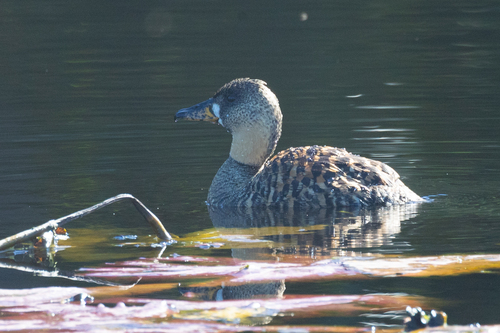
White-backed Duck (Thalassornis leuconotus) White-backed Duck
Angola Batis (Batis minulla) Angola Batis

Media

Loading…

In short

The most reliable way to separate White-backed Duck from Angola Batis is by overall structure and size: the duck is a massive, heavy-bodied waterbird, while the batis is a tiny, active songbird. In the field, even at a distance, the duck’s bulk, floating posture, and aquatic setting are instantly different from the batis’s restless, upright stance and arboreal habits. Plumage is not remotely similar, but if you are forced to compare, note the batis’s crisp pied pattern and bold face mask versus the duck’s more muted, duck-like tones. Age-specific wing patterns are not described for either species, so focus on jizz, size, and context.

Identification tips

  1. Size is the first check: If the bird is anything close to duck-sized, it cannot be Angola Batis. Conversely, if it is tiny and perching on twigs, it is not a duck.
  2. Habitat context: Ducks are on water; batises are in trees or shrubs. A bird swimming or diving is a duck; a bird flitting through branches is a batis.
  3. Overall shape and structure: White-backed Duck is heavy-bodied, broad-billed, and sits low in the water. Angola Batis is compact, short-billed, and perches upright.
  4. Facial pattern: Angola Batis males have a bold black mask and white spots on the face and nape; females have a chestnut breast band. The duck lacks any such facial markings.
  5. Wing pattern: Angola Batis shows a white wing stripe and black flight feathers with narrow white edges; the duck does not have a wing stripe or strong contrast in the wing.
  6. Tail: Angola Batis has a black tail with white outer feathers, often flicked; the duck’s tail is short and not contrasting.
  7. Underparts: Batises have clean white underparts with a sharp black (male) or chestnut (female) breast band. The duck’s underparts are not sharply marked.
  8. Eye color: Angola Batis has bright yellow eyes, which can be noticeable at close range. The duck’s eye color is not described as distinctive.
  9. Bill: The duck has a broad, flat bill typical of waterfowl; the batis has a small, pointed bill suited for insect-eating.
  10. Behavior: Watch for diving or swimming (duck) versus active, hopping, and wing-flicking (batis).
  11. Jizz in flight: The duck flies with slow, deep wingbeats and a heavy silhouette; the batis is rapid, agile, and flits between perches.
  12. Sex differences: Only relevant for batis—females have a chestnut, not black, breast band.
  13. No age-specific confusion: No special juvenile or immature wing patterns are described for either species, so age is not a major pitfall.
  14. No vocal confusion: Calls and songs are not described, but these species are so different that voice is unlikely to be needed for separation.
  15. Geographic context: Both are African, but habitat (water vs woodland) is the key separator in the field.

Size

White-backed Duck is dramatically larger, weighing about 707 g compared to the Angola Batis’s mere 9.8 g. The duck is a full-sized waterfowl, while the batis is a small, sparrow-sized passerine. Even without direct comparison, the duck’s size and mass are unmistakable in the field, especially when seen on open water. The batis is petite, around 10 cm long, and would look minuscule next to any duck.

Plumage

No age-specific wing or flight patterns are described for either species, so focus on adult plumage. The White-backed Duck has a generally subdued, duck-like appearance, lacking any strong facial or wing pattern. In contrast, adult male Angola Batis is strikingly pied: it shows a bluish-grey crown, black mask, white spots on the lores and nape, a white wing stripe, and a bold black breast band (chestnut in females). The batis’s underparts are clean white, and the tail is black with white outer feathers. The duck does not show any of these sharp contrasts or facial markings. The batis’s wing stripe and mask are especially obvious when perched or in active foraging, while the duck’s plumage is more camouflaged for aquatic life.

Behaviour

White-backed Duck is a slow, buoyant swimmer, often seen floating low in the water or diving. It is generally sedentary and unobtrusive. Angola Batis, on the other hand, is restless and energetic, constantly moving through branches, flicking wings and tail, and rarely sitting still. The batis’s active, upright posture and quick movements are completely unlike the duck’s slow, floating behavior.

Habitat

White-backed Duck is always found on or near water—lakes, marshes, and ponds—rarely venturing far from aquatic habitats. Angola Batis is strictly terrestrial, inhabiting wooded or bushy areas in western central Africa, and is never seen on water. If the bird is in a tree or shrub, especially away from water, it is almost certainly a batis; if it is swimming or diving, it is a duck.

Submit a better description

Use the same sections as the comparison. Your text is published immediately.

The most reliable way to separate White-backed Duck from Angola Batis is by overall structure and size: the duck is a massive, heavy-bodied waterbird, while the batis is a tiny, active songbird. In the field, even at a distance, the duck’s bulk, floating posture, and aquatic setting are instantly different from the batis’s restless, upright stance and arboreal habits. Plumage is not remotely similar, but if you are forced to compare, note the batis’s crisp pied pattern and bold face mask versus the duck’s more muted, duck-like tones. Age-specific wing patterns are not described for either species, so focus on jizz, size, and context.

  1. Size is the first check: If the bird is anything close to duck-sized, it cannot be Angola Batis. Conversely, if it is tiny and perching on twigs, it is not a duck.
  2. Habitat context: Ducks are on water; batises are in trees or shrubs. A bird swimming or diving is a duck; a bird flitting through branches is a batis.
  3. Overall shape and structure: White-backed Duck is heavy-bodied, broad-billed, and sits low in the water. Angola Batis is compact, short-billed, and perches upright.
  4. Facial pattern: Angola Batis males have a bold black mask and white spots on the face and nape; females have a chestnut breast band. The duck lacks any such facial markings.
  5. Wing pattern: Angola Batis shows a white wing stripe and black flight feathers with narrow white edges; the duck does not have a wing stripe or strong contrast in the wing.
  6. Tail: Angola Batis has a black tail with white outer feathers, often flicked; the duck’s tail is short and not contrasting.
  7. Underparts: Batises have clean white underparts with a sharp black (male) or chestnut (female) breast band. The duck’s underparts are not sharply marked.
  8. Eye color: Angola Batis has bright yellow eyes, which can be noticeable at close range. The duck’s eye color is not described as distinctive.
  9. Bill: The duck has a broad, flat bill typical of waterfowl; the batis has a small, pointed bill suited for insect-eating.
  10. Behavior: Watch for diving or swimming (duck) versus active, hopping, and wing-flicking (batis).
  11. Jizz in flight: The duck flies with slow, deep wingbeats and a heavy silhouette; the batis is rapid, agile, and flits between perches.
  12. Sex differences: Only relevant for batis—females have a chestnut, not black, breast band.
  13. No age-specific confusion: No special juvenile or immature wing patterns are described for either species, so age is not a major pitfall.
  14. No vocal confusion: Calls and songs are not described, but these species are so different that voice is unlikely to be needed for separation.
  15. Geographic context: Both are African, but habitat (water vs woodland) is the key separator in the field.

White-backed Duck is dramatically larger, weighing about 707 g compared to the Angola Batis’s mere 9.8 g. The duck is a full-sized waterfowl, while the batis is a small, sparrow-sized passerine. Even without direct comparison, the duck’s size and mass are unmistakable in the field, especially when seen on open water. The batis is petite, around 10 cm long, and would look minuscule next to any duck.

No age-specific wing or flight patterns are described for either species, so focus on adult plumage. The White-backed Duck has a generally subdued, duck-like appearance, lacking any strong facial or wing pattern. In contrast, adult male Angola Batis is strikingly pied: it shows a bluish-grey crown, black mask, white spots on the lores and nape, a white wing stripe, and a bold black breast band (chestnut in females). The batis’s underparts are clean white, and the tail is black with white outer feathers. The duck does not show any of these sharp contrasts or facial markings. The batis’s wing stripe and mask are especially obvious when perched or in active foraging, while the duck’s plumage is more camouflaged for aquatic life.

White-backed Duck is a slow, buoyant swimmer, often seen floating low in the water or diving. It is generally sedentary and unobtrusive. Angola Batis, on the other hand, is restless and energetic, constantly moving through branches, flicking wings and tail, and rarely sitting still. The batis’s active, upright posture and quick movements are completely unlike the duck’s slow, floating behavior.

White-backed Duck is always found on or near water—lakes, marshes, and ponds—rarely venturing far from aquatic habitats. Angola Batis is strictly terrestrial, inhabiting wooded or bushy areas in western central Africa, and is never seen on water. If the bird is in a tree or shrub, especially away from water, it is almost certainly a batis; if it is swimming or diving, it is a duck.

Discard your changes?

You have unsaved edits. If you leave now, those changes will be lost.

White-backed Duck · Angola Batis · My Tricky Birds