

Motmot

Western Bonelli's Warbler vs Yellow-browed Warbler

Phylloscopus bonelli versus Phylloscopus inornatus

Play a quiz with Western Bonelli's Warbler and Yellow-browed Warbler
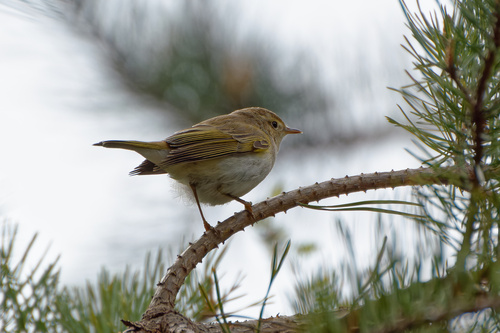
Western Bonelli's Warbler (Phylloscopus bonelli) Western Bonelli's Warbler
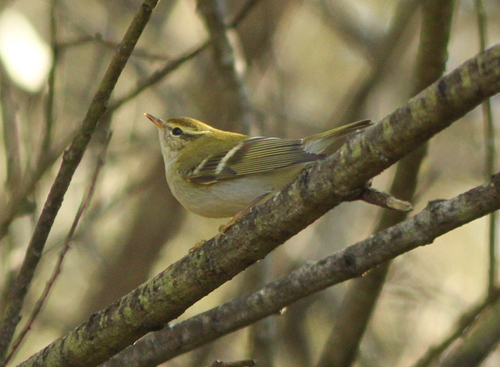
Yellow-browed Warbler (Phylloscopus inornatus) Yellow-browed Warbler

Media

Loading…

In short

The most reliable field mark to separate Western Bonelli's Warbler from Yellow-browed Warbler is the presence of bold yellowish wing bars and a strong yellow supercilium in Yellow-browed, which are completely absent in Western Bonelli's. Western Bonelli's is plainer, with a grey-green back and whitish underparts, while Yellow-browed is brighter green above and white below, with obvious yellow highlights. In flight or perched, the double wing bars and yellow edges to tertials of Yellow-browed stand out, especially in juveniles and non-breeding birds. Voice is also distinctive: Bonelli's has a disyllabic 'hu-it' call, while Yellow-browed gives a piercing 'tseeweest'. Habitat and range rarely overlap, but both can occur as vagrants in western Europe.

Identification tips

  1. Wing bars are key: Yellow-browed Warbler always shows two yellowish-white wing bars (greater and median coverts) at all ages and seasons; Western Bonelli's Warbler never shows any wing bars.
  2. Supercilium: Yellow-browed has a long, strong yellow supercilium reaching behind the eye; Bonelli's has only a faint, pale brow at best.
  3. Tertial edges: Yellow-browed shows yellowish edges to the tertials, adding to the overall bright impression; Bonelli's tertials are plain.
  4. Crown stripe: Some Yellow-browed individuals have a faint pale crown stripe, but this is variable and not always present; Bonelli's lacks any crown stripe.
  5. Upperparts color: Bonelli's is grey-green to brownish above, with a greenish rump; Yellow-browed is brighter green above, especially fresh birds.
  6. Underparts: Both are whitish below, but Yellow-browed may show a cleaner contrast due to its brighter upperparts.
  7. Leg color: Both have brown legs; this is not a reliable separator between these two.
  8. Bill: Both have small, pointed bills typical of Phylloscopus warblers; not a useful field mark here.
  9. Flight views: In flight, Yellow-browed's wing bars and yellow tertial edges may flash; Bonelli's remains plain.
  10. Behavior: Yellow-browed is extremely active, often flicking wings and tail and moving rapidly through foliage; Bonelli's is active but less frenetic.
  11. Voice: Bonelli's call is a soft, disyllabic 'hu-it'; Yellow-browed gives a loud, piercing 'tseeweest'. Calls are diagnostic if heard well.
  12. Song: Both have high-pitched, fast trilled songs, but these are less reliable for separation than calls.
  13. Habitat and range: Bonelli's breeds in southwest Europe/North Africa and winters in sub-Saharan Africa; Yellow-browed breeds in the east Palearctic and winters in Asia, but both can occur as vagrants in western Europe. If seen in breeding habitat, range is a strong clue.
  14. Season: In western Europe, Yellow-browed is a regular autumn migrant and winterer; Bonelli's is a rare vagrant outside its breeding range.
  15. Pitfalls: Do not confuse Bonelli's with other greenish Phylloscopus warblers with wing bars—if you see any yellow in the wing or supercilium, it is not Bonelli's. Conversely, a plain, unmarked warbler in Europe is unlikely to be Yellow-browed.

Size

Yellow-browed Warbler is one of the smallest Old World warblers, at 9.5–11 cm long and 4–9 g. Western Bonelli's Warbler is similar in size but not described as especially small for the genus; both are small, slim warblers, but Yellow-browed tends to look slightly more delicate and short-tailed. Size alone is not a reliable separator in the field between these two.

Plumage

Juvenile and non-breeding Yellow-browed Warblers show two prominent yellowish-white wing bars (on greater and median coverts), yellow edges to tertials, and a long yellow supercilium—these marks are visible both perched and in flight and are present in all ages. Western Bonelli's Warbler of all ages lacks any wing bars or yellow highlights; it is plainer, with a grey-green back, greenish rump and wings, and clean whitish underparts. The Bonelli's has a small, pointed bill and brown legs, but no yellow in the plumage. Yellow-browed may show a faint pale crown stripe, but this is variable. In summary: any bird with obvious yellow wing bars and supercilium is Yellow-browed; a plain, unmarked warbler is Bonelli's.

Behaviour

Yellow-browed Warbler is highly active, almost constantly moving through foliage and often difficult to observe for long, despite not being shy. Western Bonelli's Warbler is also active but may be slightly less frenetic. Both are arboreal insectivores, but Yellow-browed's restlessness and tendency to flick wings and tail are more pronounced. In flight, both are small and quick, but Yellow-browed's wing bars may flash.

Habitat

Western Bonelli's Warbler breeds in southwest Europe and North Africa, favoring forests and woodlands, and winters in sub-Saharan Africa. Yellow-browed Warbler breeds in the east Palearctic (from just west of the Urals eastwards) and winters in tropical South and Southeast Asia, but small numbers now regularly winter in western Europe. Both may occur as vagrants in western Europe, but Bonelli's is much rarer outside its breeding range. In their typical ranges, habitat overlap is minimal.

Voice

Western Bonelli's Warbler has a fast, monotone trill for its song, and a distinctive disyllabic call: 'hu-it'. Yellow-browed Warbler's song is a high-pitched medley of whistles, but its call is a loud, piercing 'tseeweest', often disyllabic but sharper and more insistent than Bonelli's. The calls are completely different and diagnostic if heard well.

Submit a better description

Use the same sections as the comparison. Your text is published immediately.

The most reliable field mark to separate Western Bonelli's Warbler from Yellow-browed Warbler is the presence of bold yellowish wing bars and a strong yellow supercilium in Yellow-browed, which are completely absent in Western Bonelli's. Western Bonelli's is plainer, with a grey-green back and whitish underparts, while Yellow-browed is brighter green above and white below, with obvious yellow highlights. In flight or perched, the double wing bars and yellow edges to tertials of Yellow-browed stand out, especially in juveniles and non-breeding birds. Voice is also distinctive: Bonelli's has a disyllabic 'hu-it' call, while Yellow-browed gives a piercing 'tseeweest'. Habitat and range rarely overlap, but both can occur as vagrants in western Europe.

  1. Wing bars are key: Yellow-browed Warbler always shows two yellowish-white wing bars (greater and median coverts) at all ages and seasons; Western Bonelli's Warbler never shows any wing bars.
  2. Supercilium: Yellow-browed has a long, strong yellow supercilium reaching behind the eye; Bonelli's has only a faint, pale brow at best.
  3. Tertial edges: Yellow-browed shows yellowish edges to the tertials, adding to the overall bright impression; Bonelli's tertials are plain.
  4. Crown stripe: Some Yellow-browed individuals have a faint pale crown stripe, but this is variable and not always present; Bonelli's lacks any crown stripe.
  5. Upperparts color: Bonelli's is grey-green to brownish above, with a greenish rump; Yellow-browed is brighter green above, especially fresh birds.
  6. Underparts: Both are whitish below, but Yellow-browed may show a cleaner contrast due to its brighter upperparts.
  7. Leg color: Both have brown legs; this is not a reliable separator between these two.
  8. Bill: Both have small, pointed bills typical of Phylloscopus warblers; not a useful field mark here.
  9. Flight views: In flight, Yellow-browed's wing bars and yellow tertial edges may flash; Bonelli's remains plain.
  10. Behavior: Yellow-browed is extremely active, often flicking wings and tail and moving rapidly through foliage; Bonelli's is active but less frenetic.
  11. Voice: Bonelli's call is a soft, disyllabic 'hu-it'; Yellow-browed gives a loud, piercing 'tseeweest'. Calls are diagnostic if heard well.
  12. Song: Both have high-pitched, fast trilled songs, but these are less reliable for separation than calls.
  13. Habitat and range: Bonelli's breeds in southwest Europe/North Africa and winters in sub-Saharan Africa; Yellow-browed breeds in the east Palearctic and winters in Asia, but both can occur as vagrants in western Europe. If seen in breeding habitat, range is a strong clue.
  14. Season: In western Europe, Yellow-browed is a regular autumn migrant and winterer; Bonelli's is a rare vagrant outside its breeding range.
  15. Pitfalls: Do not confuse Bonelli's with other greenish Phylloscopus warblers with wing bars—if you see any yellow in the wing or supercilium, it is not Bonelli's. Conversely, a plain, unmarked warbler in Europe is unlikely to be Yellow-browed.

Yellow-browed Warbler is one of the smallest Old World warblers, at 9.5–11 cm long and 4–9 g. Western Bonelli's Warbler is similar in size but not described as especially small for the genus; both are small, slim warblers, but Yellow-browed tends to look slightly more delicate and short-tailed. Size alone is not a reliable separator in the field between these two.

Juvenile and non-breeding Yellow-browed Warblers show two prominent yellowish-white wing bars (on greater and median coverts), yellow edges to tertials, and a long yellow supercilium—these marks are visible both perched and in flight and are present in all ages. Western Bonelli's Warbler of all ages lacks any wing bars or yellow highlights; it is plainer, with a grey-green back, greenish rump and wings, and clean whitish underparts. The Bonelli's has a small, pointed bill and brown legs, but no yellow in the plumage. Yellow-browed may show a faint pale crown stripe, but this is variable. In summary: any bird with obvious yellow wing bars and supercilium is Yellow-browed; a plain, unmarked warbler is Bonelli's.

Yellow-browed Warbler is highly active, almost constantly moving through foliage and often difficult to observe for long, despite not being shy. Western Bonelli's Warbler is also active but may be slightly less frenetic. Both are arboreal insectivores, but Yellow-browed's restlessness and tendency to flick wings and tail are more pronounced. In flight, both are small and quick, but Yellow-browed's wing bars may flash.

Western Bonelli's Warbler breeds in southwest Europe and North Africa, favoring forests and woodlands, and winters in sub-Saharan Africa. Yellow-browed Warbler breeds in the east Palearctic (from just west of the Urals eastwards) and winters in tropical South and Southeast Asia, but small numbers now regularly winter in western Europe. Both may occur as vagrants in western Europe, but Bonelli's is much rarer outside its breeding range. In their typical ranges, habitat overlap is minimal.

Western Bonelli's Warbler has a fast, monotone trill for its song, and a distinctive disyllabic call: 'hu-it'. Yellow-browed Warbler's song is a high-pitched medley of whistles, but its call is a loud, piercing 'tseeweest', often disyllabic but sharper and more insistent than Bonelli's. The calls are completely different and diagnostic if heard well.

Discard your changes?

You have unsaved edits. If you leave now, those changes will be lost.

Western Bonelli's Warbler · Yellow-browed Warbler · My Tricky Birds