

Motmot

Western Black-headed Batis vs Pygmy Batis

Batis erlangeri versus Batis perkeo

Play a quiz with Western Black-headed Batis and Pygmy Batis
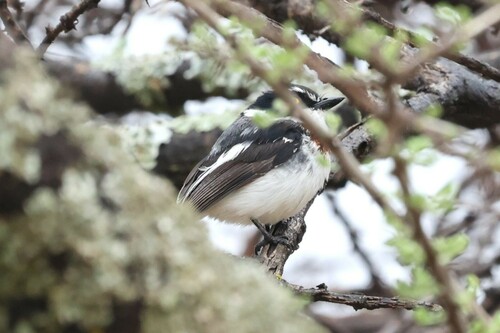
Western Black-headed Batis (Batis erlangeri) Western Black-headed Batis
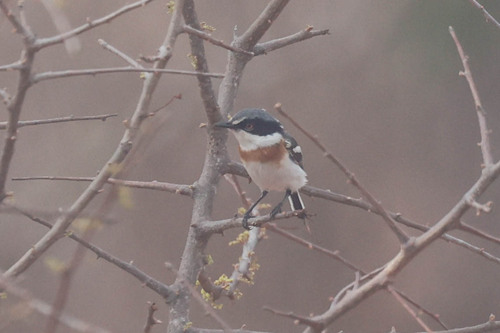
Pygmy Batis (Batis perkeo) Pygmy Batis

Media

Loading…

In short

The most reliable field mark to separate Western Black-headed Batis from Pygmy Batis is size: Pygmy Batis is notably smaller and more compact, with a dumpy appearance and fluffy, spotted rump, while Western Black-headed Batis is larger and sleeker. In plumage, male Pygmy Batis shows a bluish-grey back, a bold black mask, and a broad white wing stripe, while females have a rufous-buff breast band and chin. Western Black-headed Batis lacks these specific features, and its plumage is less contrasting. Both species share black, white, and grey coloration, but careful attention to structure and subtle plumage details is key. Habitat can also help: Pygmy Batis prefers dry savannahs in NE Africa, while Western Black-headed Batis is found in central Africa's dry forests and moist savannas.

Identification tips

  1. Size is the quickest separator: Pygmy Batis is much smaller and more compact than Western Black-headed Batis. If the bird looks tiny and dumpy, especially compared to other batises, suspect Pygmy Batis.
  2. Rump and lower back: Pygmy Batis shows a fluffy, white-spotted rump, which is especially noticeable when the bird is active or preening. Western Black-headed Batis lacks this feature.
  3. Wing pattern: Look for a broad, bold white wing stripe on Pygmy Batis, formed by the white edges to the median and greater coverts and inner secondaries/tertials. This is visible in both perched and flying birds. Western Black-headed Batis does not have such a prominent wing stripe.
  4. Head and face: Male Pygmy Batis has a bluish-grey head and back, a sharply defined black face mask, and a short white supercilium above a yellow eye. Western Black-headed Batis lacks the bluish tones and may have a less contrasting mask.
  5. Tail pattern: Pygmy Batis has black tail feathers with white edges and tips on the outer feathers. This can be seen when the tail is fanned or in flight. Western Black-headed Batis does not show this pattern as distinctly.
  6. Underparts and breast band: Both species have white underparts, but male Pygmy Batis has a narrow black breast band, while the female has a pale rufous-buff breast band and chin. Western Black-headed Batis females do not show this rufous-buff coloration.
  7. Female plumage: Female Pygmy Batis is distinctive with its rufous-buff breast band, chin, and buffy brown face mask and wing stripe. Western Black-headed Batis females lack these warm tones.
  8. Bill and legs: Both species have black bills and legs, so this is not a useful separator.
  9. Jizz: Pygmy Batis appears dumpy and short-tailed, often with a fluffy rear, while Western Black-headed Batis is more elongated and sleeker.
  10. Habitat: If you are in dry, open savannah in northeastern Africa, Pygmy Batis is far more likely. In central Africa's dry forests or moist savannas, Western Black-headed Batis is the default.
  11. Behavior: Pygmy Batis is often seen in small groups or mixed flocks, actively foraging in the canopy. Western Black-headed Batis may be more solitary or in pairs, but this is less reliable.
  12. No strong age-specific flight marks: There are no described juvenile or immature upperwing patterns for either species, so rely on size, structure, and adult plumage.
  13. Voice: No diagnostic vocal differences are described in the available notes, so do not rely on calls for separation.
  14. Pitfall: Both species share a general black, white, and grey color scheme, so quick views can be misleading. Always check for size, wing stripe, and rump pattern before making an ID.
  15. Season and sex: Female Pygmy Batis is easier to separate due to its rufous-buff tones, while males require more attention to wing and head pattern.

Size

Pygmy Batis is significantly smaller and lighter, with a body length of 8–9 cm and a mass of 5–9 g ([wikipedia]), compared to Western Black-headed Batis at 11.2 g ([wikidata]). In the field, Pygmy Batis will appear noticeably tinier and more compact, with a dumpy, short-tailed look, while Western Black-headed Batis is larger and more elongated. This size difference is often apparent even at a distance or in mixed flocks.

Plumage

No age-specific juvenile or immature upperwing patterns are described for either species, so focus is on adult and female plumage. Male Pygmy Batis stands out with a bluish-grey head and back, a sharp black face mask, and a short white supercilium above a yellow eye. Its wings have a broad, conspicuous white stripe formed by the white edges of the median and greater coverts and inner secondaries/tertials, and the rump is spotted white and appears fluffy. The underparts are white with a narrow black breast band. Female Pygmy Batis differs by having a pale rufous-buff breast band and chin, and buffy brown tones in the face mask, supercilium, and wing stripe. Western Black-headed Batis does not show the bluish-grey upperparts, bold white wing stripe, or rufous-buff tones in females. Both species have black tails, but Pygmy Batis has white edges and tips to the outer tail feathers, which may be visible in good views.

Behaviour

Pygmy Batis is highly active and arboreal, often foraging in pairs or small family groups, and frequently joins mixed-species flocks. It gleans insects from leaves and twigs, with occasional aerial sallies. While Western Black-headed Batis likely shares some foraging behaviors as a fellow batis, the notes do not specify its habits in detail. In the field, Pygmy Batis may appear more energetic and social, especially in the company of other small insectivores.

Habitat

Pygmy Batis is found in dry savannahs of northeastern Africa, while Western Black-headed Batis occupies a broader range across central Africa, favoring subtropical or tropical dry forests and moist savannas. If observed in arid, open savannah with sparse trees, Pygmy Batis is more likely. In more wooded or moister habitats, especially in central Africa, Western Black-headed Batis is the expected species. Habitat overlap is minimal, so location and environment are strong clues.

Submit a better description

Use the same sections as the comparison. Your text is published immediately.

The most reliable field mark to separate Western Black-headed Batis from Pygmy Batis is size: Pygmy Batis is notably smaller and more compact, with a dumpy appearance and fluffy, spotted rump, while Western Black-headed Batis is larger and sleeker. In plumage, male Pygmy Batis shows a bluish-grey back, a bold black mask, and a broad white wing stripe, while females have a rufous-buff breast band and chin. Western Black-headed Batis lacks these specific features, and its plumage is less contrasting. Both species share black, white, and grey coloration, but careful attention to structure and subtle plumage details is key. Habitat can also help: Pygmy Batis prefers dry savannahs in NE Africa, while Western Black-headed Batis is found in central Africa's dry forests and moist savannas.

  1. Size is the quickest separator: Pygmy Batis is much smaller and more compact than Western Black-headed Batis. If the bird looks tiny and dumpy, especially compared to other batises, suspect Pygmy Batis.
  2. Rump and lower back: Pygmy Batis shows a fluffy, white-spotted rump, which is especially noticeable when the bird is active or preening. Western Black-headed Batis lacks this feature.
  3. Wing pattern: Look for a broad, bold white wing stripe on Pygmy Batis, formed by the white edges to the median and greater coverts and inner secondaries/tertials. This is visible in both perched and flying birds. Western Black-headed Batis does not have such a prominent wing stripe.
  4. Head and face: Male Pygmy Batis has a bluish-grey head and back, a sharply defined black face mask, and a short white supercilium above a yellow eye. Western Black-headed Batis lacks the bluish tones and may have a less contrasting mask.
  5. Tail pattern: Pygmy Batis has black tail feathers with white edges and tips on the outer feathers. This can be seen when the tail is fanned or in flight. Western Black-headed Batis does not show this pattern as distinctly.
  6. Underparts and breast band: Both species have white underparts, but male Pygmy Batis has a narrow black breast band, while the female has a pale rufous-buff breast band and chin. Western Black-headed Batis females do not show this rufous-buff coloration.
  7. Female plumage: Female Pygmy Batis is distinctive with its rufous-buff breast band, chin, and buffy brown face mask and wing stripe. Western Black-headed Batis females lack these warm tones.
  8. Bill and legs: Both species have black bills and legs, so this is not a useful separator.
  9. Jizz: Pygmy Batis appears dumpy and short-tailed, often with a fluffy rear, while Western Black-headed Batis is more elongated and sleeker.
  10. Habitat: If you are in dry, open savannah in northeastern Africa, Pygmy Batis is far more likely. In central Africa's dry forests or moist savannas, Western Black-headed Batis is the default.
  11. Behavior: Pygmy Batis is often seen in small groups or mixed flocks, actively foraging in the canopy. Western Black-headed Batis may be more solitary or in pairs, but this is less reliable.
  12. No strong age-specific flight marks: There are no described juvenile or immature upperwing patterns for either species, so rely on size, structure, and adult plumage.
  13. Voice: No diagnostic vocal differences are described in the available notes, so do not rely on calls for separation.
  14. Pitfall: Both species share a general black, white, and grey color scheme, so quick views can be misleading. Always check for size, wing stripe, and rump pattern before making an ID.
  15. Season and sex: Female Pygmy Batis is easier to separate due to its rufous-buff tones, while males require more attention to wing and head pattern.

Pygmy Batis is significantly smaller and lighter, with a body length of 8–9 cm and a mass of 5–9 g ([wikipedia]), compared to Western Black-headed Batis at 11.2 g ([wikidata]). In the field, Pygmy Batis will appear noticeably tinier and more compact, with a dumpy, short-tailed look, while Western Black-headed Batis is larger and more elongated. This size difference is often apparent even at a distance or in mixed flocks.

No age-specific juvenile or immature upperwing patterns are described for either species, so focus is on adult and female plumage. Male Pygmy Batis stands out with a bluish-grey head and back, a sharp black face mask, and a short white supercilium above a yellow eye. Its wings have a broad, conspicuous white stripe formed by the white edges of the median and greater coverts and inner secondaries/tertials, and the rump is spotted white and appears fluffy. The underparts are white with a narrow black breast band. Female Pygmy Batis differs by having a pale rufous-buff breast band and chin, and buffy brown tones in the face mask, supercilium, and wing stripe. Western Black-headed Batis does not show the bluish-grey upperparts, bold white wing stripe, or rufous-buff tones in females. Both species have black tails, but Pygmy Batis has white edges and tips to the outer tail feathers, which may be visible in good views.

Pygmy Batis is highly active and arboreal, often foraging in pairs or small family groups, and frequently joins mixed-species flocks. It gleans insects from leaves and twigs, with occasional aerial sallies. While Western Black-headed Batis likely shares some foraging behaviors as a fellow batis, the notes do not specify its habits in detail. In the field, Pygmy Batis may appear more energetic and social, especially in the company of other small insectivores.

Pygmy Batis is found in dry savannahs of northeastern Africa, while Western Black-headed Batis occupies a broader range across central Africa, favoring subtropical or tropical dry forests and moist savannas. If observed in arid, open savannah with sparse trees, Pygmy Batis is more likely. In more wooded or moister habitats, especially in central Africa, Western Black-headed Batis is the expected species. Habitat overlap is minimal, so location and environment are strong clues.

Discard your changes?

You have unsaved edits. If you leave now, those changes will be lost.

Western Black-headed Batis · Pygmy Batis · My Tricky Birds