

Western Black-headed Batis vs Pygmy Batis
Batis erlangeri contro Batis perkeo
Fai un quiz con Western Black-headed Batis e Pygmy Batis
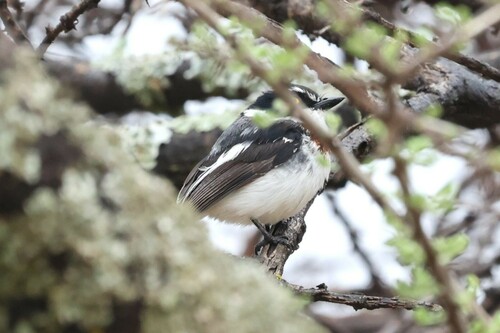 Western Black-headed Batis
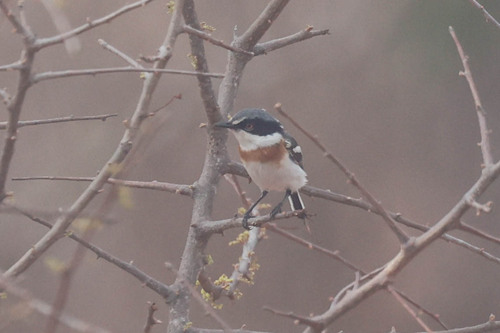 Pygmy Batis
In breve
Il segno distintivo più affidabile per separare il Western Black-headed Batis dal Pygmy Batis è la dimensione: il Pygmy Batis è notevolmente più piccolo e compatto, con un aspetto tozzo e un posteriore soffice e maculato, mentre il Western Black-headed Batis è più grande e slanciato. Nel piumaggio, il maschio del Pygmy Batis mostra un dorso grigio-bluastro, una maschera nera audace e una larga striscia bianca sulle ali, mentre le femmine hanno una banda sul petto e un mento ruggine-buff. Il Western Black-headed Batis manca di queste caratteristiche specifiche e il suo piumaggio è meno contrastante. Entrambe le specie condividono colorazioni nere, bianche e grigie, ma prestare attenzione alla struttura e ai dettagli sottili del piumaggio è fondamentale. L'habitat può anche aiutare: il Pygmy Batis preferisce le savane secche nel NE Africa, mentre il Western Black-headed Batis si trova nelle foreste secche e nelle savane umide dell'Africa centrale.
Consigli di identificazione
- La dimensione è il separatore più veloce: Il Pygmy Batis è molto più piccolo e compatto rispetto al Western Black-headed Batis. Se l'uccello sembra minuscolo e tozzo, specialmente rispetto ad altri batis, sospetta il Pygmy Batis.
- Posteriore e parte bassa della schiena: Il Pygmy Batis mostra un posteriore soffice e maculato di bianco, che è particolarmente evidente quando l'uccello è attivo o si pulisce. Il Western Black-headed Batis manca di questa caratteristica.
- Schema delle ali: Cerca una larga e audace striscia bianca sulle ali del Pygmy Batis, formata dai bordi bianchi delle copritrici mediane e maggiori e delle secondarie/terziali interne. Questo è visibile sia negli uccelli posati che in volo. Il Western Black-headed Batis non ha una striscia così prominente sulle ali.
- Testa e faccia: Il maschio del Pygmy Batis ha una testa e un dorso grigio-bluastro, una maschera facciale nera ben definita e un breve sopracciglio bianco sopra un occhio giallo. Il Western Black-headed Batis manca delle tonalità bluastre e può avere una maschera meno contrastante.
- Schema della coda: Il Pygmy Batis ha penne della coda nere con bordi e punte bianche sulle penne esterne. Questo può essere visto quando la coda è aperta o in volo. Il Western Black-headed Batis non mostra questo schema in modo così distintivo.
- Parte inferiore e banda sul petto: Entrambe le specie hanno parti inferiori bianche, ma il maschio del Pygmy Batis ha una stretta banda nera sul petto, mentre la femmina ha una banda sul petto e un mento ruggine-buff. Le femmine del Western Black-headed Batis non mostrano questa colorazione ruggine-buff.
- Piumaggio femminile: La femmina del Pygmy Batis è distintiva con la sua banda ruggine-buff sul petto, il mento e la maschera facciale e la striscia sulle ali di colore marrone chiaro. Le femmine del Western Black-headed Batis mancano di queste tonalità calde.
- Becco e zampe: Entrambe le specie hanno becchi e zampe neri, quindi questo non è un separatore utile.
- Jizz: Il Pygmy Batis appare tozzo e con una coda corta, spesso con un posteriore soffice, mentre il Western Black-headed Batis è più allungato e slanciato.
- Habitat: Se ti trovi in una savana secca e aperta nel nord-est dell'Africa, è molto più probabile che sia un Pygmy Batis. Nelle foreste secche o nelle savane umide dell'Africa centrale, il Western Black-headed Batis è la specie predefinita.
- Comportamento: Il Pygmy Batis è spesso visto in piccoli gruppi o stormi misti, foraggiando attivamente nella chioma. Il Western Black-headed Batis può essere più solitario o in coppie, ma questo è meno affidabile.
- Nessun segno di volo specifico per età: Non ci sono schemi di volo descritti per giovanili o immaturi per nessuna delle due specie, quindi fai affidamento su dimensione, struttura e piumaggio adulto.
- Voce: Non ci sono differenze vocali diagnostiche descritte nelle note disponibili, quindi non fare affidamento sui richiami per la separazione.
- Trappola: Entrambe le specie condividono uno schema di colori generale nero, bianco e grigio, quindi visioni rapide possono essere fuorvianti. Controlla sempre la dimensione, la striscia delle ali e il modello del posteriore prima di fare un'identificazione.
- Stagione e sesso: La femmina del Pygmy Batis è più facile da separare a causa delle sue tonalità ruggine-buff, mentre i maschi richiedono maggiore attenzione al modello delle ali e della testa.
Taglia
Il Pygmy Batis è significativamente più piccolo e leggero, con una lunghezza del corpo di 8–9 cm e una massa di 5–9 g ([wikipedia]), rispetto al Western Black-headed Batis a 11,2 g ([wikidata]). Sul campo, il Pygmy Batis apparirà notevolmente più piccolo e compatto, con un aspetto tozzo e una coda corta, mentre il Western Black-headed Batis è più grande e più allungato. Questa differenza di dimensione è spesso evidente anche a distanza o in stormi misti.
Piumaggio
Non ci sono schemi di volo specifici per età descritti per nessuna delle due specie, quindi ci si concentra sul piumaggio adulto e femminile. Il maschio del Pygmy Batis si distingue con una testa e un dorso grigio-bluastro, una maschera facciale nera affilata e un breve sopracciglio bianco sopra un occhio giallo. Le sue ali hanno una larga striscia bianca, evidente, formata dai bordi bianchi delle copritrici mediane e maggiori e delle secondarie/terziali interne, e il posteriore è maculato di bianco e appare soffice. Le parti inferiori sono bianche con una stretta banda nera sul petto. La femmina del Pygmy Batis si differenzia per avere una banda sul petto e un mento ruggine-buff, e tonalità marrone chiaro nella maschera facciale, nel sopracciglio e nella striscia delle ali. Il Western Black-headed Batis non mostra le parti superiori grigio-bluastre, la striscia bianca audace sulle ali o le tonalità ruggine-buff nelle femmine. Entrambe le specie hanno code nere, ma il Pygmy Batis ha bordi e punte bianche sulle penne esterne della coda, che possono essere visibili in buone osservazioni.
Comportamento
Il Pygmy Batis è altamente attivo e arboricolo, spesso foraggiando in coppie o piccoli gruppi familiari, e si unisce frequentemente a stormi misti di specie. Raccoglie insetti da foglie e rametti, con occasionali attacchi aerei. Sebbene il Western Black-headed Batis probabilmente condivida alcuni comportamenti di foraggiamento come un altro batis, le note non specificano i suoi comportamenti in dettaglio. Sul campo, il Pygmy Batis può apparire più energico e sociale, specialmente in compagnia di altri piccoli insettivori.
Habitat
Il Pygmy Batis si trova nelle savane secche del nord-est dell'Africa, mentre il Western Black-headed Batis occupa un'area più ampia nell'Africa centrale, preferendo foreste secche subtropicali o tropicali e savane umide. Se osservato in una savana arida e aperta con alberi sparsi, è più probabile che sia un Pygmy Batis. In habitat più boschivi o umidi, specialmente nell'Africa centrale, il Western Black-headed Batis è la specie attesa. La sovrapposizione degli habitat è minima, quindi la posizione e l'ambiente sono indizi forti.
Western Black-headed Batis · Pygmy Batis · I miei uccelli difficili