

Motmot

Warbling Vireo vs Yucatan Vireo

Vireo gilvus versus Vireo magister

Play a quiz with Warbling Vireo and Yucatan Vireo
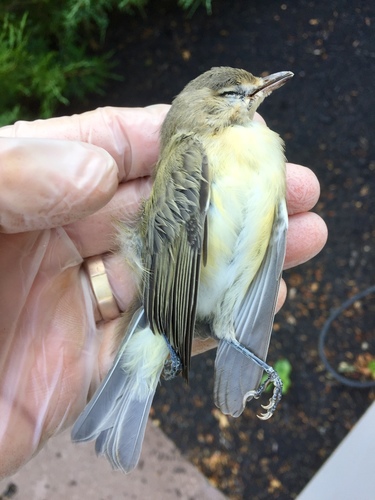
Warbling Vireo (Vireo gilvus) Warbling Vireo
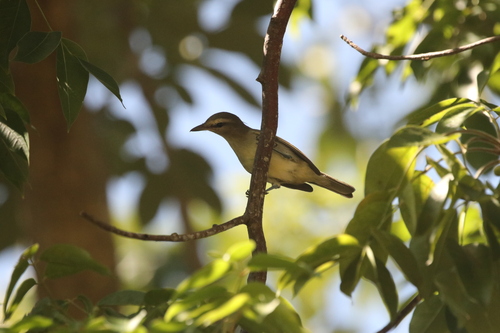
Yucatan Vireo (Vireo magister) Yucatan Vireo

Media

Loading…

In short

The most reliable field mark to separate Warbling Vireo from Yucatan Vireo is overall size and structure: Yucatan Vireo is distinctly larger and bulkier, with a heavier bill and more robust jizz. In plumage, Yucatan Vireo shows a darker, more olive-gray upperpart tone and a broader, duller supercilium, while Warbling Vireo is paler and more delicate, with a cleaner white supercilium and lighter face. Both species have a similar vireo shape and blue-gray legs, but careful attention to head pattern, size, and bill shape will usually clinch the ID. Immature or non-breeding birds do not show distinctive flight marks, so focus on perched views and structural differences.

Identification tips

  1. Size and Structure: Yucatan Vireo is larger and bulkier, with a noticeably heavier bill and thicker neck. Warbling Vireo is smaller, slimmer, and more delicate overall. This is often the first and best clue, especially if you have experience with either species.
  2. Bill Shape and Color: Yucatan Vireo's bill is stouter and darker, with a paler gray base to the mandible; Warbling Vireo's bill is slimmer and more uniformly colored. This mark is best seen in good light and close views.
  3. Supercilium (Eyebrow): Warbling Vireo has a clean, crisp white supercilium that stands out against a pale face. Yucatan Vireo's supercilium is broader, duller (pale brownish-white), and less sharply defined, blending into duskier lores and a darker face.
  4. Face Pattern: Yucatan Vireo shows brownish-gray lores that extend behind the eye, giving a masked or dusky appearance to the face. Warbling Vireo's lores are paler, and the face is overall lighter and more open.
  5. Crown and Upperparts: Warbling Vireo is olive-gray above, with a paler crown (especially in the east). Yucatan Vireo is darker gray-brown above, with a stronger olive tinge on the back and a more contrasting crown, especially in some subspecies.
  6. Underparts: Warbling Vireo is clean white below, sometimes with a faint wash on the flanks. Yucatan Vireo has buffy white on the throat and breast center, with grayish and olive-washed flanks and sides, making the underparts appear dingier and less crisp.
  7. Leg Color: Both have blue-gray legs, but Yucatan Vireo's can be more bluish or slaty, especially in the Cayman subspecies. This is a subtle mark and not always visible.
  8. Tail and Wing Pattern: No distinctive age-specific flight marks are described for either species; both have darkish wings with paler edges, but Yucatan Vireo's are blackish gray with olive edges, while Warbling Vireo is plainer.
  9. Sex and Age: Both species have similar plumage in both sexes and all ages; no strong age-specific marks are noted. Focus on structural and facial differences for all ages.
  10. Habitat and Range: Warbling Vireo is widespread in North America, especially in temperate and montane forests. Yucatan Vireo is restricted to the Yucatan Peninsula, Belize, Honduras, and Grand Cayman. If you are outside the Yucatan region, Warbling Vireo is vastly more likely.
  11. Behavior: Warbling Vireo is more active and agile, often foraging higher and in more open woodland. Yucatan Vireo is more deliberate and may be found in denser, more tropical habitats.
  12. Voice: Warbling Vireo has a distinctive, cheerful warble; Yucatan Vireo's song is not described here, so do not rely on voice for separation unless you have a known recording.
  13. Pitfalls: Western Warbling Vireos can appear darker above, but never as bulky or as masked-faced as Yucatan Vireo. Beware of lighting and wear, which can make Warbling Vireo look dingier, but the overall structure and face pattern will still differ.
  14. Subspecies Variation: Some Yucatan Vireo subspecies (e.g., stilesi, caymanensis) may show brighter olive or paler underparts, but all remain bulkier and duskier-faced than any Warbling Vireo.
  15. Vagrancy: A Yucatan Vireo outside its normal range (e.g., Texas) should be scrutinized carefully for all the above marks, as it is a major rarity.

Size

Yucatan Vireo is noticeably larger and heavier than Warbling Vireo. Yucatan Vireo measures about 15 cm in length and weighs between 13.5–25 g (mean ~15.4 g), while Warbling Vireo is smaller at 12–13 cm and 10–16 g. This difference is apparent in the field: Yucatan Vireo appears bulkier, with a stouter bill and a more robust overall build, while Warbling Vireo is more slender and delicate. The difference is most obvious when seen side-by-side or with experience, but even a single perched bird can often be judged by its relatively chunky proportions (Yucatan) versus slim and dainty (Warbling).

Plumage

No age-specific upperwing or flight marks are described for either species, so focus on perched birds. Adult Warbling Vireo is olive-gray above with a pale white underpart, a clean white supercilium, and a light face. Its crown is paler and less contrasting, especially in eastern populations; western birds may have a slightly darker gray crown but are still paler than Yucatan Vireo. Yucatan Vireo adults have a darker gray-brown crown and upperparts with an olive tinge, a broader and duller pale brownish-white supercilium, and brownish-gray lores that extend behind the eye, giving the face a duskier, more masked look. The underparts are buffy white centrally, with grayish and olive-washed flanks. The bill of Yucatan Vireo is stouter and darker, with a paler base to the mandible, while Warbling Vireo's bill is slightly slimmer and more uniform in color. Subspecies of Yucatan Vireo can show even more olive or gray tones, but all are darker and more robust-looking than Warbling Vireo. Both have blue-gray legs, but Yucatan's may be more bluish or slaty depending on subspecies.

Behaviour

Both species forage in trees and shrubs, moving methodically along branches and sometimes hovering for insects. Warbling Vireo is more likely to be seen in open, well-spaced deciduous trees, often along streams, and tends to move more nimbly and lightly. Yucatan Vireo, being bulkier, may appear more deliberate and less agile. Both construct deep cup nests suspended from branches, but this is rarely a field mark. Warbling Vireo may be more approachable in human-modified habitats, while Yucatan Vireo tends to avoid such areas.

Habitat

Warbling Vireo breeds in open deciduous and mixed woods across a vast range from Alaska to Mexico, favoring widely spaced trees (cottonwood, aspen) along waterways. Yucatan Vireo is restricted to the Yucatan Peninsula, Belize, Honduras, and Grand Cayman, with a single vagrant record in Texas; it is not found in the core range of Warbling Vireo. Yucatan Vireo prefers subtropical and tropical woodland, mangroves, and coastal scrub, and is not typically found in the more temperate or montane forests favored by Warbling Vireo. Thus, geography and habitat can be strong clues, but vagrancy is possible.

Voice

Warbling Vireo has a cheerful, warbling song reminiscent of Painted Bunting or Purple Finch, with subtle differences between eastern and western populations. No vocal description is provided for Yucatan Vireo, so voice is not a reliable separator in this context.

Submit a better description

Use the same sections as the comparison. Your text is published immediately.

The most reliable field mark to separate Warbling Vireo from Yucatan Vireo is overall size and structure: Yucatan Vireo is distinctly larger and bulkier, with a heavier bill and more robust jizz. In plumage, Yucatan Vireo shows a darker, more olive-gray upperpart tone and a broader, duller supercilium, while Warbling Vireo is paler and more delicate, with a cleaner white supercilium and lighter face. Both species have a similar vireo shape and blue-gray legs, but careful attention to head pattern, size, and bill shape will usually clinch the ID. Immature or non-breeding birds do not show distinctive flight marks, so focus on perched views and structural differences.

  1. Size and Structure: Yucatan Vireo is larger and bulkier, with a noticeably heavier bill and thicker neck. Warbling Vireo is smaller, slimmer, and more delicate overall. This is often the first and best clue, especially if you have experience with either species.
  2. Bill Shape and Color: Yucatan Vireo's bill is stouter and darker, with a paler gray base to the mandible; Warbling Vireo's bill is slimmer and more uniformly colored. This mark is best seen in good light and close views.
  3. Supercilium (Eyebrow): Warbling Vireo has a clean, crisp white supercilium that stands out against a pale face. Yucatan Vireo's supercilium is broader, duller (pale brownish-white), and less sharply defined, blending into duskier lores and a darker face.
  4. Face Pattern: Yucatan Vireo shows brownish-gray lores that extend behind the eye, giving a masked or dusky appearance to the face. Warbling Vireo's lores are paler, and the face is overall lighter and more open.
  5. Crown and Upperparts: Warbling Vireo is olive-gray above, with a paler crown (especially in the east). Yucatan Vireo is darker gray-brown above, with a stronger olive tinge on the back and a more contrasting crown, especially in some subspecies.
  6. Underparts: Warbling Vireo is clean white below, sometimes with a faint wash on the flanks. Yucatan Vireo has buffy white on the throat and breast center, with grayish and olive-washed flanks and sides, making the underparts appear dingier and less crisp.
  7. Leg Color: Both have blue-gray legs, but Yucatan Vireo's can be more bluish or slaty, especially in the Cayman subspecies. This is a subtle mark and not always visible.
  8. Tail and Wing Pattern: No distinctive age-specific flight marks are described for either species; both have darkish wings with paler edges, but Yucatan Vireo's are blackish gray with olive edges, while Warbling Vireo is plainer.
  9. Sex and Age: Both species have similar plumage in both sexes and all ages; no strong age-specific marks are noted. Focus on structural and facial differences for all ages.
  10. Habitat and Range: Warbling Vireo is widespread in North America, especially in temperate and montane forests. Yucatan Vireo is restricted to the Yucatan Peninsula, Belize, Honduras, and Grand Cayman. If you are outside the Yucatan region, Warbling Vireo is vastly more likely.
  11. Behavior: Warbling Vireo is more active and agile, often foraging higher and in more open woodland. Yucatan Vireo is more deliberate and may be found in denser, more tropical habitats.
  12. Voice: Warbling Vireo has a distinctive, cheerful warble; Yucatan Vireo's song is not described here, so do not rely on voice for separation unless you have a known recording.
  13. Pitfalls: Western Warbling Vireos can appear darker above, but never as bulky or as masked-faced as Yucatan Vireo. Beware of lighting and wear, which can make Warbling Vireo look dingier, but the overall structure and face pattern will still differ.
  14. Subspecies Variation: Some Yucatan Vireo subspecies (e.g., stilesi, caymanensis) may show brighter olive or paler underparts, but all remain bulkier and duskier-faced than any Warbling Vireo.
  15. Vagrancy: A Yucatan Vireo outside its normal range (e.g., Texas) should be scrutinized carefully for all the above marks, as it is a major rarity.

Yucatan Vireo is noticeably larger and heavier than Warbling Vireo. Yucatan Vireo measures about 15 cm in length and weighs between 13.5–25 g (mean ~15.4 g), while Warbling Vireo is smaller at 12–13 cm and 10–16 g. This difference is apparent in the field: Yucatan Vireo appears bulkier, with a stouter bill and a more robust overall build, while Warbling Vireo is more slender and delicate. The difference is most obvious when seen side-by-side or with experience, but even a single perched bird can often be judged by its relatively chunky proportions (Yucatan) versus slim and dainty (Warbling).

No age-specific upperwing or flight marks are described for either species, so focus on perched birds. Adult Warbling Vireo is olive-gray above with a pale white underpart, a clean white supercilium, and a light face. Its crown is paler and less contrasting, especially in eastern populations; western birds may have a slightly darker gray crown but are still paler than Yucatan Vireo. Yucatan Vireo adults have a darker gray-brown crown and upperparts with an olive tinge, a broader and duller pale brownish-white supercilium, and brownish-gray lores that extend behind the eye, giving the face a duskier, more masked look. The underparts are buffy white centrally, with grayish and olive-washed flanks. The bill of Yucatan Vireo is stouter and darker, with a paler base to the mandible, while Warbling Vireo's bill is slightly slimmer and more uniform in color. Subspecies of Yucatan Vireo can show even more olive or gray tones, but all are darker and more robust-looking than Warbling Vireo. Both have blue-gray legs, but Yucatan's may be more bluish or slaty depending on subspecies.

Both species forage in trees and shrubs, moving methodically along branches and sometimes hovering for insects. Warbling Vireo is more likely to be seen in open, well-spaced deciduous trees, often along streams, and tends to move more nimbly and lightly. Yucatan Vireo, being bulkier, may appear more deliberate and less agile. Both construct deep cup nests suspended from branches, but this is rarely a field mark. Warbling Vireo may be more approachable in human-modified habitats, while Yucatan Vireo tends to avoid such areas.

Warbling Vireo breeds in open deciduous and mixed woods across a vast range from Alaska to Mexico, favoring widely spaced trees (cottonwood, aspen) along waterways. Yucatan Vireo is restricted to the Yucatan Peninsula, Belize, Honduras, and Grand Cayman, with a single vagrant record in Texas; it is not found in the core range of Warbling Vireo. Yucatan Vireo prefers subtropical and tropical woodland, mangroves, and coastal scrub, and is not typically found in the more temperate or montane forests favored by Warbling Vireo. Thus, geography and habitat can be strong clues, but vagrancy is possible.

Warbling Vireo has a cheerful, warbling song reminiscent of Painted Bunting or Purple Finch, with subtle differences between eastern and western populations. No vocal description is provided for Yucatan Vireo, so voice is not a reliable separator in this context.

Discard your changes?

You have unsaved edits. If you leave now, those changes will be lost.

Warbling Vireo · Yucatan Vireo · My Tricky Birds