

Motmot

Two-barred Warbler vs Arctic Warbler

Phylloscopus plumbeitarsus versus Phylloscopus borealis

Play a quiz with Two-barred Warbler and Arctic Warbler
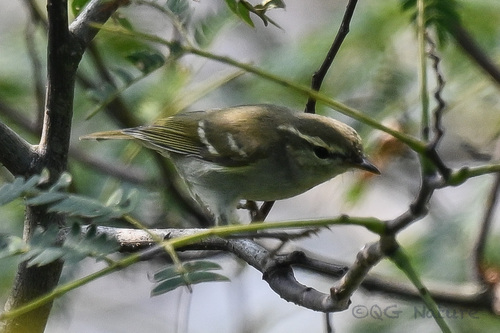
Two-barred Warbler (Phylloscopus plumbeitarsus) Two-barred Warbler
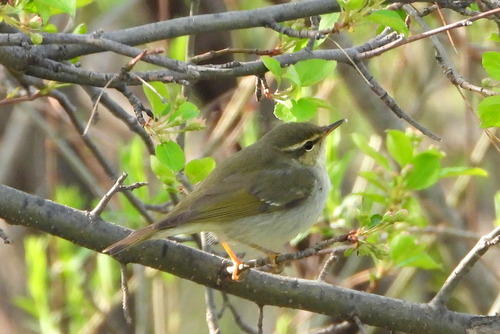
Arctic Warbler (Phylloscopus borealis) Arctic Warbler

Media

Loading…

In short

The most reliable field mark for separating Two-barred Warbler from Arctic Warbler is the number of wing bars: Two-barred Warbler always shows two distinct pale wing bars on the upperwing (across greater and median coverts), while Arctic Warbler has only a single wing bar. This difference is visible in all ages and plumages, both perched and in flight. Structurally, Arctic Warbler is slightly larger and has a noticeably heavier, dagger-like bill with a dark tip to the lower mandible, which Two-barred Warbler lacks. Both species are leaf warblers with similar greenish upperparts and pale underparts, so careful attention to wing pattern and bill structure is essential. Vocalizations and habitat preferences may help in context, but are less diagnostic than wing pattern and bill shape.

Identification tips

  1. Count the wing bars: Two-barred Warbler always shows two pale wing bars (on median and greater coverts), while Arctic Warbler has only one (on greater coverts). This is the most reliable mark for all ages and in all seasons.
  2. Check the bill: Arctic Warbler has a noticeably heavier, dagger-like bill with a dark tip to the lower mandible. Two-barred Warbler's bill is finer and lacks the dark tip. This is best seen at close range or in good light.
  3. Look for overall size: Arctic Warbler is slightly larger and bulkier than Two-barred Warbler, but this can be subtle and is not always reliable unless birds are side by side.
  4. Assess upperpart color: Both species are greyish-green above and off-white below; color is not a reliable separator.
  5. Examine the underparts: Both species are pale below with no strong markings; underpart color does not separate them.
  6. Perched vs. in-flight views: Wing bars are visible in both perched and in-flight birds, but can be especially clear in good light or when the bird flicks its wings.
  7. Juvenile and adult comparison: The two-bar vs. one-bar wing pattern holds for both adults and juveniles, so age does not affect this mark.
  8. Listen for song: If you hear a fast trill, Arctic Warbler is likely, as this is characteristic of the species. Absence of song or calls is not diagnostic.
  9. Consider bill color: The dark tip to the lower mandible is a subtle but useful mark for Arctic Warbler, absent in Two-barred Warbler.
  10. Habitat and range: If you are in Alaska or western Palearctic, Arctic Warbler is more likely; in eastern Siberia, Mongolia, or Manchuria, Two-barred Warbler is more likely. In overlap zones, rely on plumage and structure.
  11. Ignore leg color: No reliable difference is noted in leg color between these two species.
  12. Do not rely on behavior: Both species behave similarly, so foraging style and movement are not helpful.
  13. Sex and season: There are no strong sex or seasonal plumage differences in either species that aid separation.
  14. Avoid confusion with Greenish Warbler: Both species can be confused with Greenish Warbler, but within this pair, focus on wing bars and bill structure.
  15. Photograph for later review: If uncertain, a clear photo of the upperwing and bill can confirm identification later.

Size

Arctic Warbler is slightly larger overall than Two-barred Warbler, with a heavier, more robust bill. This size difference can be subtle in the field, but the bill of Arctic Warbler is noticeably thicker and more pointed, especially when seen well. Both species are small leaf warblers, so size alone is rarely diagnostic without direct comparison.

Plumage

The key plumage difference at all ages is the wing pattern: Two-barred Warbler always shows two distinct pale wing bars (on the median and greater coverts), while Arctic Warbler has only a single wing bar (on the greater coverts). This is true for both adults and juveniles, and is visible both perched and in flight. Otherwise, both species are greyish-green above and off-white below, with no strong differences in overall coloration. Arctic Warbler's bill is heavier and has a dark tip to the lower mandible, which is not present in Two-barred Warbler. No other plumage features are reliably diagnostic between these two species.

Behaviour

Both species behave like typical leaf warblers, actively foraging among foliage and often flicking their wings. There are no strong behavioral differences noted between the two, so behavior is not a reliable field mark for separation.

Habitat

Arctic Warbler breeds in birch or mixed birch forest near water across Fennoscandia, the northern Palearctic, and Alaska, and winters in Southeast Asia. Two-barred Warbler breeds in northern Mongolia, Manchuria, and southern Siberia, with similar migratory habits. While their ranges overlap in some areas, Arctic Warbler is more likely in far western Palearctic and Alaska, while Two-barred Warbler is more eastern. Habitat alone is not diagnostic where ranges overlap, but can support identification in out-of-range situations.

Voice

Arctic Warbler has a fast trill song, which is distinctive if heard well. There is no specific vocal description for Two-barred Warbler in the provided notes, so voice is less useful for separation unless Arctic Warbler's trill is clearly heard.

Submit a better description

Use the same sections as the comparison. Your text is published immediately.

The most reliable field mark for separating Two-barred Warbler from Arctic Warbler is the number of wing bars: Two-barred Warbler always shows two distinct pale wing bars on the upperwing (across greater and median coverts), while Arctic Warbler has only a single wing bar. This difference is visible in all ages and plumages, both perched and in flight. Structurally, Arctic Warbler is slightly larger and has a noticeably heavier, dagger-like bill with a dark tip to the lower mandible, which Two-barred Warbler lacks. Both species are leaf warblers with similar greenish upperparts and pale underparts, so careful attention to wing pattern and bill structure is essential. Vocalizations and habitat preferences may help in context, but are less diagnostic than wing pattern and bill shape.

  1. Count the wing bars: Two-barred Warbler always shows two pale wing bars (on median and greater coverts), while Arctic Warbler has only one (on greater coverts). This is the most reliable mark for all ages and in all seasons.
  2. Check the bill: Arctic Warbler has a noticeably heavier, dagger-like bill with a dark tip to the lower mandible. Two-barred Warbler's bill is finer and lacks the dark tip. This is best seen at close range or in good light.
  3. Look for overall size: Arctic Warbler is slightly larger and bulkier than Two-barred Warbler, but this can be subtle and is not always reliable unless birds are side by side.
  4. Assess upperpart color: Both species are greyish-green above and off-white below; color is not a reliable separator.
  5. Examine the underparts: Both species are pale below with no strong markings; underpart color does not separate them.
  6. Perched vs. in-flight views: Wing bars are visible in both perched and in-flight birds, but can be especially clear in good light or when the bird flicks its wings.
  7. Juvenile and adult comparison: The two-bar vs. one-bar wing pattern holds for both adults and juveniles, so age does not affect this mark.
  8. Listen for song: If you hear a fast trill, Arctic Warbler is likely, as this is characteristic of the species. Absence of song or calls is not diagnostic.
  9. Consider bill color: The dark tip to the lower mandible is a subtle but useful mark for Arctic Warbler, absent in Two-barred Warbler.
  10. Habitat and range: If you are in Alaska or western Palearctic, Arctic Warbler is more likely; in eastern Siberia, Mongolia, or Manchuria, Two-barred Warbler is more likely. In overlap zones, rely on plumage and structure.
  11. Ignore leg color: No reliable difference is noted in leg color between these two species.
  12. Do not rely on behavior: Both species behave similarly, so foraging style and movement are not helpful.
  13. Sex and season: There are no strong sex or seasonal plumage differences in either species that aid separation.
  14. Avoid confusion with Greenish Warbler: Both species can be confused with Greenish Warbler, but within this pair, focus on wing bars and bill structure.
  15. Photograph for later review: If uncertain, a clear photo of the upperwing and bill can confirm identification later.

Arctic Warbler is slightly larger overall than Two-barred Warbler, with a heavier, more robust bill. This size difference can be subtle in the field, but the bill of Arctic Warbler is noticeably thicker and more pointed, especially when seen well. Both species are small leaf warblers, so size alone is rarely diagnostic without direct comparison.

The key plumage difference at all ages is the wing pattern: Two-barred Warbler always shows two distinct pale wing bars (on the median and greater coverts), while Arctic Warbler has only a single wing bar (on the greater coverts). This is true for both adults and juveniles, and is visible both perched and in flight. Otherwise, both species are greyish-green above and off-white below, with no strong differences in overall coloration. Arctic Warbler's bill is heavier and has a dark tip to the lower mandible, which is not present in Two-barred Warbler. No other plumage features are reliably diagnostic between these two species.

Both species behave like typical leaf warblers, actively foraging among foliage and often flicking their wings. There are no strong behavioral differences noted between the two, so behavior is not a reliable field mark for separation.

Arctic Warbler breeds in birch or mixed birch forest near water across Fennoscandia, the northern Palearctic, and Alaska, and winters in Southeast Asia. Two-barred Warbler breeds in northern Mongolia, Manchuria, and southern Siberia, with similar migratory habits. While their ranges overlap in some areas, Arctic Warbler is more likely in far western Palearctic and Alaska, while Two-barred Warbler is more eastern. Habitat alone is not diagnostic where ranges overlap, but can support identification in out-of-range situations.

Arctic Warbler has a fast trill song, which is distinctive if heard well. There is no specific vocal description for Two-barred Warbler in the provided notes, so voice is less useful for separation unless Arctic Warbler's trill is clearly heard.

Discard your changes?

You have unsaved edits. If you leave now, those changes will be lost.

Two-barred Warbler · Arctic Warbler · My Tricky Birds