

Tufted Titmouse vs Shore Lark
Baeolophus bicolor versus Eremophila alpestris
Play a quiz with Tufted Titmouse and Shore Lark
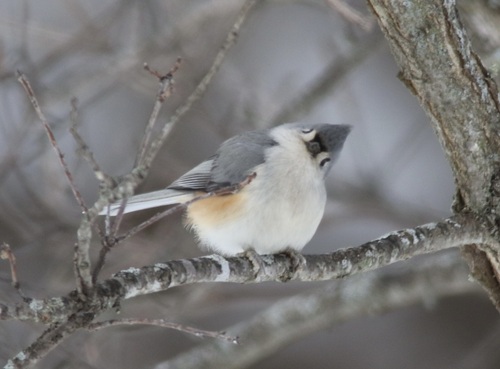 Tufted Titmouse
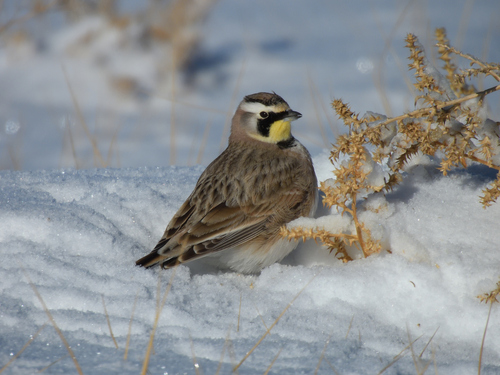 Shore Lark
In short
The most reliable field mark to separate Tufted Titmouse from Shore Lark is the presence of a prominent gray crest on the titmouse, which is never shown by the lark. In flight or at rest, Shore Lark (Horned Lark) is larger, longer-winged, and shows a striking black-and-yellow (or black-and-white in some races) facial pattern with black 'horns' in adult males, while Tufted Titmouse is plainer gray above with a black forehead and rusty flanks. Juvenile titmice lack the full black forehead and crest, but still never approach the bold face pattern of any Shore Lark. The two species also differ strongly in structure, behavior, and habitat: titmice are small, short-tailed woodland birds often seen at feeders or in flocks, while larks are ground-dwelling, open-country birds with longer wings and tails, and a more upright stance.
Identification tips
- Crest vs. Horns: Tufted Titmouse always shows a prominent gray crest (even in juveniles, though reduced), never black 'horns'. Shore Lark never has a crest, but adult males in summer show black 'horns'—tufts of feathers on the crown. Females and immatures lark lack horns but still have patterned faces.
- Face Pattern: Shore Lark has a bold black-and-yellow (or black-and-white) face with a black mask and throat in all plumages, most striking in adult males. Tufted Titmouse has a plain gray face with a small black patch on the forehead (reduced in juveniles) and never shows a mask or yellow/white face.
- Rusty Flanks: Tufted Titmouse has rusty or cinnamon flanks, visible from the side, unique among these two. Shore Lark's flanks are pale and never rusty.
- Tail Pattern: Shore Lark's tail is mostly black except for the central feathers, creating a strong contrast in flight or when spread. Titmouse has a plain gray tail with no black.
- Body Structure: Titmouse is compact, short-tailed, and round-headed with a short bill. Shore Lark is longer-bodied, longer-tailed, and has a more slender, pointed bill.
- Size in Field: Shore Lark is noticeably larger and heavier than Tufted Titmouse. If seen side by side, the lark will look longer and bulkier.
- Perching vs. Ground: Titmice are almost always seen perched in trees or shrubs, rarely on the ground. Shore Larks are almost always on the ground, walking or running.
- Flight Style: Titmouse makes short, bounding flights between trees or feeders. Shore Lark has a more direct, undulating flight, often over open ground.
- Habitat: Titmouse is found in wooded or suburban areas, often at feeders. Shore Lark is in open country—fields, shorelines, tundra, or mountain slopes.
- Vocalizations: Titmouse gives loud, clear whistles; lark gives soft, tinkling warbles and weak calls. If you hear a strong 'peter-peter-peter', it's a titmouse.
- Juvenile Pitfall: Juvenile titmice lack the full black forehead, making them even plainer, but still never show the bold face pattern of lark. Juvenile larks are duller but retain facial patterning.
- Sex Differences: Male larks in summer are most striking with full horns and face pattern; females and immatures are duller but still patterned. Titmouse sexes are similar, with males slightly larger.
- Feeder Behavior: Titmouse frequently visits feeders, taking one seed at a time and caching it. Shore Lark does not visit feeders.
- Association with Other Birds: Titmouse often joins mixed flocks with chickadees and other woodland birds. Shore Lark forms single-species flocks in open habitats.
- Tail Flicking: Titmouse may flick its tail and wings while foraging in trees; Shore Lark does not show this behavior.
Size
Shore Lark is distinctly larger and heavier than Tufted Titmouse. Shore Lark measures 16–20 cm in length, weighs 28–48 g, and has a wingspan of 30–34 cm [wikipedia][avonet]. Tufted Titmouse is smaller, at 14–16 cm long, 18–26 g, and a wingspan of 20–26 cm [wikipedia][avonet]. In the field, this translates to Shore Lark appearing longer-bodied and more robust, with proportionally longer wings and tail, while Tufted Titmouse is compact and short-tailed.
Plumage
No age-specific upperwing pattern is described for either species, so focus is on head and body plumage. Adult Tufted Titmouse is gray above with a white front, rusty flanks, a black forehead, and a prominent gray crest. Juveniles lack the full black forehead and have a reduced crest, but still show plain gray upperparts and no bold face pattern. Shore Lark is brown-gray above and pale below, but stands out by its striking face: adult males in summer have a yellow (or white in some races) face with bold black mask, throat, and 'horns'—two tufts of black feathers on the crown. The tail of Shore Lark is mostly black except for the central feathers, creating a strong contrast in flight. Females and immatures are duller but still show a patterned face and lack any crest. Titmouse never shows black 'horns', yellow or white face, or a black tail. The rusty flanks of titmouse are unique among these two. In summary: titmouse is plainer with a crest and rusty flanks; lark is boldly marked on the face, lacks a crest, and has a contrasting tail.
Behaviour
Tufted Titmouse is an active, agile woodland bird, often seen in small flocks or mixed-species groups, moving through trees and shrubs, frequently visiting feeders, and making quick flights from cover to cover. It rarely spends time on the ground. Shore Lark is a ground-dwelling species, walking or running on open ground, often in loose flocks outside the breeding season. It is rarely seen in trees, and its flight is more undulating and direct, often accompanied by song in display flights. The titmouse caches food and is vocally active in the canopy, while the lark is more likely to be seen foraging or nesting on bare ground.
Habitat
Tufted Titmouse is found in deciduous and mixed woodlands, gardens, parks, and shrublands—almost always in areas with trees or substantial shrub cover. It is a frequent visitor to backyard feeders in the eastern US. Shore Lark occupies open habitats: bare ground, shorelines, fields, tundra, and sometimes mountain slopes. It avoids wooded areas and is rarely seen near feeders. If you see the bird in a forest or at a feeder, it is almost certainly a titmouse; if on open ground or shorelines, especially in winter, it is likely a lark.
Voice
Tufted Titmouse gives a clear, whistled 'peter-peter-peter' song, often repeated and variable, and is generally loud and easy to hear. Calls are sharp and scolding. Shore Lark's song is a high-pitched, tinkling or lisping warble, often delivered in flight, and its calls are weak and thin compared to the titmouse. In the field, the titmouse's voice is much more prominent and musical, while the lark's is softer and more delicate.