

Motmot

Townsend's Storm-Petrel vs Wedge-rumped Storm-Petrel

Hydrobates socorroensis versus Hydrobates tethys

Play a quiz with Townsend's Storm-Petrel and Wedge-rumped Storm-Petrel
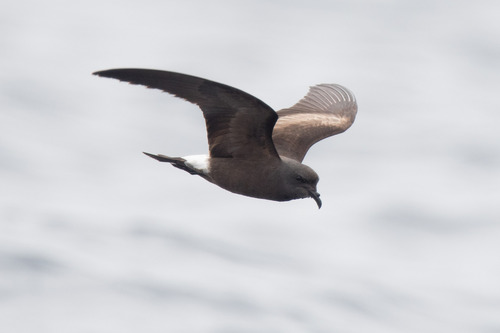
Townsend's Storm-Petrel (Hydrobates socorroensis) Townsend's Storm-Petrel
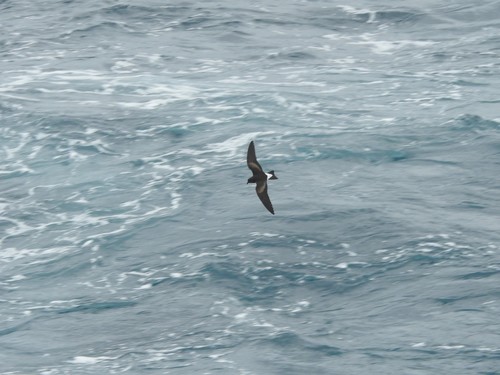
Wedge-rumped Storm-Petrel (Hydrobates tethys) Wedge-rumped Storm-Petrel

Media

Loading…

In short

The most reliable way to separate Townsend's Storm-Petrel from Wedge-rumped Storm-Petrel is by location: Townsend's breeds only on Guadalupe Island off Mexico and ranges north to southern California, while Wedge-rumped breeds in the Galápagos and along the Peruvian coast. In the field, both are small, dark storm-petrels, but Wedge-rumped is best known for its distinctive pale wedge-shaped rump patch, which is absent in Townsend's. If you see a storm-petrel with a clearly defined pale wedge on the rump, it is Wedge-rumped; if the rump is uniformly dark, it is Townsend's. Other structural and behavioral differences are subtle and not well documented in the available sources.

Identification tips

  1. Rump pattern is the single best field mark: Wedge-rumped Storm-Petrel always shows a pale wedge-shaped rump patch; Townsend's Storm-Petrel has a uniformly dark rump. This mark is reliable for all ages and in all seasons.
  2. Geographic range is highly diagnostic: Off California or western Mexico, expect Townsend's; off Peru or the Galápagos, expect Wedge-rumped. Vagrancy is rare, so use range as a primary filter.
  3. Overall coloration: Both species are dark overall, but only Wedge-rumped has a contrasting pale rump. Do not rely on subtle differences in darkness or gloss.
  4. No documented age-specific wing or tail patterns: Neither species is reported to show distinctive upperwing or tail marks that differ by age, so focus on rump pattern.
  5. Bill and structural features: No reliable differences in bill size, wing length, or tail shape are described in the available sources; structure is not a safe separator.
  6. Flight style: Both species have typical storm-petrel flight and feeding behavior; do not use jizz or flight action to separate them.
  7. Perched views: The rump mark is visible when perched as well as in flight; a pale wedge on the rump always indicates Wedge-rumped.
  8. Sex and seasonal variation: No sexual or seasonal plumage differences relevant to identification are documented for either species.
  9. Voice: No vocal differences are described in the available sources; do not use calls or songs for separation.
  10. Pitfalls: In poor light or distant views, the pale rump of Wedge-rumped can be missed, making it appear uniformly dark like Townsend's. Always try for a clear view of the rump in good light.
  11. Immature birds: Even juveniles and immatures of Wedge-rumped show the pale rump; Townsend's of all ages lack it.
  12. Context: If you are on a pelagic trip, check the expected species for your location and season—this will usually resolve confusion between these two.
  13. Do not use subtle differences: Do not attempt to separate these species by minor differences in size, darkness, or flight style; these are not supported by the available data.
  14. Checklist approach: If you see a storm-petrel with a pale wedge-shaped rump anywhere in the eastern Pacific south of Mexico, it is almost certainly Wedge-rumped. If the rump is dark and you are north of the Galápagos, it is Townsend's.
  15. Summary tip: Always prioritize rump pattern and location above all other marks when separating these two species.

Size

Both species are small storm-petrels in the genus Hydrobates, and no size differences are noted in the available sources. Expect similar proportions and mass in the field; size is not a useful separator between these two.

Plumage

The key plumage difference is the rump: Wedge-rumped Storm-Petrel of all ages shows a conspicuous pale wedge-shaped rump patch, visible both in flight and when perched. Townsend's Storm-Petrel, by contrast, has a uniformly dark rump with no pale patch. This difference applies to adults and immatures alike. No age-specific upperwing or tail pattern differences are documented in the sources for either species. Both are otherwise dark overall, typical of the group, but the rump pattern is diagnostic.

Behaviour

Both species are pelagic and exhibit typical storm-petrel flight: fluttering, bounding, and sometimes pattering on the water. No distinctive behavioral differences are documented in the available sources. Flight style and feeding behavior are not reliable for separating these two.

Habitat

Townsend's Storm-Petrel breeds exclusively on Guadalupe Island off western Mexico and ranges north to southern California and south to 10°N in the eastern Pacific. Wedge-rumped Storm-Petrel breeds in the Galápagos Islands and along the coast of Peru. If you are birding off California or Mexico, Townsend's is expected; off Ecuador, Peru, or the Galápagos, Wedge-rumped is the default. Overlap at sea is unlikely, so location is a strong clue.

Submit a better description

Use the same sections as the comparison. Your text is published immediately.

The most reliable way to separate Townsend's Storm-Petrel from Wedge-rumped Storm-Petrel is by location: Townsend's breeds only on Guadalupe Island off Mexico and ranges north to southern California, while Wedge-rumped breeds in the Galápagos and along the Peruvian coast. In the field, both are small, dark storm-petrels, but Wedge-rumped is best known for its distinctive pale wedge-shaped rump patch, which is absent in Townsend's. If you see a storm-petrel with a clearly defined pale wedge on the rump, it is Wedge-rumped; if the rump is uniformly dark, it is Townsend's. Other structural and behavioral differences are subtle and not well documented in the available sources.

  1. Rump pattern is the single best field mark: Wedge-rumped Storm-Petrel always shows a pale wedge-shaped rump patch; Townsend's Storm-Petrel has a uniformly dark rump. This mark is reliable for all ages and in all seasons.
  2. Geographic range is highly diagnostic: Off California or western Mexico, expect Townsend's; off Peru or the Galápagos, expect Wedge-rumped. Vagrancy is rare, so use range as a primary filter.
  3. Overall coloration: Both species are dark overall, but only Wedge-rumped has a contrasting pale rump. Do not rely on subtle differences in darkness or gloss.
  4. No documented age-specific wing or tail patterns: Neither species is reported to show distinctive upperwing or tail marks that differ by age, so focus on rump pattern.
  5. Bill and structural features: No reliable differences in bill size, wing length, or tail shape are described in the available sources; structure is not a safe separator.
  6. Flight style: Both species have typical storm-petrel flight and feeding behavior; do not use jizz or flight action to separate them.
  7. Perched views: The rump mark is visible when perched as well as in flight; a pale wedge on the rump always indicates Wedge-rumped.
  8. Sex and seasonal variation: No sexual or seasonal plumage differences relevant to identification are documented for either species.
  9. Voice: No vocal differences are described in the available sources; do not use calls or songs for separation.
  10. Pitfalls: In poor light or distant views, the pale rump of Wedge-rumped can be missed, making it appear uniformly dark like Townsend's. Always try for a clear view of the rump in good light.
  11. Immature birds: Even juveniles and immatures of Wedge-rumped show the pale rump; Townsend's of all ages lack it.
  12. Context: If you are on a pelagic trip, check the expected species for your location and season—this will usually resolve confusion between these two.
  13. Do not use subtle differences: Do not attempt to separate these species by minor differences in size, darkness, or flight style; these are not supported by the available data.
  14. Checklist approach: If you see a storm-petrel with a pale wedge-shaped rump anywhere in the eastern Pacific south of Mexico, it is almost certainly Wedge-rumped. If the rump is dark and you are north of the Galápagos, it is Townsend's.
  15. Summary tip: Always prioritize rump pattern and location above all other marks when separating these two species.

Both species are small storm-petrels in the genus Hydrobates, and no size differences are noted in the available sources. Expect similar proportions and mass in the field; size is not a useful separator between these two.

The key plumage difference is the rump: Wedge-rumped Storm-Petrel of all ages shows a conspicuous pale wedge-shaped rump patch, visible both in flight and when perched. Townsend's Storm-Petrel, by contrast, has a uniformly dark rump with no pale patch. This difference applies to adults and immatures alike. No age-specific upperwing or tail pattern differences are documented in the sources for either species. Both are otherwise dark overall, typical of the group, but the rump pattern is diagnostic.

Both species are pelagic and exhibit typical storm-petrel flight: fluttering, bounding, and sometimes pattering on the water. No distinctive behavioral differences are documented in the available sources. Flight style and feeding behavior are not reliable for separating these two.

Townsend's Storm-Petrel breeds exclusively on Guadalupe Island off western Mexico and ranges north to southern California and south to 10°N in the eastern Pacific. Wedge-rumped Storm-Petrel breeds in the Galápagos Islands and along the coast of Peru. If you are birding off California or Mexico, Townsend's is expected; off Ecuador, Peru, or the Galápagos, Wedge-rumped is the default. Overlap at sea is unlikely, so location is a strong clue.

Discard your changes?

You have unsaved edits. If you leave now, those changes will be lost.

Townsend's Storm-Petrel · Wedge-rumped Storm-Petrel · My Tricky Birds