
Thrush Nightingale vs Common Nightingale
Luscinia luscinia versus Luscinia megarhynchos
Play a quiz with Thrush Nightingale and Common Nightingale
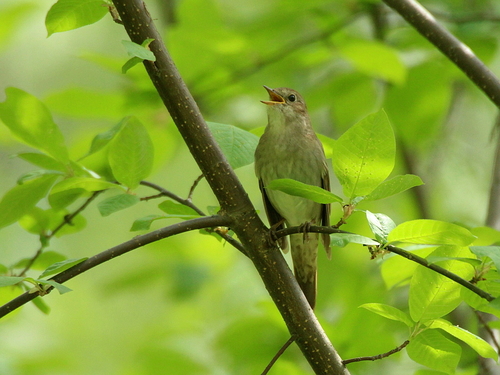 Thrush Nightingale
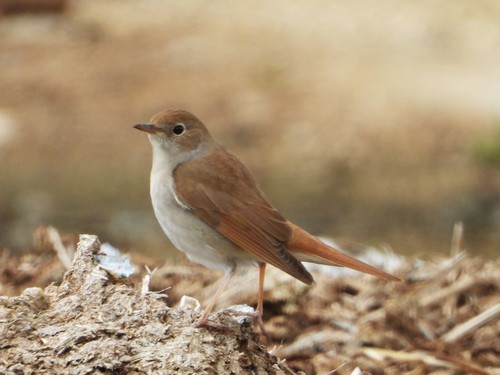 Common Nightingale
In short
The most reliable field mark to separate Thrush Nightingale from Common Nightingale is the overall tone and pattern of the upperparts and tail: Thrush Nightingale is a uniform dark brown above with no obvious rufous tones, while Common Nightingale shows a distinctly rufous tail and rump contrasting with plainer brown upperparts. Juvenile and adult Thrush Nightingales are both darker and more mottled below, with a cloudy, grey-brown look, whereas Common Nightingale is cleaner and paler below. In flight or perched, look for the lack of rufous in the tail and upperparts for Thrush Nightingale. Both species are similar in size and shape, but subtle differences in plumage and overall coloration are key, especially in poor light or dense cover.
Identification tips
- Tail color and contrast (all ages): Common Nightingale shows a bright rufous tail and rump that contrast with the brown back, especially obvious when the bird flicks its tail or in flight. Thrush Nightingale's tail is darker rufous-brown and does not stand out from the uniformly dark brown upperparts.
- Overall upperpart tone (all ages): Thrush Nightingale is a uniform dark brown above, with a slight olive tinge and no rufous tones. Common Nightingale is paler brown above, with a warmer, rufous rump and tail.
- Underpart pattern (all ages, especially juveniles): Thrush Nightingale has a cloudy, mottled appearance below, with brown spotting on the sides of the throat and breast. Common Nightingale is cleaner and paler below, buff to white, with little or no mottling.
- Face pattern (adults, especially eastern subspecies): Some Common Nightingales (L. m. golzi, L. m. africana) show a pale supercilium and stronger face pattern, which Thrush Nightingale lacks. Most Thrush Nightingales have plain, brownish-black lores and ear-coverts.
- Juvenile plumage: Juvenile Thrush Nightingales are darker and more heavily mottled below than juvenile Common Nightingales.
- Wing and upperwing pattern: Both species have plain wings, but Common Nightingale's are slightly warmer and more rufous-toned; this is subtle and not always reliable.
- Bill, legs, and eye color: Both species have brown bills, legs, and feet, and dark brown irises; these features are not useful for separation.
- Song: If heard well, Thrush Nightingale's song is more solemn and less varied than the Common Nightingale's famously musical and variable song. Use with caution unless experienced.
- Habitat and range: In northern and eastern Europe, especially in damp, dense undergrowth, Thrush Nightingale is more likely. In southern and western Europe, in drier, open scrub or woodland edge, Common Nightingale is more likely.
- Season: Both species are migratory and overlap in some areas during migration. In western Europe, especially the UK, Common Nightingale is the expected breeder; Thrush Nightingale is a rare visitor.
- Sex and age: Both species are sexually monomorphic (sexes look alike). Age differences are most useful in the underpart pattern (juveniles more mottled in Thrush Nightingale).
- Flight views: In flight, the rufous tail of Common Nightingale is often obvious, while Thrush Nightingale appears more uniformly dark and lacks strong tail contrast.
- Perched views: Look for the overall dark, cloudy, and mottled look of Thrush Nightingale versus the cleaner, paler, and warmer-toned Common Nightingale.
- Pitfalls: Poor light can obscure the rufous tones of Common Nightingale's tail, making it appear more like Thrush Nightingale. Juveniles of both species can be confusing, but the heavier mottling of Thrush Nightingale is a good clue.
- Overlap and hybrids: Where ranges overlap, hybrids have occurred and can be very difficult to identify. Use a combination of marks and, if possible, song and habitat to support your identification.
Size
Both species are very similar in size, each being about the size of a European Robin. Thrush Nightingale is around 16 cm long with an 18 cm wingspan, while Common Nightingale ranges from 15–16.5 cm in length. There is no meaningful difference in size or structure that is reliable in the field; both are small, compact, and similarly proportioned passerines. Sexes are alike in both species.
Plumage
- Juveniles and immatures: Thrush Nightingale juveniles are darker and more mottled overall than Common Nightingale, especially on the underparts. The breast and throat of Thrush Nightingale show strong brown mottling and spotting, while Common Nightingale juveniles are paler and less heavily marked below.
- Adults: Thrush Nightingale is uniformly dark brown above, with a slight olive tinge but no rufous tones. The tail is dark rufous-brown but does not contrast strongly with the back. Underparts are pale buff or whitish but always mottled and cloudy, especially on the breast and sides of the throat. Common Nightingale, by contrast, is plain brown above but with a distinctly rufous tail and rump that stand out from the rest of the upperparts. Its underparts are cleaner, buff to white, and less mottled than Thrush Nightingale. Some eastern and Caucasian Common Nightingales show a pale supercilium and stronger face pattern, which Thrush Nightingale lacks.
- Wing pattern: Neither species has strong wing panels or contrasting upperwing marks; both have plain wings, but Common Nightingale's are slightly warmer-toned.
Behaviour
Both species are secretive, often skulking in dense undergrowth and rarely venturing into the open. They forage mostly on the ground for insects and other invertebrates. Flight is typically low and direct between cover. There are no strong behavioral differences noted in the sources that would reliably separate the two in the field.
Habitat
Thrush Nightingale breeds in damp forests and dense undergrowth, often near water and frequently in beds of nettles or thick vegetation. Its range is more northerly and easterly, covering eastern Europe and western Asia. Common Nightingale prefers drier, open scrub, woodland edge, and coppice, especially in southern and western parts of Europe. Where ranges overlap, habitat can be a clue: Thrush Nightingale is more likely in wetter, denser, and more northerly sites, while Common Nightingale favors drier, more open, and southerly habitats.
Voice
Both species have powerful and beautiful songs, but the Thrush Nightingale's song is described as more solemn and less varied than the Common Nightingale's famously rich and musical song. However, song is not a reliable field mark for separating the two unless you are very familiar with their subtle differences. Both sexes look alike, but only the male Common Nightingale sings.