

rouxinol-oriental vs rouxinol
Luscinia luscinia versus Luscinia megarhynchos
Jogue um quiz com rouxinol-oriental e rouxinol
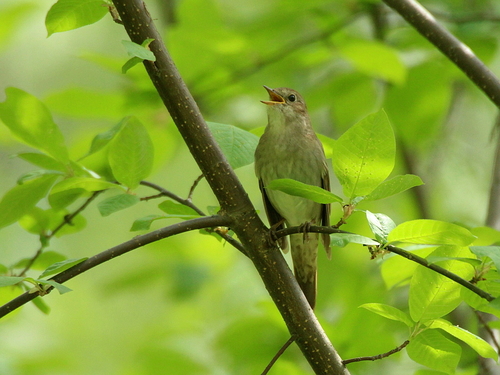 rouxinol-oriental
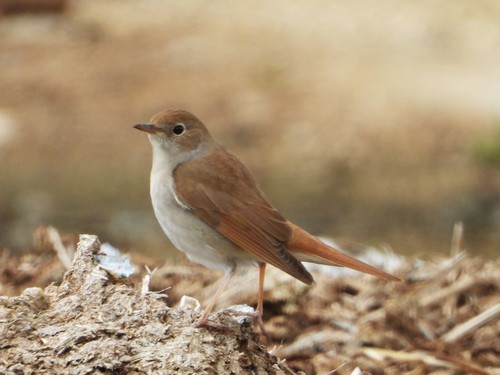 rouxinol
Em resumo
A marca de campo mais confiável para separar o rouxinol-oriental do rouxinol é o tom e o padrão geral das partes superiores e da cauda: o rouxinol-oriental é um marrom escuro uniforme por cima, sem tons ruivos óbvios, enquanto o rouxinol apresenta uma cauda e um rabo distintamente ruivos que contrastam com as partes superiores marrons mais simples. Os rouxinóis-orientais juvenis e adultos são ambos mais escuros e mais manchados por baixo, com uma aparência nublada e marrom-acinzentada, enquanto o rouxinol é mais limpo e mais claro por baixo. Em voo ou empoleirado, procure a falta de ruivo na cauda e nas partes superiores do rouxinol-oriental. Ambas as espécies são semelhantes em tamanho e forma, mas diferenças sutis na plumagem e na coloração geral são fundamentais, especialmente em luz fraca ou em cobertura densa.
Dicas de identificação
- Cor e contraste da cauda (todas as idades): O rouxinol apresenta uma cauda e um rabo ruivos brilhantes que contrastam com as costas marrons, especialmente óbvio quando o pássaro balança a cauda ou em voo. A cauda do rouxinol-oriental é marrom-ruiva mais escura e não se destaca das partes superiores uniformemente marrons.
- Tom geral das partes superiores (todas as idades): O rouxinol-oriental é um marrom escuro uniforme por cima, com um leve tom oliva e sem tons ruivos. O rouxinol é um marrom mais claro por cima, com um rabo e um rabo ruivos mais quentes.
- Padrão das partes inferiores (todas as idades, especialmente juvenis): O rouxinol-oriental tem uma aparência nublada e manchada por baixo, com manchas marrons nos lados da garganta e do peito. O rouxinol é mais limpo e mais claro por baixo, de cor creme a branca, com pouca ou nenhuma mancha.
- Padrão do rosto (adultos, especialmente subespécies orientais): Alguns rouxinóis (L. m. golzi, L. m. africana) apresentam um supercílios pálido e um padrão facial mais forte, que o rouxinol-oriental não possui. A maioria dos rouxinóis-orientais tem lore e coberturas auriculares marrons-pretas simples.
- Plumagem juvenil: Os juvenis do rouxinol-oriental são mais escuros e mais manchados por baixo do que os juvenis do rouxinol.
- Padrão das asas e das asas superiores: Ambas as espécies têm asas simples, mas as do rouxinol são ligeiramente mais quentes e com tons ruivos; isso é sutil e nem sempre confiável.
- Bico, pernas e cor dos olhos: Ambas as espécies têm bicos, pernas e pés marrons, e íris marrons-escuras; essas características não são úteis para separação.
- Canto: Se ouvido bem, o canto do rouxinol-oriental é mais solene e menos variado do que o famoso canto musical e variável do rouxinol. Use com cautela, a menos que tenha experiência.
- Habitat e distribuição: No norte e leste da Europa, especialmente em sub-bosques úmidos e densos, o rouxinol-oriental é mais provável. No sul e oeste da Europa, em arbustos abertos e secos ou na borda de florestas, o rouxinol é mais provável.
- Estação: Ambas as espécies são migratórias e se sobrepõem em algumas áreas durante a migração. No oeste da Europa, especialmente no Reino Unido, o rouxinol é o reprodutor esperado; o rouxinol-oriental é um visitante raro.
- Sexo e idade: Ambas as espécies são sexualmente monomórficas (os sexos se parecem). As diferenças de idade são mais úteis no padrão das partes inferiores (juvenis mais manchados no rouxinol-oriental).
- Visões em voo: Em voo, a cauda ruiva do rouxinol é frequentemente óbvia, enquanto o rouxinol-oriental parece mais uniformemente escuro e carece de forte contraste na cauda.
- Visões empoleiradas: Procure a aparência geral escura, nublada e manchada do rouxinol-oriental em comparação com o rouxinol, que é mais limpo, mais claro e com tons mais quentes.
- Armadilhas: Luz fraca pode obscurecer os tons ruivos da cauda do rouxinol, fazendo-o parecer mais com o rouxinol-oriental. Juvenis de ambas as espécies podem ser confusos, mas a mancha mais pesada do rouxinol-oriental é uma boa pista.
- Sobreposição e híbridos: Onde as distribuições se sobrepõem, híbridos ocorreram e podem ser muito difíceis de identificar. Use uma combinação de marcas e, se possível, canto e habitat para apoiar sua identificação.
Tamanho
Ambas as espécies são muito semelhantes em tamanho, cada uma sendo aproximadamente do tamanho de um pisco-de-peito-ruivo. O rouxinol-oriental mede cerca de 16 cm de comprimento com uma envergadura de 18 cm, enquanto o rouxinol varia de 15 a 16,5 cm de comprimento. Não há diferença significativa em tamanho ou estrutura que seja confiável em campo; ambas são pequenas, compactas e proporcionalmente semelhantes. Os sexos são semelhantes em ambas as espécies.
Plumagem
- Juvenis e imaturos: Os juvenis do rouxinol-oriental são mais escuros e mais manchados no geral do que o rouxinol, especialmente nas partes inferiores. O peito e a garganta do rouxinol-oriental apresentam forte manchamento e manchas marrons, enquanto os juvenis do rouxinol são mais claros e menos marcados por baixo.
- Adultos: O rouxinol-oriental é uniformemente marrom escuro por cima, com um leve tom oliva, mas sem tons ruivos. A cauda é marrom-ruiva escura, mas não contrasta fortemente com as costas. As partes inferiores são de um creme pálido ou esbranquiçado, mas sempre manchadas e nubladas, especialmente no peito e nos lados da garganta. O rouxinol, em contraste, é marrom simples por cima, mas com uma cauda e um rabo distintamente ruivos que se destacam do restante das partes superiores. Suas partes inferiores são mais limpas, de creme a branca, e menos manchadas do que as do rouxinol-oriental. Alguns rouxinóis orientais e caucasianos apresentam um supercílios pálido e um padrão facial mais forte, que o rouxinol-oriental não possui.
- Padrão das asas: Nenhuma das espécies tem painéis de asas fortes ou marcas contrastantes nas asas superiores; ambas têm asas simples, mas as do rouxinol são ligeiramente mais quentes em tom.
Comportamento
Ambas as espécies são secretivas, frequentemente se escondendo em sub-bosques densos e raramente se aventurando em áreas abertas. Elas forrageiam principalmente no chão em busca de insetos e outros invertebrados. O voo é tipicamente baixo e direto entre as coberturas. Não há diferenças comportamentais fortes observadas nas fontes que separariam confiavelmente as duas em campo.
Habitat
O rouxinol-oriental se reproduz em florestas úmidas e sub-bosques densos, frequentemente perto da água e frequentemente em leitos de urtigas ou vegetação densa. Sua distribuição é mais ao norte e a leste, cobrindo a Europa Oriental e a Ásia Ocidental. O rouxinol prefere arbustos abertos e secos, bordas de florestas e talhadia, especialmente nas partes sul e oeste da Europa. Onde as distribuições se sobrepõem, o habitat pode ser uma pista: o rouxinol-oriental é mais provável em locais mais úmidos, densos e mais ao norte, enquanto o rouxinol prefere habitats mais secos, abertos e ao sul.
Voz
Ambas as espécies têm canções poderosas e bonitas, mas a canção do rouxinol-oriental é descrita como mais solene e menos variada do que a famosa canção rica e musical do rouxinol. No entanto, o canto não é uma marca de campo confiável para separar os dois, a menos que você esteja muito familiarizado com suas sutis diferenças. Ambos os sexos se parecem, mas apenas o macho do rouxinol canta.