
Ruiseñor Ruso vs Ruiseñor Común
Luscinia luscinia frente a Luscinia megarhynchos
Juega un quiz con Ruiseñor Ruso y Ruiseñor Común
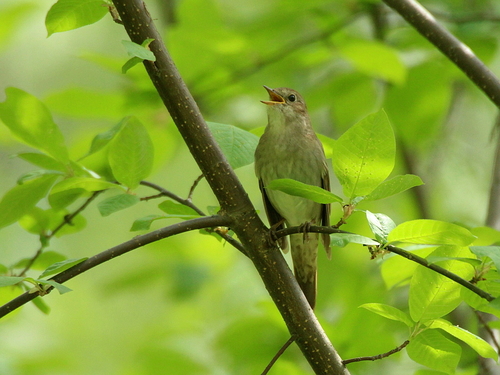 Ruiseñor Ruso
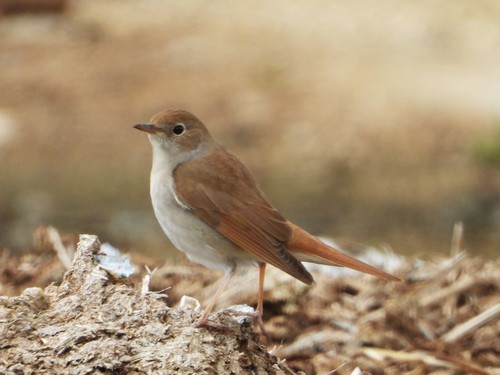 Ruiseñor Común
En breve
La marca de campo más confiable para separar el Ruiseñor Ruso del Ruiseñor Común es el tono y patrón general de las partes superiores y la cola: el Ruiseñor Ruso es de un marrón oscuro uniforme por encima sin tonos rufo obvios, mientras que el Ruiseñor Común muestra una cola y un obispillo distintivamente rufos que contrastan con las partes superiores marrones más simples. Tanto los ruiseñores rusos juveniles como los adultos son más oscuros y más moteados por debajo, con un aspecto gris-marrón nublado, mientras que el Ruiseñor Común es más limpio y más pálido por debajo. En vuelo o posado, busca la falta de rufo en la cola y las partes superiores del Ruiseñor Ruso. Ambas especies son similares en tamaño y forma, pero las diferencias sutiles en el plumaje y la coloración general son clave, especialmente en luz pobre o cobertura densa.
Consejos de identificación
- Color y contraste de la cola (todas las edades): El Ruiseñor Común muestra una cola y un obispillo rufos brillantes que contrastan con la espalda marrón, especialmente obvio cuando el pájaro agita su cola o en vuelo. La cola del Ruiseñor Ruso es de un marrón rufoso más oscuro y no se destaca del marrón oscuro uniforme de las partes superiores.
- Tono general de las partes superiores (todas las edades): El Ruiseñor Ruso es de un marrón oscuro uniforme por encima, con un ligero tinte oliva y sin tonos rufos. El Ruiseñor Común es de un marrón más pálido por encima, con un obispillo y cola rufos más cálidos.
- Patrón de las partes inferiores (todas las edades, especialmente juveniles): El Ruiseñor Ruso tiene una apariencia nublada y moteada por debajo, con manchas marrones en los lados de la garganta y el pecho. El Ruiseñor Común es más limpio y más pálido por debajo, de color crema a blanco, con poco o ningún moteado.
- Patrón de la cara (adultos, especialmente subespecies orientales): Algunos Ruiseñores Comunes (L. m. golzi, L. m. africana) muestran un supercilio pálido y un patrón facial más fuerte, que el Ruiseñor Ruso carece. La mayoría de los Ruiseñores Rusos tienen loreos y cobertores de oído de un marrón negro simple.
- Plumaje juvenil: Los juveniles del Ruiseñor Ruso son más oscuros y más moteados por debajo que los juveniles del Ruiseñor Común.
- Patrón de alas y ala superior: Ambas especies tienen alas simples, pero las del Ruiseñor Común son ligeramente más cálidas y con tonos rufos; esto es sutil y no siempre confiable.
- Color del pico, patas y ojos: Ambas especies tienen picos, patas y pies marrones, y ojos de iris marrón oscuro; estas características no son útiles para la separación.
- Canto: Si se escucha bien, el canto del Ruiseñor Ruso es más solemne y menos variado que el famoso canto musical y variable del Ruiseñor Común. Úsalo con precaución a menos que seas experimentado.
- Hábitat y distribución: En el norte y este de Europa, especialmente en la maleza densa y húmeda, es más probable encontrar el Ruiseñor Ruso. En el sur y oeste de Europa, en matorrales secos y abiertos o en el borde del bosque, es más probable encontrar el Ruiseñor Común.
- Temporada: Ambas especies son migratorias y se superponen en algunas áreas durante la migración. En el oeste de Europa, especialmente en el Reino Unido, se espera que el Ruiseñor Común sea el criador; el Ruiseñor Ruso es un visitante raro.
- Sexo y edad: Ambas especies son sexualmente monomórficas (los sexos se parecen). Las diferencias de edad son más útiles en el patrón de las partes inferiores (los juveniles son más moteados en el Ruiseñor Ruso).
- Vistas en vuelo: En vuelo, la cola rufa del Ruiseñor Común es a menudo obvia, mientras que el Ruiseñor Ruso aparece más uniformemente oscuro y carece de un fuerte contraste en la cola.
- Vistas posadas: Busca el aspecto oscuro, nublado y moteado del Ruiseñor Ruso frente al aspecto más limpio, pálido y de tonos más cálidos del Ruiseñor Común.
- Trampas: La luz pobre puede oscurecer los tonos rufos de la cola del Ruiseñor Común, haciéndola parecer más como el Ruiseñor Ruso. Los juveniles de ambas especies pueden ser confusos, pero el moteado más pesado del Ruiseñor Ruso es una buena pista.
- Superposición e híbridos: Donde las distribuciones se superponen, han ocurrido híbridos y pueden ser muy difíciles de identificar. Usa una combinación de marcas y, si es posible, canto y hábitat para apoyar tu identificación.
Tamaño
Ambas especies son muy similares en tamaño, cada una siendo aproximadamente del tamaño de un Petirrojo Europeo. El Ruiseñor Ruso mide alrededor de 16 cm de largo con una envergadura de 18 cm, mientras que el Ruiseñor Común varía de 15 a 16.5 cm de longitud. No hay una diferencia significativa en tamaño o estructura que sea confiable en el campo; ambas son pequeñas, compactas y con proporciones similares. Los sexos son similares en ambas especies.
Plumaje
- Juveniles e inmaduros: Los juveniles del Ruiseñor Ruso son más oscuros y más moteados en general que el Ruiseñor Común, especialmente en las partes inferiores. El pecho y la garganta del Ruiseñor Ruso muestran un fuerte moteado y manchas marrones, mientras que los juveniles del Ruiseñor Común son más pálidos y menos marcados por debajo.
- Adultos: El Ruiseñor Ruso es uniformemente marrón oscuro por encima, con un ligero tinte oliva pero sin tonos rufos. La cola es de un marrón rufoso oscuro pero no contrasta fuertemente con la espalda. Las partes inferiores son de un color crema pálido o blanquecino pero siempre moteadas y nubladas, especialmente en el pecho y los lados de la garganta. El Ruiseñor Común, en contraste, es de un marrón simple por encima pero con una cola y un obispillo rufos que destacan del resto de las partes superiores. Sus partes inferiores son más limpias, de color crema a blanco, y menos moteadas que las del Ruiseñor Ruso. Algunos Ruiseñores Comunes orientales y caucásicos muestran un supercilio pálido y un patrón facial más fuerte, que el Ruiseñor Ruso carece.
- Patrón de alas: Ninguna de las especies tiene paneles de alas fuertes o marcas contrastantes en las alas superiores; ambas tienen alas simples, pero las del Ruiseñor Común son ligeramente más cálidas en tono.
Comportamiento
Ambas especies son secretivas, a menudo ocultándose en la maleza densa y rara vez aventurándose al aire libre. Forrajean principalmente en el suelo en busca de insectos y otros invertebrados. El vuelo es típicamente bajo y directo entre la cobertura. No se han notado diferencias de comportamiento fuertes en las fuentes que permitan separar confiablemente a las dos en el campo.
Hábitat
El Ruiseñor Ruso cría en bosques húmedos y maleza densa, a menudo cerca del agua y frecuentemente en lechos de ortigas o vegetación espesa. Su distribución es más septentrional y oriental, cubriendo Europa del Este y Asia Occidental. El Ruiseñor Común prefiere matorrales secos y abiertos, el borde del bosque y la corta, especialmente en las partes del sur y oeste de Europa. Donde las distribuciones se superponen, el hábitat puede ser una pista: el Ruiseñor Ruso es más probable que se encuentre en sitios más húmedos, densos y más septentrionales, mientras que el Ruiseñor Común favorece hábitats más secos, abiertos y del sur.
Voz
Ambas especies tienen cantos poderosos y hermosos, pero el canto del Ruiseñor Ruso se describe como más solemne y menos variado que el famoso canto rico y musical del Ruiseñor Común. Sin embargo, el canto no es una marca de campo confiable para separar a los dos a menos que estés muy familiarizado con sus diferencias sutiles. Ambos sexos se parecen, pero solo el macho del Ruiseñor Común canta.