

Motmot

Terek Sandpiper vs Green Sandpiper

Xenus cinereus versus Tringa ochropus

Play a quiz with Terek Sandpiper and Green Sandpiper
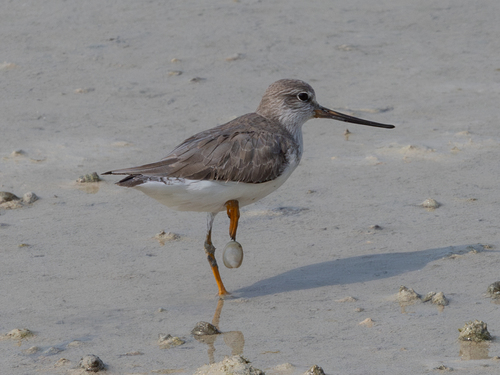
Terek Sandpiper (Xenus cinereus) Terek Sandpiper
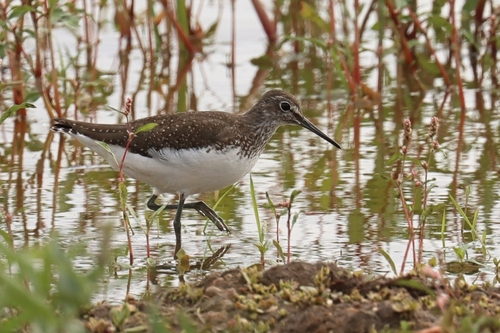
Green Sandpiper (Tringa ochropus) Green Sandpiper

Media

Loading…

In short

The most reliable way to separate Terek Sandpiper from Green Sandpiper is by bill shape and flight pattern: Terek Sandpiper has a long, distinctly upcurved bill and shows a plain grey back and wings, while Green Sandpiper has a straight, short dark bill and a striking white rump and dark wings in flight. Juvenile and non-breeding Green Sandpipers often show less spotting above, but always retain the white rump, which is absent in Terek. Terek Sandpiper's yellow legs and active, running feeding style also contrast with the Green Sandpiper's darker legs and more deliberate movements. Both species can appear similar at a distance, but careful attention to these features will resolve most confusion.

Identification tips

  1. Bill shape: Terek Sandpiper has a long, distinctly upcurved bill (like a small avocet), while Green Sandpiper's bill is short, straight, and dark. This is visible at most angles and distances.
  2. Flight pattern (all ages): Green Sandpiper shows a brilliant white rump and dark wings above and below in flight. Terek Sandpiper lacks a white rump and has a plain grey upperwing and back.
  3. Leg color: Terek Sandpiper's legs are yellow; Green Sandpiper's are dark green. This is best seen when birds are standing or wading.
  4. Facial pattern: Terek often shows a white supercilium (eyebrow), sometimes faint, while Green Sandpiper has a plainer face.
  5. Back and wing spotting: Green Sandpiper has white spots on the back (most obvious in breeding adults, reduced in non-breeding and juveniles), while Terek is plain grey above in all plumages.
  6. Breast and underparts: Both have white underparts, but Terek's breast is grey, blending into the white belly; Green Sandpiper's breast is greyish but usually more sharply demarcated from the white belly.
  7. Bill color: Terek's bill is yellowish at the base, black towards the tip; Green's is uniformly dark.
  8. Structure and jizz: Terek appears more elongated with longer legs and bill, often stands more upright; Green Sandpiper is more compact and plump.
  9. Feeding behavior: Terek is very active, running and chasing prey, sometimes washing food; Green is more deliberate and less frenetic.
  10. Habitat: Terek prefers open mudflats and estuaries, especially coastal; Green is more often at freshwater pools, marshes, and riverbanks.
  11. Associations: Terek often mixes with other small waders and plovers; Green is more solitary or loosely grouped.
  12. Vocalizations: Listen for Terek's high whistle versus Green's three-note fluting call, especially in flight.
  13. Seasonal variation: Green Sandpiper's back spots are most prominent in breeding adults, reduced in winter and juveniles, but white rump is always present.
  14. Pitfalls: At a distance, both can look similar in size and general shape; always check bill shape and flight rump pattern for confirmation.
  15. Sex and age: No strong sexual dimorphism in either species; age differences in Green Sandpiper mainly affect back spotting, not rump pattern.

Size

Green Sandpiper is slightly heavier (body mass ~80g [wikidata]), while Terek Sandpiper is a bit longer (22–25 cm [wikipedia]), but in the field, size difference is subtle and not a reliable separator. Both are small waders, with Terek appearing a bit more elongated due to its longer bill and legs, while Green Sandpiper is more compact and plump.

Plumage

The key age-related plumage difference is in flight: Green Sandpiper of all ages shows a brilliant white rump and dark wings above and below, which is highly conspicuous and diagnostic. Juvenile and non-breeding Green Sandpipers have less white spotting on the back than breeding adults, but the white rump remains obvious. Terek Sandpiper, regardless of age or season, lacks a white rump and instead shows a uniform grey back, face, and breast with a white belly. On the ground, Green Sandpiper has a dark greenish-brown back with variable white spots (maximal in breeding adults), while Terek Sandpiper is plainer grey above. Terek's white supercilium can be variable but is usually present, while Green Sandpiper has a less distinct facial pattern. Leg color is another clue: Terek's legs are yellow, Green's are dark green. Bill color also differs: Terek's bill is yellowish at the base, Green's is uniformly dark.

Behaviour

Terek Sandpiper is notably active, often chasing prey and running along the water's edge, sometimes washing its catch. Green Sandpiper is more deliberate, feeding by probing and picking in shallow water or muddy edges. Terek often associates with other small waders and plovers, while Green Sandpiper is more solitary or in loose groups. In flight, Terek appears more elongated and swift, while Green Sandpiper's flight is direct and shows the white rump.

Habitat

Both species frequent muddy or wet habitats, but Terek Sandpiper is more often seen on open mudflats, estuaries, and coastal areas, especially during migration and winter. Green Sandpiper prefers freshwater habitats such as pools, marshes, and river edges, and is less likely to be found on open coastal mudflats. During breeding, Green Sandpiper nests in trees near water, while Terek breeds on the ground near water in the taiga.

Voice

Terek Sandpiper gives a high whistle, while Green Sandpiper has a characteristic three-note whistle in flight. Both calls are quite different, with Terek's being more piercing and Green's more fluting. Vocalizations are helpful if heard well, but not always diagnostic at a distance.

Submit a better description

Use the same sections as the comparison. Your text is published immediately.

The most reliable way to separate Terek Sandpiper from Green Sandpiper is by bill shape and flight pattern: Terek Sandpiper has a long, distinctly upcurved bill and shows a plain grey back and wings, while Green Sandpiper has a straight, short dark bill and a striking white rump and dark wings in flight. Juvenile and non-breeding Green Sandpipers often show less spotting above, but always retain the white rump, which is absent in Terek. Terek Sandpiper's yellow legs and active, running feeding style also contrast with the Green Sandpiper's darker legs and more deliberate movements. Both species can appear similar at a distance, but careful attention to these features will resolve most confusion.

  1. Bill shape: Terek Sandpiper has a long, distinctly upcurved bill (like a small avocet), while Green Sandpiper's bill is short, straight, and dark. This is visible at most angles and distances.
  2. Flight pattern (all ages): Green Sandpiper shows a brilliant white rump and dark wings above and below in flight. Terek Sandpiper lacks a white rump and has a plain grey upperwing and back.
  3. Leg color: Terek Sandpiper's legs are yellow; Green Sandpiper's are dark green. This is best seen when birds are standing or wading.
  4. Facial pattern: Terek often shows a white supercilium (eyebrow), sometimes faint, while Green Sandpiper has a plainer face.
  5. Back and wing spotting: Green Sandpiper has white spots on the back (most obvious in breeding adults, reduced in non-breeding and juveniles), while Terek is plain grey above in all plumages.
  6. Breast and underparts: Both have white underparts, but Terek's breast is grey, blending into the white belly; Green Sandpiper's breast is greyish but usually more sharply demarcated from the white belly.
  7. Bill color: Terek's bill is yellowish at the base, black towards the tip; Green's is uniformly dark.
  8. Structure and jizz: Terek appears more elongated with longer legs and bill, often stands more upright; Green Sandpiper is more compact and plump.
  9. Feeding behavior: Terek is very active, running and chasing prey, sometimes washing food; Green is more deliberate and less frenetic.
  10. Habitat: Terek prefers open mudflats and estuaries, especially coastal; Green is more often at freshwater pools, marshes, and riverbanks.
  11. Associations: Terek often mixes with other small waders and plovers; Green is more solitary or loosely grouped.
  12. Vocalizations: Listen for Terek's high whistle versus Green's three-note fluting call, especially in flight.
  13. Seasonal variation: Green Sandpiper's back spots are most prominent in breeding adults, reduced in winter and juveniles, but white rump is always present.
  14. Pitfalls: At a distance, both can look similar in size and general shape; always check bill shape and flight rump pattern for confirmation.
  15. Sex and age: No strong sexual dimorphism in either species; age differences in Green Sandpiper mainly affect back spotting, not rump pattern.

Green Sandpiper is slightly heavier (body mass ~80g [wikidata]), while Terek Sandpiper is a bit longer (22–25 cm [wikipedia]), but in the field, size difference is subtle and not a reliable separator. Both are small waders, with Terek appearing a bit more elongated due to its longer bill and legs, while Green Sandpiper is more compact and plump.

The key age-related plumage difference is in flight: Green Sandpiper of all ages shows a brilliant white rump and dark wings above and below, which is highly conspicuous and diagnostic. Juvenile and non-breeding Green Sandpipers have less white spotting on the back than breeding adults, but the white rump remains obvious. Terek Sandpiper, regardless of age or season, lacks a white rump and instead shows a uniform grey back, face, and breast with a white belly. On the ground, Green Sandpiper has a dark greenish-brown back with variable white spots (maximal in breeding adults), while Terek Sandpiper is plainer grey above. Terek's white supercilium can be variable but is usually present, while Green Sandpiper has a less distinct facial pattern. Leg color is another clue: Terek's legs are yellow, Green's are dark green. Bill color also differs: Terek's bill is yellowish at the base, Green's is uniformly dark.

Terek Sandpiper is notably active, often chasing prey and running along the water's edge, sometimes washing its catch. Green Sandpiper is more deliberate, feeding by probing and picking in shallow water or muddy edges. Terek often associates with other small waders and plovers, while Green Sandpiper is more solitary or in loose groups. In flight, Terek appears more elongated and swift, while Green Sandpiper's flight is direct and shows the white rump.

Both species frequent muddy or wet habitats, but Terek Sandpiper is more often seen on open mudflats, estuaries, and coastal areas, especially during migration and winter. Green Sandpiper prefers freshwater habitats such as pools, marshes, and river edges, and is less likely to be found on open coastal mudflats. During breeding, Green Sandpiper nests in trees near water, while Terek breeds on the ground near water in the taiga.

Terek Sandpiper gives a high whistle, while Green Sandpiper has a characteristic three-note whistle in flight. Both calls are quite different, with Terek's being more piercing and Green's more fluting. Vocalizations are helpful if heard well, but not always diagnostic at a distance.

Discard your changes?

You have unsaved edits. If you leave now, those changes will be lost.

Terek Sandpiper · Green Sandpiper · My Tricky Birds