
Tawny Pipit vs Meadow Pipit
Anthus campestris versus Anthus pratensis
Play a quiz with Tawny Pipit and Meadow Pipit
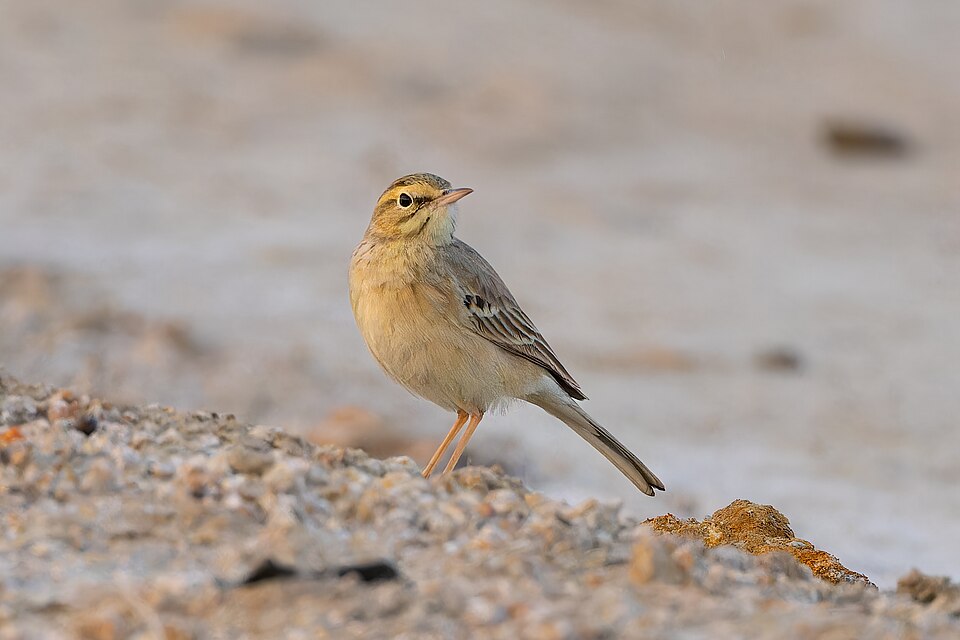 Tawny Pipit
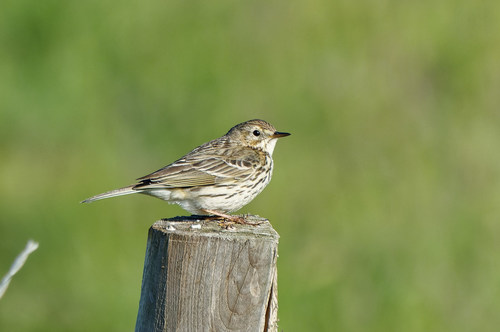 Meadow Pipit
In short
The most reliable way to separate Tawny Pipit from Meadow Pipit is by overall structure and the amount of streaking: Tawny Pipit is larger, longer-legged, and much less streaked, with a plainer sandy-brown upperpart and cleaner underparts, while Meadow Pipit is smaller, more compact, and heavily streaked above and below. In flight or perched, look for the Meadow Pipit's strong dark barring and long hind claw, versus the Tawny Pipit's plainness and proportionally longer legs. Voice and habitat can help, but focus on structure and streaking for the quickest field separation.
Identification tips
- Streaking: Meadow Pipit is always heavily streaked above and below (back, breast, flanks), while Tawny Pipit is much plainer, with minimal or no streaking on the underparts; this is the most consistent visual clue in all plumages.
- Structure: Tawny Pipit is longer-legged and stands more upright, with a more robust, elongated appearance. Meadow Pipit is more compact, with a shorter-legged, crouched posture.
- Bill: Tawny Pipit has a narrower, darker bill; Meadow Pipit's bill is thin but less distinctly dark. This is subtle and best used in good light at close range.
- Leg Color: Meadow Pipit has pale pinkish-yellow legs, which can be a useful supporting mark if seen well. Tawny Pipit's leg color is less distinctive.
- Hind Claw: Meadow Pipit has a very long hind claw (longer than the hind toe), visible in good views or photos. Tawny Pipit's hind claw is not as long or prominent.
- Tail Pattern: Meadow Pipit has a brown tail with narrow white outer edges, which may be visible in flight or when the tail is spread. Tawny Pipit's tail is less distinctly marked.
- Flight Style: Tawny Pipit flies strongly and directly; Meadow Pipit has a more fluttery, undulating flight, especially during song flights.
- Voice: Listen for Tawny Pipit's sharp, high 'schip' call versus Meadow Pipit's soft 'tsi-tsi'. Song differences are also useful if heard: Tawny Pipit's is a short, loud 'chir-ree', Meadow Pipit's is a repetitive series that speeds up at the end.
- Habitat: In dry, open, sandy or stony ground, especially in southern or eastern Europe or Asia, Tawny Pipit is more likely. In damp grassland, moorland, or upland areas, Meadow Pipit is the default.
- Season and Range: Meadow Pipit is widespread and often abundant in western Europe year-round; Tawny Pipit is a summer visitor or passage migrant in much of its range, wintering farther south.
- Regional Variation: Some Meadow Pipits in Ireland and western Scotland are darker, but still more streaked than Tawny Pipit.
- Perched vs. In Flight: Both species can look similar when perched, but in flight, Meadow Pipit's streaking and white tail edges may be more apparent; Tawny Pipit remains plain and sandy.
- Confusion Risk: Be cautious in winter in South Asia, where multiple large pipits occur; always check for streaking and structure, not just size.
- Sex and Age: No strong sexual dimorphism in either species; streaking is present in all ages of Meadow Pipit, and plainness is consistent in Tawny Pipit.
- Pitfalls: Do not rely on size alone unless both species are side by side; always use a combination of streaking, structure, and voice for confident identification.
Size
Tawny Pipit is distinctly larger and heavier (body mass ~22g [wikidata]), measuring about 16 cm in length with a wingspan of 25–28 cm [wikipedia]. Meadow Pipit is smaller and lighter (length 14.5–15 cm, weight 15–22g), with a more delicate build. The difference is subtle at a distance, but in direct comparison, Tawny Pipit appears longer-legged and more robust, while Meadow Pipit is more compact and dainty.
Plumage
Juvenile and adult Meadow Pipits are heavily streaked above and below, with dark barring across the breast, flanks, and back. Their tails are brown with narrow white edges. Tawny Pipit of all ages is much plainer: sandy brown above, pale below, and with minimal streaking—often nearly unmarked on the underparts. This contrast is especially clear in fresh autumn Meadow Pipits, which show bold streaking, versus the almost unmarked Tawny Pipit. No distinctive age-specific upperwing or flight marks are noted for either species in the sources, but the overall plainness of Tawny Pipit stands out at all ages. Meadow Pipit's legs are pale pinkish-yellow, while Tawny Pipit's are less distinctly colored. The bill of Tawny Pipit is narrower and darker, but this is subtle. Subtle regional variation exists in Meadow Pipit (e.g., darker birds in Ireland/Scotland), but all remain more streaked than Tawny Pipit.
Behaviour
Tawny Pipit tends to walk with a more upright, long-legged stance and often appears more confident and less nervous than Meadow Pipit. Its flight is described as strong and direct. Meadow Pipit is typically more fluttery and undulating in flight, and often seen performing song flights. On the ground, Meadow Pipit is more likely to be seen creeping or running with quick, nervous movements.
Habitat
Tawny Pipit breeds in open, dry, sandy or stony habitats across the central Palearctic, and winters in tropical Africa and the Indian subcontinent. Meadow Pipit is much more widespread and abundant in damp grasslands, moorlands, and open country throughout much of the Palearctic, including western Europe where it is often resident year-round. While both can overlap in open country, Meadow Pipit is more likely in wet, grassy, or upland habitats, and Tawny Pipit prefers drier, barer ground.
Voice
Tawny Pipit's call is a sharp, high-pitched 'schip', distinctly higher than the Meadow Pipit's faint 'tsi-tsi'. Tawny Pipit's song is a short, loud, disyllabic 'chir-ree chir-ree', while Meadow Pipit's song is a simple, repetitive series that accelerates towards the end, often delivered in a short song flight. In the field, call is often the quickest vocal clue: Tawny Pipit is sharper and clearer, Meadow Pipit softer and more sibilant.