

Tawny-faced Gnatwren vs Long-billed Gnatwren
Microbates cinereiventris versus Ramphocaenus melanurus
Play a quiz with Tawny-faced Gnatwren and Long-billed Gnatwren
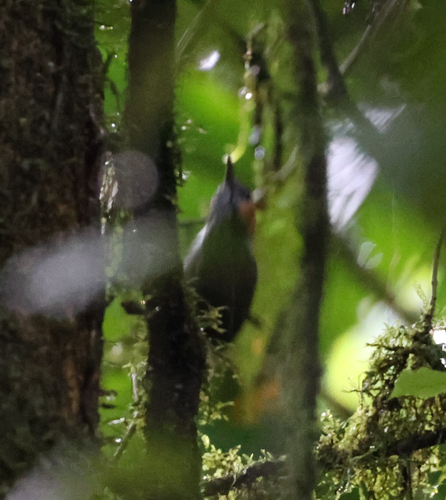 Tawny-faced Gnatwren
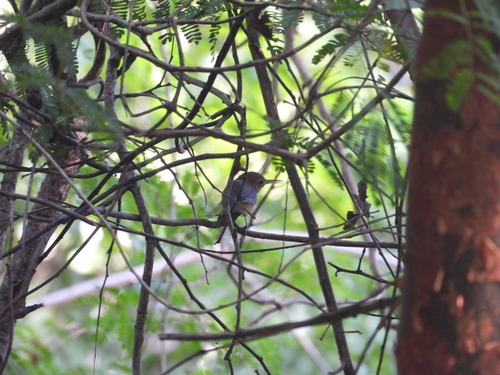 Long-billed Gnatwren
In short
The most reliable field mark to separate Tawny-faced Gnatwren from Long-billed Gnatwren is the combination of face and underpart coloration: Tawny-faced shows a distinctive tawny or rufous face, while Long-billed has rufous only on the head sides and a contrastingly white throat. Both species are tiny, active, and similar in overall shape, but Long-billed Gnatwren has a notably longer, thinner bill and a more cocked, black-and-white tail. In the field, focus on face color and tail pattern, especially when birds are moving quickly through dense undergrowth. Juvenile and immature-specific wing or flight marks are not described in the sources, so rely on adult plumage and structure for separation.
Identification tips
- Face color is key: Tawny-faced Gnatwren has a strong, uniform tawny or rufous face; Long-billed Gnatwren has rufous only on the sides of the head, with a sharply white throat.
- Throat contrast: Long-billed Gnatwren shows a bright white throat, which stands out against the buff underparts and rufous head sides. Tawny-faced has a paler throat but not as sharply white or contrasting.
- Tail pattern and posture: Long-billed Gnatwren has a black tail with white tips (except central feathers) and habitually cocks and wags its tail. Tawny-faced's tail pattern and behavior are less distinctive in the sources.
- Bill structure: Long-billed Gnatwren has a noticeably longer, thinner bill than Tawny-faced, which is more apparent at close range or in good light.
- Upperparts: Both species have grey-brown upperparts, but this is not a strong separator.
- Underparts: Long-billed Gnatwren has buff underparts; Tawny-faced's underparts are paler but not as distinctly buff.
- No age-specific wing pattern: There are no described juvenile or immature wing or flight pattern differences, so do not rely on these for separation.
- Behavior: Watch for the tail-wagging, cocked tail of Long-billed Gnatwren, especially when foraging low in dense vegetation.
- Vocalizations: If you hear a rapid trilled call, it is diagnostic for Long-billed (Trilling) Gnatwren. Absence of this call is not diagnostic for Tawny-faced.
- Habitat overlap: Both species can occur in the same forest types and regions, so do not use habitat alone to separate them where ranges overlap.
- Size: Both are tiny and similar in size; do not use size as a primary field mark.
- Pitfalls: Poor light or brief views can make the face and throat pattern hard to judge. Focus on the combination of face color and throat contrast whenever possible.
- Sex and season: No significant sexual or seasonal plumage differences are described for either species; these marks work year-round and for both sexes.
- When in doubt: Prioritize a clear view of the face and throat, and listen for vocalizations if possible. If only the tail pattern and behavior are seen, a cocked, black-and-white tail strongly favors Long-billed Gnatwren.
Size
Tawny-faced Gnatwren is slightly heavier (11.9 g vs 10.0 g) but both are very small birds and this difference is not likely to be apparent in the field. Long-billed Gnatwren is described as 12–13 cm long, but the difference in body length is negligible for field identification. Both species are similar in size and can be considered equally small and delicate.
Plumage
No age-specific wing or flight pattern differences are described for either species. For adults, Tawny-faced Gnatwren stands out with its overall tawny or rufous face, which contrasts with a paler throat and underparts. Long-billed Gnatwren has grey-brown upperparts, rufous sides to the head, a white throat, and buff underparts. Its tail is black with white tips to all but the central feathers, and is often cocked upward. The face pattern is the quickest way to separate them: Tawny-faced has a more extensive and uniform tawny face, while Long-billed shows rufous only on the sides of the head, with a sharply white throat. Juvenile or immature-specific plumage differences are not detailed in the available sources.
Behaviour
Both species are active, insectivorous birds that forage in dense undergrowth. Long-billed Gnatwren is noted for its habit of frequently wagging its cocked tail, which is black with white tips. Tawny-faced Gnatwren's behavior is less specifically described, but as a gnatwren, it is likely similarly active and skulking. The tail-wagging and cocked tail posture of Long-billed Gnatwren may help in field separation when observed well.
Habitat
Both species occur in lowland and foothill forests in Central and South America, with overlapping ranges in countries like Colombia, Ecuador, and Panama. Tawny-faced Gnatwren is found from Nicaragua to Peru and Bolivia, while Long-billed Gnatwren ranges from southeast Mexico to Amazonia. Habitat preferences are broadly similar, favoring dense forest undergrowth, so habitat alone is not a reliable separator where their ranges overlap.
Voice
Long-billed Gnatwren (Trilling Gnatwren) gives a distinctive trilled call, described as a rapid 'drdrdrdrdrdrdrdrdrdr.' No vocal description is provided for Tawny-faced Gnatwren in the sources, so voice is only diagnostic if the trilled call of Long-billed is heard. Absence of this call does not confirm Tawny-faced, but presence of the trill supports Long-billed.
Tawny-faced Gnatwren · Long-billed Gnatwren · My Tricky Birds