

Motmot

Swinhoe's Snipe vs Pin-tailed Snipe

Gallinago megala versus Gallinago stenura

Play a quiz with Swinhoe's Snipe and Pin-tailed Snipe
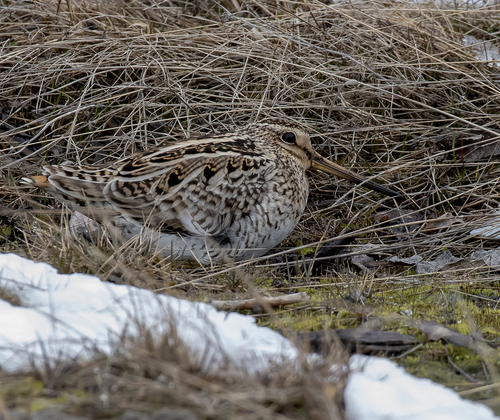
Swinhoe's Snipe (Gallinago megala) Swinhoe's Snipe
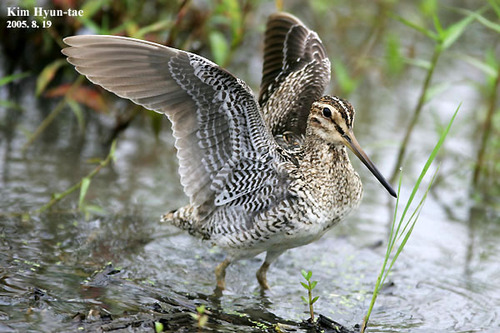
Pin-tailed Snipe (Gallinago stenura) Pin-tailed Snipe

Media

Loading…

In short

Separating Swinhoe's Snipe from Pin-tailed Snipe in the field is notoriously difficult, especially in non-breeding or immature plumages, as both are cryptically patterned Gallinago snipes with similar structure and coloration. The most reliable differences are subtle: Swinhoe's Snipe is slightly larger and heavier, with a marginally longer bill and tail, but these are hard to judge without direct comparison. Both species show similar mottled brown, buff, and white upperparts and streaked underparts, and immatures are nearly indistinguishable in plumage. Flight behavior and subtle differences in structure (such as tail length and wing shape) may offer the best clues, but even experienced observers often struggle without close views or direct comparison.

Identification tips

  1. Size and Structure: Swinhoe's Snipe is slightly larger and heavier than Pin-tailed Snipe (140 g vs 116.5 g), with a marginally longer bill and tail. This difference is subtle and not always apparent unless birds are seen side by side.
  2. Bill Length: Swinhoe's Snipe has a slightly longer bill, but this is difficult to judge in the field unless birds are close and unobstructed.
  3. Tail Length: Swinhoe's Snipe has a marginally longer tail, but again, this is a subtle distinction and not easily used in isolation.
  4. Upperpart Pattern: Both species have cryptic, mottled upperparts in black, brown, buff, and white. No reliable differences in the pattern or coloration are described between the two.
  5. Underpart Pattern: Both show a streaked buff breast and white belly. The dark eye-stripe with pale supercilium and subocular lines is present in both, so not diagnostic.
  6. Wing Shape in Flight: Pin-tailed Snipe is described as having less pointed wings than Common Snipe, but no direct comparison to Swinhoe's is given. Both lack the white trailing edge of Common Snipe.
  7. Tail Shape in Flight: Pin-tailed Snipe is said to have a shorter tail and a flatter flight path than Common Snipe, but differences with Swinhoe's are not specified. Both may appear similar in flight.
  8. Juvenile/Immature Plumage: No distinctive juvenile or first-winter upperwing or tail patterns are described for either species that would allow reliable separation.
  9. Sex Differences: Sexes are similar in both species; do not use sex as a field mark.
  10. Vocalizations: If heard, Pin-tailed Snipe males may give a loud, repetitive 'tcheka' song and produce whistling noises in display flight. Swinhoe's Snipe vocalizations are not described here, so this may be a limited but possible clue in display contexts.
  11. Behavior: Both species flush reluctantly from cover and show similar feeding and movement behavior. Display behavior (group displays in Pin-tailed) is rarely observed outside the breeding season.
  12. Habitat: Both use similar wetland habitats; habitat is not a reliable separator.
  13. Pitfalls: Most field marks overlap, and even experienced birders may not be able to separate these species reliably without close, prolonged views or in-hand examination. Be cautious about over-interpreting subtle differences.
  14. Best Practice: Use a combination of size, structure, and any available vocal or behavioral clues, but accept that many individuals will remain unidentified in the field.
  15. When in Doubt: If you cannot confidently separate the two based on the above, it is best to record as 'Swinhoe's/Pin-tailed Snipe' and note the uncertainty.

Size

Swinhoe's Snipe averages noticeably heavier (140 g vs 116.5 g) and slightly longer (27–29 cm vs 25–27 cm) than Pin-tailed Snipe. However, these differences are subtle in the field, especially when birds are seen singly or at a distance. Bill length is also slightly greater in Swinhoe's, but again, this is difficult to assess reliably without side-by-side views. Both are medium-sized Gallinago snipes, and size alone is rarely diagnostic.

Plumage

Both species have cryptic, mottled upperparts in black, brown, buff, and white, with pale underparts and a streaked buff breast. Immatures of both are nearly identical, differing only in minor details not easily seen in the field. Pin-tailed Snipe shows a dark eye-stripe with pale supercilium and subocular lines, and a white belly, but these features are shared with Swinhoe's. No distinctive juvenile or first-winter upperwing patterns are described for either species that allow reliable separation. The wings of Pin-tailed Snipe are described as less pointed than Common Snipe, but not specifically contrasted with Swinhoe's. Both lack the white trailing edge of Common Snipe. Tail pattern is not described as distinctive between these two. In summary, plumage is not a reliable separator at any age based on current sources.

Behaviour

Both species are secretive, ground-dwelling waders that flush reluctantly from cover. In flight, Pin-tailed Snipe is noted for a flatter flight path and shorter tail compared to Common Snipe, but differences between Pin-tailed and Swinhoe's are not clearly described. Male Pin-tailed Snipe may display in groups, but this is not a reliable field mark for most observers. Both species show similar feeding and flushing behavior.

Habitat

No diagnostic habitat differences are described between Swinhoe's and Pin-tailed Snipe in the provided sources. Both occupy wet grasslands, marshes, and similar habitats during migration and winter.

Voice

Pin-tailed Snipe males may display with a loud, repetitive 'tcheka' song and produce whistling noises in flight from their pin-like outer tail feathers. The normal call is a weak 'squik.' No distinctive vocalizations are described for Swinhoe's Snipe in the provided notes. However, these vocalizations are most often heard in display or breeding contexts, which may not be relevant for most field encounters.

Submit a better description

Use the same sections as the comparison. Your text is published immediately.

Separating Swinhoe's Snipe from Pin-tailed Snipe in the field is notoriously difficult, especially in non-breeding or immature plumages, as both are cryptically patterned Gallinago snipes with similar structure and coloration. The most reliable differences are subtle: Swinhoe's Snipe is slightly larger and heavier, with a marginally longer bill and tail, but these are hard to judge without direct comparison. Both species show similar mottled brown, buff, and white upperparts and streaked underparts, and immatures are nearly indistinguishable in plumage. Flight behavior and subtle differences in structure (such as tail length and wing shape) may offer the best clues, but even experienced observers often struggle without close views or direct comparison.

  1. Size and Structure: Swinhoe's Snipe is slightly larger and heavier than Pin-tailed Snipe (140 g vs 116.5 g), with a marginally longer bill and tail. This difference is subtle and not always apparent unless birds are seen side by side.
  2. Bill Length: Swinhoe's Snipe has a slightly longer bill, but this is difficult to judge in the field unless birds are close and unobstructed.
  3. Tail Length: Swinhoe's Snipe has a marginally longer tail, but again, this is a subtle distinction and not easily used in isolation.
  4. Upperpart Pattern: Both species have cryptic, mottled upperparts in black, brown, buff, and white. No reliable differences in the pattern or coloration are described between the two.
  5. Underpart Pattern: Both show a streaked buff breast and white belly. The dark eye-stripe with pale supercilium and subocular lines is present in both, so not diagnostic.
  6. Wing Shape in Flight: Pin-tailed Snipe is described as having less pointed wings than Common Snipe, but no direct comparison to Swinhoe's is given. Both lack the white trailing edge of Common Snipe.
  7. Tail Shape in Flight: Pin-tailed Snipe is said to have a shorter tail and a flatter flight path than Common Snipe, but differences with Swinhoe's are not specified. Both may appear similar in flight.
  8. Juvenile/Immature Plumage: No distinctive juvenile or first-winter upperwing or tail patterns are described for either species that would allow reliable separation.
  9. Sex Differences: Sexes are similar in both species; do not use sex as a field mark.
  10. Vocalizations: If heard, Pin-tailed Snipe males may give a loud, repetitive 'tcheka' song and produce whistling noises in display flight. Swinhoe's Snipe vocalizations are not described here, so this may be a limited but possible clue in display contexts.
  11. Behavior: Both species flush reluctantly from cover and show similar feeding and movement behavior. Display behavior (group displays in Pin-tailed) is rarely observed outside the breeding season.
  12. Habitat: Both use similar wetland habitats; habitat is not a reliable separator.
  13. Pitfalls: Most field marks overlap, and even experienced birders may not be able to separate these species reliably without close, prolonged views or in-hand examination. Be cautious about over-interpreting subtle differences.
  14. Best Practice: Use a combination of size, structure, and any available vocal or behavioral clues, but accept that many individuals will remain unidentified in the field.
  15. When in Doubt: If you cannot confidently separate the two based on the above, it is best to record as 'Swinhoe's/Pin-tailed Snipe' and note the uncertainty.

Swinhoe's Snipe averages noticeably heavier (140 g vs 116.5 g) and slightly longer (27–29 cm vs 25–27 cm) than Pin-tailed Snipe. However, these differences are subtle in the field, especially when birds are seen singly or at a distance. Bill length is also slightly greater in Swinhoe's, but again, this is difficult to assess reliably without side-by-side views. Both are medium-sized Gallinago snipes, and size alone is rarely diagnostic.

Both species have cryptic, mottled upperparts in black, brown, buff, and white, with pale underparts and a streaked buff breast. Immatures of both are nearly identical, differing only in minor details not easily seen in the field. Pin-tailed Snipe shows a dark eye-stripe with pale supercilium and subocular lines, and a white belly, but these features are shared with Swinhoe's. No distinctive juvenile or first-winter upperwing patterns are described for either species that allow reliable separation. The wings of Pin-tailed Snipe are described as less pointed than Common Snipe, but not specifically contrasted with Swinhoe's. Both lack the white trailing edge of Common Snipe. Tail pattern is not described as distinctive between these two. In summary, plumage is not a reliable separator at any age based on current sources.

Both species are secretive, ground-dwelling waders that flush reluctantly from cover. In flight, Pin-tailed Snipe is noted for a flatter flight path and shorter tail compared to Common Snipe, but differences between Pin-tailed and Swinhoe's are not clearly described. Male Pin-tailed Snipe may display in groups, but this is not a reliable field mark for most observers. Both species show similar feeding and flushing behavior.

No diagnostic habitat differences are described between Swinhoe's and Pin-tailed Snipe in the provided sources. Both occupy wet grasslands, marshes, and similar habitats during migration and winter.

Pin-tailed Snipe males may display with a loud, repetitive 'tcheka' song and produce whistling noises in flight from their pin-like outer tail feathers. The normal call is a weak 'squik.' No distinctive vocalizations are described for Swinhoe's Snipe in the provided notes. However, these vocalizations are most often heard in display or breeding contexts, which may not be relevant for most field encounters.

Discard your changes?

You have unsaved edits. If you leave now, those changes will be lost.

Swinhoe's Snipe · Pin-tailed Snipe · My Tricky Birds