

Superb Fairywren vs White-winged Fairywren
Malurus cyaneus versus Malurus leucopterus
Play a quiz with Superb Fairywren and White-winged Fairywren
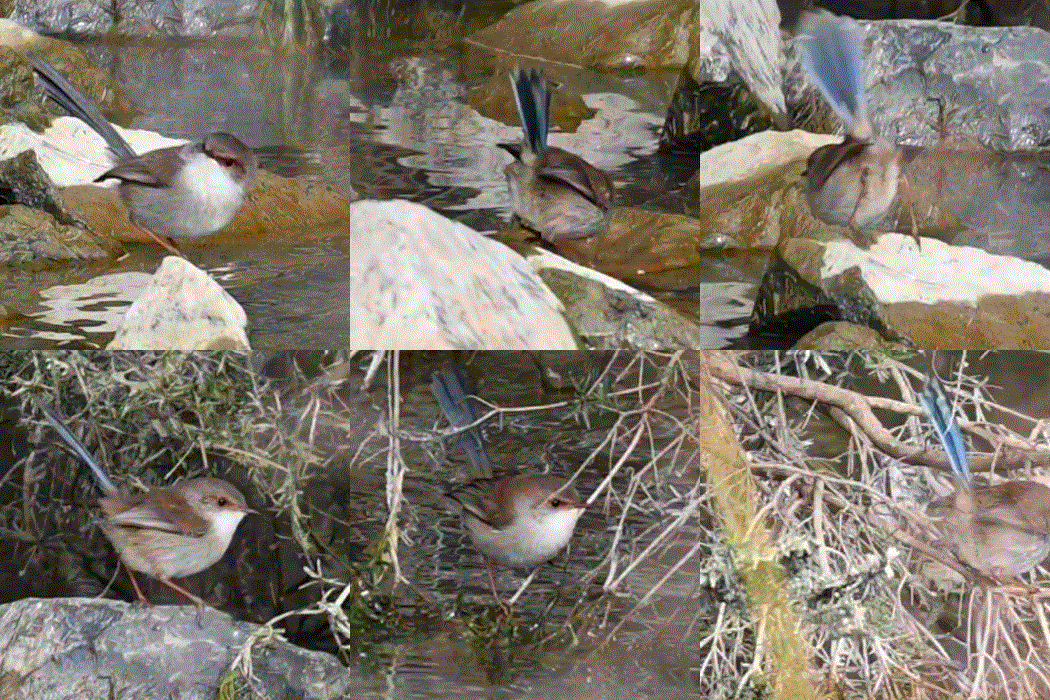 Superb Fairywren
 White-winged Fairywren
In short
The most reliable field mark between Superb Fairywren and White-winged Fairywren is the presence of bold white wing patches on adult male White-winged Fairywrens in breeding plumage, which are completely absent in Superb Fairywren at any age or sex. Outside of breeding plumage, both species' females and immatures are drab brown with blue tails, but the White-winged Fairywren female is paler and sandier, and the blue tail is paler than the Superb's. Bill color and shape, as well as subtle differences in tail length and jizz, can help when plumage is ambiguous. Habitat and range also provide strong clues: Superb Fairywren is a bird of southeastern Australia’s wetter habitats, while White-winged Fairywren is found in drier, more arid central and western regions.
Identification tips
- White wing patches (breeding male White-winged only): If you see bold white patches on the wings or shoulders, especially in flight or display, it is a White-winged Fairywren. Superb Fairywren never shows white in the wings at any age or sex.
- Breeding male plumage: Superb Fairywren males have a bright blue crown, ear coverts, mantle, and tail, with a black mask and throat. White-winged Fairywren breeding males are cobalt blue or black over the body with white wings and shoulders (subspecies-dependent).
- Female and immature color: Female and immature Superb Fairywrens are grey-brown with a blue tail; White-winged Fairywren females and immatures are paler, sandy-brown with a paler blue tail and a pinkish-buff bill.
- Tail color and length: Both species have long, upright tails, but the blue of the White-winged Fairywren’s tail is paler in females and immatures. Superb Fairywren’s tail is a deeper blue in breeding males and duller in non-breeding birds.
- Bill color: Superb Fairywren females and juveniles have a brown bill; breeding males have a black bill. White-winged Fairywren females have a pinkish-buff bill, while breeding males have a black bill. Immature White-winged males develop a darker bill by late summer or autumn.
- Bill shape: The White-winged Fairywren’s bill is finer and more pointed than that of the Superb, but this is subtle and best seen at close range.
- Non-breeding males: Both species’ non-breeding males resemble females, but White-winged Fairywren males may show some blue or white feathering, especially as they age. Superb Fairywren non-breeding males are dull brown with a greyish-blue tail.
- Juvenile confusion: Both species’ juveniles are brown with blue tails, but White-winged Fairywren juveniles are paler and sandier, with a paler blue tail and pinkish-buff bill. Superb Fairywren juveniles are more uniformly grey-brown with a duller blue tail and brown bill.
- Flight views: In flight, White-winged Fairywren males in breeding plumage show white wing flashes; Superb Fairywren never does. Both have short, rounded wings and long tails, but the white in the wings is diagnostic for White-winged.
- Habitat and range: Superb Fairywren is found in wetter, southeastern Australia; White-winged Fairywren is restricted to arid and semi-arid regions of central and western Australia. If you’re in a garden or urban park in the southeast, it’s almost certainly a Superb; in arid scrub, White-winged is much more likely.
- Group structure: Both species form small social groups, but White-winged Fairywren groups may include brown or partially blue males and a breeding female, with helpers from previous broods.
- Seasonal timing: Breeding males of both species are most obvious in spring and summer, but non-breeding and immature birds dominate in autumn and winter, making ID trickier then—rely more on bill color, tail color, and habitat.
- No white in Superb: If you see any white in the wings or shoulders, rule out Superb Fairywren immediately.
- No black mask in White-winged: Only Superb Fairywren breeding males have a black mask and throat; White-winged Fairywren never shows this pattern.
- Subtle size difference: Superb Fairywren is slightly larger, but this is rarely useful in the field unless both species are side by side.
Size
Superb Fairywren is slightly larger, averaging 14 cm in length and 8–13 g in mass, compared to the White-winged Fairywren’s 11–13.5 cm and 7.2–10.9 g for males (females similar). Both have proportionally long tails, but the difference in size is subtle and rarely diagnostic in the field. Bill length is similar, but the White-winged Fairywren's bill is finer and more pointed.
Plumage
-
Juveniles and Immatures: Both species' juveniles are brown with blue tails, but White-winged Fairywren juveniles have a paler, sandy-brown tone and a paler blue tail, while Superb Fairywren juveniles are more uniformly grey-brown with a duller blue tail. Bill color is pinkish-buff in White-winged and brown in Superb. No distinctive upperwing pattern is noted for either species at this age.
-
Adult Breeding Males: Superb Fairywren males have a brilliant blue forehead, ear coverts, mantle, and tail, with a black mask and throat, and brown wings. White-winged Fairywren breeding males (depending on subspecies) are cobalt blue or black-bodied with striking white wings and shoulders—this white is especially visible in flight and is unique among Australian fairywrens. Superb Fairywren never shows white in the wings.
-
Adult Females: Both are brown with blue tails, but Superb Fairywren females are more uniformly grey-brown, while White-winged Fairywren females are paler, sandy-brown, with a pinkish-buff bill and a paler blue tail.
-
Non-breeding/Eclipse Males: Both species' males in eclipse plumage resemble females, but White-winged Fairywren males retain a darker bill, and may show some blue or white feathering, especially in older birds. Superb Fairywren eclipse males are dull brown with a greyish-blue tail and a brown bill.
Behaviour
Both species are active, restless feeders, hopping and bouncing with tails held upright. Superb Fairywren is often seen in open ground near shelter, while White-winged Fairywren is more likely to be found in arid scrub or open country. Both species move in small social groups, often with helpers. In flight, both have short, rounded wings and take short, low flights, but White-winged Fairywren males may show conspicuous white wing flashes during display or flight, which Superb never does.
Habitat
Superb Fairywren is common and familiar in southeastern Australia, favoring wetter habitats such as forests, woodlands, gardens, and urban parks. White-winged Fairywren is found in the drier, more arid regions of central and western Australia, including open shrubland and grassland. Overlap is minimal; habitat context is a strong clue if you know your location.