

Motmot

Sula Megapode vs Rufous-fronted Wood-Quail

Megapodius bernsteinii versus Odontophorus erythrops

Play a quiz with Sula Megapode and Rufous-fronted Wood-Quail

Sula Megapode (Megapodius bernsteinii) Sula Megapode
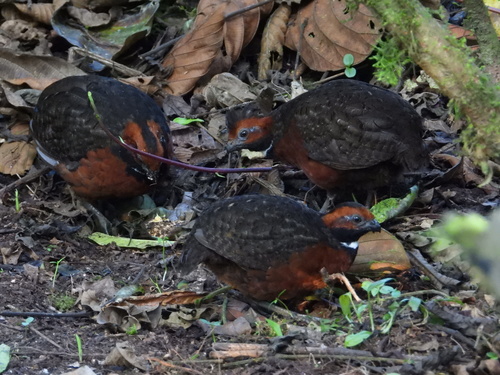
Rufous-fronted Wood-Quail (Odontophorus erythrops) Rufous-fronted Wood-Quail

Media

Loading…

In short

The most reliable way to separate Sula Megapode from Rufous-fronted Wood-Quail is by overall color and leg color: Sula Megapode is a uniform reddish-brown with long, striking red or orange-red legs, while Rufous-fronted Wood-Quail shows a mix of rufous, black, and olive with a distinctive rufous crown and face, and a bare purple or blue-black eye ring. Sula Megapode is larger, with a pointed crest and a more uniform appearance, whereas the wood-quail is smaller, rounder, and patterned, especially on the back and belly. Both are ground-dwellers, but their ranges do not overlap: Sula Megapode is restricted to the Sula and Banggai Islands, while Rufous-fronted Wood-Quail is found in Colombia and Ecuador. Immature wood-quails show black spots and bars on the belly, which are never present in Sula Megapode.

Identification tips

  1. Uniformity of Plumage: Sula Megapode is always a uniform reddish-brown with no barring, spots, or contrasting colors on the body, wings, or belly. Rufous-fronted Wood-Quail shows a mix of rufous, black, and olive, with black spots on the back and belly (especially in juveniles).
  2. Leg Color and Length: Sula Megapode has long, bright red or orange-red legs that are very obvious in the field, especially when walking. Rufous-fronted Wood-Quail has much shorter, less conspicuous legs.
  3. Crest Shape: Both species have a crest, but Sula Megapode's is short and pointed, while the wood-quail's crest is more rounded and blends with the rufous crown.
  4. Facial Pattern: Rufous-fronted Wood-Quail has a distinctive rufous crown and face, with a bare purple (male) or blue-black (female) eye ring, making the face look more patterned and colorful. Sula Megapode's face is the same reddish-brown as the rest of the body, lacking any contrasting eye ring or facial patch.
  5. Juvenile Pattern: Juvenile wood-quails have black spots and bars on the belly—a mark never present in Sula Megapode of any age. If you see belly barring or spotting, it's a wood-quail.
  6. Back and Rump: Wood-quail can show black or olive backs with black spots, while Sula Megapode is plain reddish-brown above.
  7. Throat Color (O. e. parambae): The parambae subspecies of wood-quail has a white throat, which is never seen in Sula Megapode.
  8. Body Shape and Posture: Sula Megapode is longer, more upright, and 'leggier,' while wood-quail is compact, rounded, and sits lower to the ground.
  9. Size: Sula Megapode is 30–35 cm long, noticeably larger than the 23–28 cm wood-quail. If you have a sense of scale, this is helpful.
  10. Behavior: Megapodes often walk upright and can appear more deliberate, while wood-quail move quickly in groups and are more likely to flush suddenly.
  11. Range: If you are not on the Sula or Banggai Islands, you are not seeing Sula Megapode. If you are outside Colombia/Ecuador, you are not seeing Rufous-fronted Wood-Quail.
  12. Sex Differences: Sula Megapode sexes are alike. In wood-quail, the female is duller on the face and has a blue-black eye ring, but both sexes share the main field marks.
  13. Flight Views: No distinctive upperwing pattern is described for either species, so rely on body color and structure in flight.
  14. No Voice Data: Vocalizations are not described in the sources, so do not rely on calls or songs for separation.
  15. Habitat Context: Both species prefer forested habitats, but megapode can also occur in mangroves and shrubland, while wood-quail is strictly forest-dwelling in the Andes foothills.

Size

Sula Megapode is noticeably larger, measuring 30–35 cm in length, while Rufous-fronted Wood-Quail is 23–28 cm. The megapode also appears longer-legged and more upright due to its long red or orange-red legs, whereas the wood-quail is more compact and rounded. In mass, the wood-quail is around 329–340 g, but no mass is given for the megapode; the difference in length and leg structure is more visually striking in the field.

Plumage

Juvenile and adult Sula Megapode are a uniform reddish-brown all over, with no barring, spotting, or contrasting pattern, and both sexes look alike. They have a short, pointed crest and long, vividly colored red or orange-red legs. In contrast, adult Rufous-fronted Wood-Quail males have a rufous crown, crest, and face, a bare purple eye ring, and a back/rump that can be black or olive with black spots; the breast and belly are dark rufous. Females are duller chestnut on the face with a blue-black eye ring. Juveniles resemble females but show black spots and bars on the belly—a key mark not found in Sula Megapode of any age. The O. e. parambae subspecies has darker upperparts and a white throat, adding further contrast. In flight or on the ground, the wood-quail always shows more pattern and contrast than the uniform megapode.

Behaviour

Both species are ground-dwelling and secretive, but Sula Megapode is more likely to be seen walking with an upright stance, showing off its long legs and crest. Rufous-fronted Wood-Quail tends to move in coveys, scurrying through dense undergrowth, and appears more compact and rounded. The megapode's behavior may seem more 'chicken-like,' while the wood-quail is more furtive and quick-moving.

Habitat

The two species never overlap in range: Sula Megapode is found only on the Sula and Banggai Islands in Indonesia, in a variety of forest types including dry, moist lowland, mangrove, and shrubland. Rufous-fronted Wood-Quail is restricted to Colombia and Ecuador, inhabiting forested areas. If you know your location, this is a decisive separation.

Submit a better description

Use the same sections as the comparison. Your text is published immediately.

The most reliable way to separate Sula Megapode from Rufous-fronted Wood-Quail is by overall color and leg color: Sula Megapode is a uniform reddish-brown with long, striking red or orange-red legs, while Rufous-fronted Wood-Quail shows a mix of rufous, black, and olive with a distinctive rufous crown and face, and a bare purple or blue-black eye ring. Sula Megapode is larger, with a pointed crest and a more uniform appearance, whereas the wood-quail is smaller, rounder, and patterned, especially on the back and belly. Both are ground-dwellers, but their ranges do not overlap: Sula Megapode is restricted to the Sula and Banggai Islands, while Rufous-fronted Wood-Quail is found in Colombia and Ecuador. Immature wood-quails show black spots and bars on the belly, which are never present in Sula Megapode.

  1. Uniformity of Plumage: Sula Megapode is always a uniform reddish-brown with no barring, spots, or contrasting colors on the body, wings, or belly. Rufous-fronted Wood-Quail shows a mix of rufous, black, and olive, with black spots on the back and belly (especially in juveniles).
  2. Leg Color and Length: Sula Megapode has long, bright red or orange-red legs that are very obvious in the field, especially when walking. Rufous-fronted Wood-Quail has much shorter, less conspicuous legs.
  3. Crest Shape: Both species have a crest, but Sula Megapode's is short and pointed, while the wood-quail's crest is more rounded and blends with the rufous crown.
  4. Facial Pattern: Rufous-fronted Wood-Quail has a distinctive rufous crown and face, with a bare purple (male) or blue-black (female) eye ring, making the face look more patterned and colorful. Sula Megapode's face is the same reddish-brown as the rest of the body, lacking any contrasting eye ring or facial patch.
  5. Juvenile Pattern: Juvenile wood-quails have black spots and bars on the belly—a mark never present in Sula Megapode of any age. If you see belly barring or spotting, it's a wood-quail.
  6. Back and Rump: Wood-quail can show black or olive backs with black spots, while Sula Megapode is plain reddish-brown above.
  7. Throat Color (O. e. parambae): The parambae subspecies of wood-quail has a white throat, which is never seen in Sula Megapode.
  8. Body Shape and Posture: Sula Megapode is longer, more upright, and 'leggier,' while wood-quail is compact, rounded, and sits lower to the ground.
  9. Size: Sula Megapode is 30–35 cm long, noticeably larger than the 23–28 cm wood-quail. If you have a sense of scale, this is helpful.
  10. Behavior: Megapodes often walk upright and can appear more deliberate, while wood-quail move quickly in groups and are more likely to flush suddenly.
  11. Range: If you are not on the Sula or Banggai Islands, you are not seeing Sula Megapode. If you are outside Colombia/Ecuador, you are not seeing Rufous-fronted Wood-Quail.
  12. Sex Differences: Sula Megapode sexes are alike. In wood-quail, the female is duller on the face and has a blue-black eye ring, but both sexes share the main field marks.
  13. Flight Views: No distinctive upperwing pattern is described for either species, so rely on body color and structure in flight.
  14. No Voice Data: Vocalizations are not described in the sources, so do not rely on calls or songs for separation.
  15. Habitat Context: Both species prefer forested habitats, but megapode can also occur in mangroves and shrubland, while wood-quail is strictly forest-dwelling in the Andes foothills.

Sula Megapode is noticeably larger, measuring 30–35 cm in length, while Rufous-fronted Wood-Quail is 23–28 cm. The megapode also appears longer-legged and more upright due to its long red or orange-red legs, whereas the wood-quail is more compact and rounded. In mass, the wood-quail is around 329–340 g, but no mass is given for the megapode; the difference in length and leg structure is more visually striking in the field.

Juvenile and adult Sula Megapode are a uniform reddish-brown all over, with no barring, spotting, or contrasting pattern, and both sexes look alike. They have a short, pointed crest and long, vividly colored red or orange-red legs. In contrast, adult Rufous-fronted Wood-Quail males have a rufous crown, crest, and face, a bare purple eye ring, and a back/rump that can be black or olive with black spots; the breast and belly are dark rufous. Females are duller chestnut on the face with a blue-black eye ring. Juveniles resemble females but show black spots and bars on the belly—a key mark not found in Sula Megapode of any age. The O. e. parambae subspecies has darker upperparts and a white throat, adding further contrast. In flight or on the ground, the wood-quail always shows more pattern and contrast than the uniform megapode.

Both species are ground-dwelling and secretive, but Sula Megapode is more likely to be seen walking with an upright stance, showing off its long legs and crest. Rufous-fronted Wood-Quail tends to move in coveys, scurrying through dense undergrowth, and appears more compact and rounded. The megapode's behavior may seem more 'chicken-like,' while the wood-quail is more furtive and quick-moving.

The two species never overlap in range: Sula Megapode is found only on the Sula and Banggai Islands in Indonesia, in a variety of forest types including dry, moist lowland, mangrove, and shrubland. Rufous-fronted Wood-Quail is restricted to Colombia and Ecuador, inhabiting forested areas. If you know your location, this is a decisive separation.

Discard your changes?

You have unsaved edits. If you leave now, those changes will be lost.

Sula Megapode · Rufous-fronted Wood-Quail · My Tricky Birds