

Sula Megapode vs Rufous-fronted Wood-Quail
Megapodius bernsteinii contro Odontophorus erythrops
Fai un quiz con Sula Megapode e Rufous-fronted Wood-Quail
 Sula Megapode
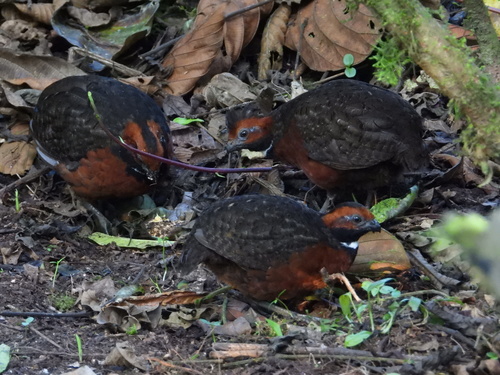 Rufous-fronted Wood-Quail
In breve
Il modo più affidabile per separare Sula Megapode da Rufous-fronted Wood-Quail è attraverso il colore generale e il colore delle gambe: Sula Megapode è di un uniforme marrone rossiccio con lunghe e sorprendenti gambe rosse o rosso-arancioni, mentre Rufous-fronted Wood-Quail mostra un mix di rufous, nero e oliva con una corona e un volto rufous distintivi, e un anello oculare nudo di colore viola o blu-nero. Sula Megapode è più grande, con una cresta appuntita e un aspetto più uniforme, mentre il wood-quail è più piccolo, più rotondo e con un motivo, specialmente sulla schiena e sul ventre. Entrambi sono abitatori del suolo, ma i loro areali non si sovrappongono: Sula Megapode è limitato alle Isole Sula e Banggai, mentre Rufous-fronted Wood-Quail si trova in Colombia e Ecuador. I wood-quail immaturi mostrano macchie nere e barre sul ventre, che non sono mai presenti in Sula Megapode.
Consigli di identificazione
- Uniformità del piumaggio: Sula Megapode è sempre di un uniforme marrone rossiccio senza barre, macchie o colori contrastanti sul corpo, sulle ali o sul ventre. Rufous-fronted Wood-Quail mostra un mix di rufous, nero e oliva, con macchie nere sulla schiena e sul ventre (specialmente nei giovanili).
- Colore e lunghezza delle gambe: Sula Megapode ha lunghe gambe rosse o rosso-arancioni che sono molto evidenti sul campo, specialmente quando cammina. Rufous-fronted Wood-Quail ha gambe molto più corte e meno appariscenti.
- Forma della cresta: Entrambe le specie hanno una cresta, ma quella di Sula Megapode è corta e appuntita, mentre la cresta del wood-quail è più arrotondata e si fonde con la corona rufous.
- Motivo facciale: Rufous-fronted Wood-Quail ha una corona e un volto rufous distintivi, con un anello oculare nudo di colore viola (maschio) o blu-nero (femmina), rendendo il volto più decorato e colorato. Il volto di Sula Megapode è dello stesso marrone rossiccio del resto del corpo, privo di qualsiasi anello oculare contrastante o macchia facciale.
- Motivo giovanile: I wood-quail giovanili hanno macchie nere e barre sul ventre—un segno mai presente in Sula Megapode di qualsiasi età. Se vedi barre o macchie sul ventre, è un wood-quail.
- Schiena e coda: Il wood-quail può mostrare schiene nere o olive con macchie nere, mentre Sula Megapode è di un semplice marrone rossiccio sopra.
- Colore della gola (O. e. parambae): La sottospecie parambae di wood-quail ha una gola bianca, che non si vede mai in Sula Megapode.
- Forma e postura del corpo: Sula Megapode è più lunga, più eretta e 'con gambe lunghe', mentre il wood-quail è compatto, rotondo e si trova più in basso rispetto al suolo.
- Dimensioni: Sula Megapode è lunga 30–35 cm, notevolmente più grande del wood-quail di 23–28 cm. Se hai un senso della scala, questo è utile.
- Comportamento: I megapodi spesso camminano eretti e possono apparire più deliberati, mentre i wood-quail si muovono rapidamente in gruppi e sono più propensi a volare via all'improvviso.
- Areale: Se non sei sulle Isole Sula o Banggai, non stai vedendo Sula Megapode. Se sei al di fuori di Colombia/Ecuador, non stai vedendo Rufous-fronted Wood-Quail.
- Differenze sessuali: I sessi di Sula Megapode sono simili. Nel wood-quail, la femmina è più opaca sul volto e ha un anello oculare blu-nero, ma entrambi i sessi condividono i principali segni sul campo.
- Viste in volo: Non è descritto alcun motivo distintivo sulla parte superiore dell'ala per entrambe le specie, quindi fai affidamento sul colore e sulla struttura del corpo in volo.
- Nessun dato vocale: Le vocalizzazioni non sono descritte nelle fonti, quindi non fare affidamento su richiami o canti per la separazione.
- Contesto dell'habitat: Entrambe le specie preferiscono habitat forestali, ma il megapode può anche trovarsi in mangrovie e terreni arbustivi, mentre il wood-quail è strettamente abitante delle foreste nelle pendici delle Ande.
Taglia
Sula Megapode è notevolmente più grande, misurando 30–35 cm di lunghezza, mentre Rufous-fronted Wood-Quail è 23–28 cm. Il megapode appare anche con gambe più lunghe e più erette a causa delle sue lunghe gambe rosse o rosso-arancioni, mentre il wood-quail è più compatto e rotondo. In massa, il wood-quail pesa circa 329–340 g, ma non è fornito alcun dato di massa per il megapode; la differenza in lunghezza e struttura delle gambe è più visivamente impressionante sul campo.
Piumaggio
I giovanili e gli adulti di Sula Megapode sono di un uniforme marrone rossiccio ovunque, senza barre, macchie o motivi contrastanti, e entrambi i sessi si somigliano. Hanno una cresta corta e appuntita e lunghe gambe di colore rosso o rosso-arancione vivace. Al contrario, i maschi adulti di Rufous-fronted Wood-Quail hanno una corona, una cresta e un volto rufous, un anello oculare nudo di colore viola, e una schiena/coda che può essere nera o oliva con macchie nere; il petto e il ventre sono di un rufous scuro. Le femmine sono più opache di castagno sul volto con un anello oculare blu-nero. I giovanili somigliano alle femmine ma mostrano macchie nere e barre sul ventre—un segno chiave non trovato in Sula Megapode di qualsiasi età. La sottospecie O. e. parambae ha parti superiori più scure e una gola bianca, aggiungendo ulteriore contrasto. In volo o a terra, il wood-quail mostra sempre più motivo e contrasto rispetto al megapode uniforme.
Comportamento
Entrambe le specie sono abitatori del suolo e riservati, ma Sula Megapode è più probabile che venga vista camminare con una postura eretta, mostrando le sue lunghe gambe e la cresta. Rufous-fronted Wood-Quail tende a muoversi in covate, correndo attraverso la fitta vegetazione, e appare più compatto e rotondo. Il comportamento del megapode può sembrare più 'simile a un pollo', mentre il wood-quail è più furtivo e veloce.
Habitat
Le due specie non si sovrappongono mai nell'areale: Sula Megapode si trova solo sulle Isole Sula e Banggai in Indonesia, in una varietà di tipi di foresta tra cui foreste secche, umide, mangrovie e terreni arbustivi. Rufous-fronted Wood-Quail è limitato a Colombia ed Ecuador, abitanti di aree forestali. Se conosci la tua posizione, questa è una separazione decisiva.
Sula Megapode · Rufous-fronted Wood-Quail · I miei uccelli difficili