

Motmot

Subtropical Pygmy-Owl vs Central American Pygmy-Owl

Glaucidium parkeri versus Glaucidium griseiceps

Play a quiz with Subtropical Pygmy-Owl and Central American Pygmy-Owl
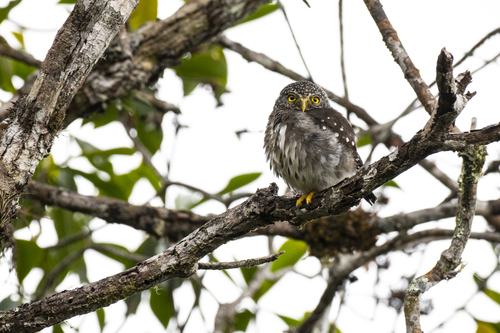
Subtropical Pygmy-Owl (Glaucidium parkeri) Subtropical Pygmy-Owl
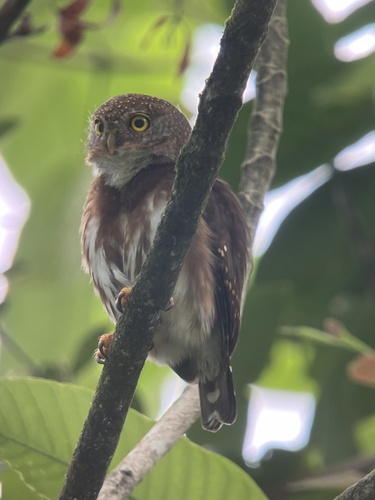
Central American Pygmy-Owl (Glaucidium griseiceps) Central American Pygmy-Owl

Media

Loading…

In short

The most reliable field mark between Subtropical Pygmy-Owl and Central American Pygmy-Owl is the pattern and spotting on the crown and nape, especially in juveniles: juvenile Central American Pygmy-Owls have a plain gray, unspotted crown and sooty nape 'false eyes', while adult and likely juvenile Subtropical Pygmy-Owls show prominent white spots on the crown and face. Adults of both can look similar, but Subtropical Pygmy-Owl tends to have a darker, more olive-brown upperpart tone, and its tail is blackish with spotty white bands, while Central American Pygmy-Owl's tail is richer brown with pale bars. Both species are small, chunky owls with similar structure, but Central American Pygmy-Owl averages slightly larger and heavier. Vocalizations differ, but are not always diagnostic in the field. Range is a strong clue: Subtropical Pygmy-Owl is restricted to the Andes of Bolivia, Colombia, Ecuador, and Peru, while Central American Pygmy-Owl is found from southern Mexico through Central America into northwestern South America.

Identification tips

  1. Juvenile crown pattern: Juvenile Central American Pygmy-Owl has a plain gray, unspotted crown and sooty nape 'false eyes'—if you see a small owl with a clean gray head and no crown spots, it's Central American Pygmy-Owl. Juvenile Subtropical Pygmy-Owl is undescribed, but adults (and likely immatures) show prominent white spots on the crown and face.
  2. Adult crown spotting: Subtropical Pygmy-Owl adults have prominent white spots on a grayish-brown crown; Central American Pygmy-Owl adults have buff to whitish spots on a grayish-brown crown, but these may be less conspicuous.
  3. Nape 'false eyes': Both species have dark 'false eyes' on the nape, but Central American Pygmy-Owl juveniles have sooty (darker) patches, while Subtropical Pygmy-Owl's are black.
  4. Upperparts tone: Subtropical Pygmy-Owl has a darker, more olive-brown back and rump; Central American Pygmy-Owl is richer brown above.
  5. Tail pattern: Subtropical Pygmy-Owl's tail is blackish with spotty white bands; Central American Pygmy-Owl's tail is rich brown with pale bars. Look for the difference in band sharpness and background color.
  6. Underpart streaking: Both have whitish underparts with reddish-brown streaks, but Subtropical Pygmy-Owl's streaks are broader and duller (reddish-olive brown), while Central American Pygmy-Owl's are narrower and more reddish brown.
  7. Rufous morph: Both species can show a rare rufous morph, which is not reliably separable in the field—avoid using this as a primary mark.
  8. Size: Central American Pygmy-Owl can be slightly larger and heavier, but overlap is significant; do not rely on size unless extremes are observed.
  9. Vocalization: If you hear a song starting with 2–4 hoots, a pause, then a rapid series of similar notes, it's Central American Pygmy-Owl. Subtropical Pygmy-Owl's song is not described here, so use caution.
  10. Range: Subtropical Pygmy-Owl is restricted to the Andes of Bolivia, Colombia, Ecuador, and Peru; Central American Pygmy-Owl ranges from southern Mexico through Central America to Colombia and Ecuador. In areas of overlap (Colombia, Ecuador), use habitat and elevation to help.
  11. Habitat and elevation: Subtropical Pygmy-Owl prefers subtropical/montane forests at higher elevations; Central American Pygmy-Owl is more often in lowland and foothill forests. If you are in lowland Central America, it's almost certainly Central American Pygmy-Owl.
  12. Perched posture and jizz: Both species are similar in structure and posture—small, chunky, upright owls—so do not use this as a separator.
  13. Flight views: No specific flight or upperwing pattern differences are described for either species, so focus on head and tail pattern if seen in flight.
  14. Sex and season: No seasonal or sexual plumage differences are described that would help separate these two species.
  15. Pitfalls: Be cautious with rufous morphs and streaking intensity, as these can vary individually and overlap. Focus on crown spotting (especially in juveniles), tail pattern, and range/habitat for the most reliable separation.

Size

Subtropical Pygmy-Owl is about 14–14.5 cm long, with males averaging 61.6 g. Central American Pygmy-Owl ranges from 13–18 cm in length, with males 50.6–58.8 g and females about 56 g. There is overlap, but Central American Pygmy-Owl can be slightly larger and heavier, especially at the upper end of its range. In the field, this difference is subtle and not a reliable separator unless both species are seen side-by-side.

Plumage

Juvenile Central American Pygmy-Owls are distinctive: their crown and nape are plain gray, lacking spots, and the nape's 'false eyes' are sooty. In contrast, juvenile Subtropical Pygmy-Owl plumage has not been described, but adults (and likely immatures) show prominent white spots on the grayish-brown crown and face, and black 'false eyes' on the nape. Adult Subtropical Pygmy-Owls have a grayish-brown crown with white spots, dark brown back and rump, and a blackish tail with spotty white bands. Central American Pygmy-Owl adults have a grayish-brown crown with buff to whitish spots, rich brown upperparts, and a tail with pale bars. Underparts are similar in both: whitish with reddish-brown streaks, but Subtropical Pygmy-Owl's streaks are broader and duller reddish-olive brown. Both species have a rare rufous morph, which is not reliably separable in the field.

Behaviour

Both species are small, stocky owls often seen perched upright in forested habitats. There are no strong behavioral differences described that would reliably separate them in the field.

Habitat

Subtropical Pygmy-Owl is found in the Andes of Bolivia, Colombia, Ecuador, and Peru, typically in subtropical or montane forests. Central American Pygmy-Owl occupies a much broader range, from southern Mexico through Central America to northwestern South America (including Colombia and Ecuador), and is found in lowland and foothill forests. Overlap may occur in Colombia and Ecuador, but habitat elevation and forest type can help: Subtropical Pygmy-Owl favors higher elevations and more montane settings.

Voice

Central American Pygmy-Owl's song starts with 2–4 equally spaced hoots, a brief pause, then a series of 6–18 similar notes ('huu-huu, huu-huu-huu...'), sometimes preceded by trills. No specific vocal description is given for Subtropical Pygmy-Owl here, so voice is not a reliable separator unless the full song is heard and compared to known recordings.

Submit a better description

Use the same sections as the comparison. Your text is published immediately.

The most reliable field mark between Subtropical Pygmy-Owl and Central American Pygmy-Owl is the pattern and spotting on the crown and nape, especially in juveniles: juvenile Central American Pygmy-Owls have a plain gray, unspotted crown and sooty nape 'false eyes', while adult and likely juvenile Subtropical Pygmy-Owls show prominent white spots on the crown and face. Adults of both can look similar, but Subtropical Pygmy-Owl tends to have a darker, more olive-brown upperpart tone, and its tail is blackish with spotty white bands, while Central American Pygmy-Owl's tail is richer brown with pale bars. Both species are small, chunky owls with similar structure, but Central American Pygmy-Owl averages slightly larger and heavier. Vocalizations differ, but are not always diagnostic in the field. Range is a strong clue: Subtropical Pygmy-Owl is restricted to the Andes of Bolivia, Colombia, Ecuador, and Peru, while Central American Pygmy-Owl is found from southern Mexico through Central America into northwestern South America.

  1. Juvenile crown pattern: Juvenile Central American Pygmy-Owl has a plain gray, unspotted crown and sooty nape 'false eyes'—if you see a small owl with a clean gray head and no crown spots, it's Central American Pygmy-Owl. Juvenile Subtropical Pygmy-Owl is undescribed, but adults (and likely immatures) show prominent white spots on the crown and face.
  2. Adult crown spotting: Subtropical Pygmy-Owl adults have prominent white spots on a grayish-brown crown; Central American Pygmy-Owl adults have buff to whitish spots on a grayish-brown crown, but these may be less conspicuous.
  3. Nape 'false eyes': Both species have dark 'false eyes' on the nape, but Central American Pygmy-Owl juveniles have sooty (darker) patches, while Subtropical Pygmy-Owl's are black.
  4. Upperparts tone: Subtropical Pygmy-Owl has a darker, more olive-brown back and rump; Central American Pygmy-Owl is richer brown above.
  5. Tail pattern: Subtropical Pygmy-Owl's tail is blackish with spotty white bands; Central American Pygmy-Owl's tail is rich brown with pale bars. Look for the difference in band sharpness and background color.
  6. Underpart streaking: Both have whitish underparts with reddish-brown streaks, but Subtropical Pygmy-Owl's streaks are broader and duller (reddish-olive brown), while Central American Pygmy-Owl's are narrower and more reddish brown.
  7. Rufous morph: Both species can show a rare rufous morph, which is not reliably separable in the field—avoid using this as a primary mark.
  8. Size: Central American Pygmy-Owl can be slightly larger and heavier, but overlap is significant; do not rely on size unless extremes are observed.
  9. Vocalization: If you hear a song starting with 2–4 hoots, a pause, then a rapid series of similar notes, it's Central American Pygmy-Owl. Subtropical Pygmy-Owl's song is not described here, so use caution.
  10. Range: Subtropical Pygmy-Owl is restricted to the Andes of Bolivia, Colombia, Ecuador, and Peru; Central American Pygmy-Owl ranges from southern Mexico through Central America to Colombia and Ecuador. In areas of overlap (Colombia, Ecuador), use habitat and elevation to help.
  11. Habitat and elevation: Subtropical Pygmy-Owl prefers subtropical/montane forests at higher elevations; Central American Pygmy-Owl is more often in lowland and foothill forests. If you are in lowland Central America, it's almost certainly Central American Pygmy-Owl.
  12. Perched posture and jizz: Both species are similar in structure and posture—small, chunky, upright owls—so do not use this as a separator.
  13. Flight views: No specific flight or upperwing pattern differences are described for either species, so focus on head and tail pattern if seen in flight.
  14. Sex and season: No seasonal or sexual plumage differences are described that would help separate these two species.
  15. Pitfalls: Be cautious with rufous morphs and streaking intensity, as these can vary individually and overlap. Focus on crown spotting (especially in juveniles), tail pattern, and range/habitat for the most reliable separation.

Subtropical Pygmy-Owl is about 14–14.5 cm long, with males averaging 61.6 g. Central American Pygmy-Owl ranges from 13–18 cm in length, with males 50.6–58.8 g and females about 56 g. There is overlap, but Central American Pygmy-Owl can be slightly larger and heavier, especially at the upper end of its range. In the field, this difference is subtle and not a reliable separator unless both species are seen side-by-side.

Juvenile Central American Pygmy-Owls are distinctive: their crown and nape are plain gray, lacking spots, and the nape's 'false eyes' are sooty. In contrast, juvenile Subtropical Pygmy-Owl plumage has not been described, but adults (and likely immatures) show prominent white spots on the grayish-brown crown and face, and black 'false eyes' on the nape. Adult Subtropical Pygmy-Owls have a grayish-brown crown with white spots, dark brown back and rump, and a blackish tail with spotty white bands. Central American Pygmy-Owl adults have a grayish-brown crown with buff to whitish spots, rich brown upperparts, and a tail with pale bars. Underparts are similar in both: whitish with reddish-brown streaks, but Subtropical Pygmy-Owl's streaks are broader and duller reddish-olive brown. Both species have a rare rufous morph, which is not reliably separable in the field.

Both species are small, stocky owls often seen perched upright in forested habitats. There are no strong behavioral differences described that would reliably separate them in the field.

Subtropical Pygmy-Owl is found in the Andes of Bolivia, Colombia, Ecuador, and Peru, typically in subtropical or montane forests. Central American Pygmy-Owl occupies a much broader range, from southern Mexico through Central America to northwestern South America (including Colombia and Ecuador), and is found in lowland and foothill forests. Overlap may occur in Colombia and Ecuador, but habitat elevation and forest type can help: Subtropical Pygmy-Owl favors higher elevations and more montane settings.

Central American Pygmy-Owl's song starts with 2–4 equally spaced hoots, a brief pause, then a series of 6–18 similar notes ('huu-huu, huu-huu-huu...'), sometimes preceded by trills. No specific vocal description is given for Subtropical Pygmy-Owl here, so voice is not a reliable separator unless the full song is heard and compared to known recordings.

Discard your changes?

You have unsaved edits. If you leave now, those changes will be lost.

Subtropical Pygmy-Owl · Central American Pygmy-Owl · My Tricky Birds