

Motmot

Spotted Sandgrouse vs Lichtenstein's Sandgrouse

Pterocles senegallus versus Pterocles lichtensteinii

Play a quiz with Spotted Sandgrouse and Lichtenstein's Sandgrouse

Spotted Sandgrouse (Pterocles senegallus) Spotted Sandgrouse
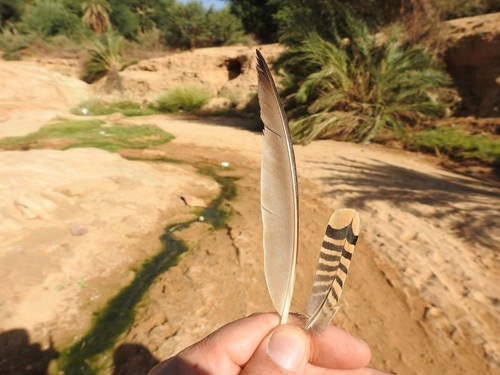
Lichtenstein's Sandgrouse (Pterocles lichtensteinii) Lichtenstein's Sandgrouse

Media

Loading…

In short

Spotted Sandgrouse is best separated from Lichtenstein's Sandgrouse by its larger size, longer tail with somewhat elongated central feathers, and distinctive plumage: males show a reddish-brown nape, orange throat, and a pale grey collar, while both sexes have pinkish-grey upperparts with small dark spots and obvious dark patches on the wings and belly. In flight, Spotted Sandgrouse shows pale primaries with dark trailing edges and a dark belly stripe, whereas Lichtenstein's is smaller, stockier, and both sexes are closely barred blackish on buff above and below, lacking the spotted pattern and strong color contrasts of Spotted. Lichtenstein's also lacks the elongated central tail feathers and is overall more uniform and cryptic. These differences are visible in both perched and flying birds, but flight views of the wing and belly pattern are especially diagnostic.

Identification tips

  1. Flight pattern and underwing (all ages): Spotted Sandgrouse shows pale primaries with a dark trailing edge and a distinct dark belly stripe in flight; Lichtenstein's lacks these features and is more uniformly barred below.
  2. Body size and shape: Spotted is larger and longer-tailed (about 33 cm), while Lichtenstein's is smaller, stockier, and shorter-tailed (about 25 cm).
  3. Tail shape: Spotted has somewhat elongated central tail feathers (but not as long as Pin-tailed Sandgrouse); Lichtenstein's tail is short and lacks any elongation.
  4. Male head and neck pattern: Male Spotted has a reddish-brown nape, pale grey collar, orange throat, and grey breast; Lichtenstein's male lacks these colors and is closely barred throughout.
  5. Female plumage: Female Spotted is duller but still shows the spotted pattern and dark patches; Lichtenstein's female is also barred and lacks any spots or patches.
  6. Upperparts: Spotted shows pinkish-grey upperparts with small dark spots and obvious dark patches on the wings and lower belly; Lichtenstein's is uniformly buff with fine blackish barring, no spots or patches.
  7. Underparts: Spotted has a dark belly stripe visible in flight; Lichtenstein's is finely barred below, with no belly stripe.
  8. Wing pattern in flight: Look for the pale primaries with dark trailing edge in Spotted; Lichtenstein's wings are more uniformly barred and lack contrasting panels or edges.
  9. Tail in flight: Spotted's tail appears longer and more pointed due to slight central feather elongation; Lichtenstein's is short and rounded.
  10. Voice: If you hear a musical 'queeto-queeto' or repeated 'queet - queet - queet', it is Spotted; Lichtenstein's call is not described but is not noted as similar.
  11. Behavior at waterholes: Both species visit waterholes daily, so context is not helpful for separation.
  12. Habitat: Both occur in arid, stony, or desert habitats; do not rely on habitat alone for identification.
  13. Flock structure: Both can be gregarious outside breeding season; flock size is not diagnostic.
  14. Juvenile birds: Juvenile Spotted already show the spotted pattern and dark patches, while juvenile Lichtenstein's are barred like adults.
  15. Pitfalls: Beware of confusing Spotted with other sandgrouse with dark primaries (e.g., Crowned Sandgrouse), but Lichtenstein's is always barred, never spotted or patchy.

Size

Spotted Sandgrouse is noticeably larger, reaching about 33 cm in length, while Lichtenstein's Sandgrouse is smaller and stockier at about 25 cm. This size difference is apparent in direct comparison or when familiar with both species. Spotted also appears longer-tailed due to its somewhat elongated central tail feathers, while Lichtenstein's tail is short and lacks elongation.

Plumage

Juvenile and adult Spotted Sandgrouse both show a combination of pinkish-grey upperparts with small dark spots and prominent dark patches on the wings, tail, and lower belly. In flight, all ages display pale primaries with a dark trailing edge and a dark belly stripe, which is a key field mark. Males have a reddish-brown nape, orange throat, and pale grey collar, while females are duller but still spotted. Lichtenstein's Sandgrouse, in contrast, is closely and finely barred blackish on a buff ground above and below in both sexes and all ages, giving a more uniform and cryptic appearance. It lacks the spotted pattern, strong color contrasts, and the dark belly stripe of Spotted. The tail in Lichtenstein's is short and unremarkable, without elongation.

Behaviour

Both species are ground-dwelling and gregarious outside the breeding season, foraging in small flocks and making daily flights to waterholes. Spotted Sandgrouse is noted for its rapid, strong flight and wary behavior, often freezing when threatened. Lichtenstein's is similarly adapted to arid environments and is also wary, but no specific behavioral differences are highlighted in the sources.

Habitat

Both species inhabit arid regions, including deserts and stony hills, across northern and eastern Africa, the Middle East, and into Asia. There is significant overlap in their ranges and preferred habitats, so habitat alone is not a reliable separator.

Voice

Spotted Sandgrouse has a distinctive, musical 'queeto-queeto' or repeated high-pitched 'queet - queet - queet' call, which can help distinguish it from other sandgrouse. No specific vocal description is given for Lichtenstein's Sandgrouse in the sources, so voice is only a one-way separator if Spotted's call is heard.

Submit a better description

Use the same sections as the comparison. Your text is published immediately.

Spotted Sandgrouse is best separated from Lichtenstein's Sandgrouse by its larger size, longer tail with somewhat elongated central feathers, and distinctive plumage: males show a reddish-brown nape, orange throat, and a pale grey collar, while both sexes have pinkish-grey upperparts with small dark spots and obvious dark patches on the wings and belly. In flight, Spotted Sandgrouse shows pale primaries with dark trailing edges and a dark belly stripe, whereas Lichtenstein's is smaller, stockier, and both sexes are closely barred blackish on buff above and below, lacking the spotted pattern and strong color contrasts of Spotted. Lichtenstein's also lacks the elongated central tail feathers and is overall more uniform and cryptic. These differences are visible in both perched and flying birds, but flight views of the wing and belly pattern are especially diagnostic.

  1. Flight pattern and underwing (all ages): Spotted Sandgrouse shows pale primaries with a dark trailing edge and a distinct dark belly stripe in flight; Lichtenstein's lacks these features and is more uniformly barred below.
  2. Body size and shape: Spotted is larger and longer-tailed (about 33 cm), while Lichtenstein's is smaller, stockier, and shorter-tailed (about 25 cm).
  3. Tail shape: Spotted has somewhat elongated central tail feathers (but not as long as Pin-tailed Sandgrouse); Lichtenstein's tail is short and lacks any elongation.
  4. Male head and neck pattern: Male Spotted has a reddish-brown nape, pale grey collar, orange throat, and grey breast; Lichtenstein's male lacks these colors and is closely barred throughout.
  5. Female plumage: Female Spotted is duller but still shows the spotted pattern and dark patches; Lichtenstein's female is also barred and lacks any spots or patches.
  6. Upperparts: Spotted shows pinkish-grey upperparts with small dark spots and obvious dark patches on the wings and lower belly; Lichtenstein's is uniformly buff with fine blackish barring, no spots or patches.
  7. Underparts: Spotted has a dark belly stripe visible in flight; Lichtenstein's is finely barred below, with no belly stripe.
  8. Wing pattern in flight: Look for the pale primaries with dark trailing edge in Spotted; Lichtenstein's wings are more uniformly barred and lack contrasting panels or edges.
  9. Tail in flight: Spotted's tail appears longer and more pointed due to slight central feather elongation; Lichtenstein's is short and rounded.
  10. Voice: If you hear a musical 'queeto-queeto' or repeated 'queet - queet - queet', it is Spotted; Lichtenstein's call is not described but is not noted as similar.
  11. Behavior at waterholes: Both species visit waterholes daily, so context is not helpful for separation.
  12. Habitat: Both occur in arid, stony, or desert habitats; do not rely on habitat alone for identification.
  13. Flock structure: Both can be gregarious outside breeding season; flock size is not diagnostic.
  14. Juvenile birds: Juvenile Spotted already show the spotted pattern and dark patches, while juvenile Lichtenstein's are barred like adults.
  15. Pitfalls: Beware of confusing Spotted with other sandgrouse with dark primaries (e.g., Crowned Sandgrouse), but Lichtenstein's is always barred, never spotted or patchy.

Spotted Sandgrouse is noticeably larger, reaching about 33 cm in length, while Lichtenstein's Sandgrouse is smaller and stockier at about 25 cm. This size difference is apparent in direct comparison or when familiar with both species. Spotted also appears longer-tailed due to its somewhat elongated central tail feathers, while Lichtenstein's tail is short and lacks elongation.

Juvenile and adult Spotted Sandgrouse both show a combination of pinkish-grey upperparts with small dark spots and prominent dark patches on the wings, tail, and lower belly. In flight, all ages display pale primaries with a dark trailing edge and a dark belly stripe, which is a key field mark. Males have a reddish-brown nape, orange throat, and pale grey collar, while females are duller but still spotted. Lichtenstein's Sandgrouse, in contrast, is closely and finely barred blackish on a buff ground above and below in both sexes and all ages, giving a more uniform and cryptic appearance. It lacks the spotted pattern, strong color contrasts, and the dark belly stripe of Spotted. The tail in Lichtenstein's is short and unremarkable, without elongation.

Both species are ground-dwelling and gregarious outside the breeding season, foraging in small flocks and making daily flights to waterholes. Spotted Sandgrouse is noted for its rapid, strong flight and wary behavior, often freezing when threatened. Lichtenstein's is similarly adapted to arid environments and is also wary, but no specific behavioral differences are highlighted in the sources.

Both species inhabit arid regions, including deserts and stony hills, across northern and eastern Africa, the Middle East, and into Asia. There is significant overlap in their ranges and preferred habitats, so habitat alone is not a reliable separator.

Spotted Sandgrouse has a distinctive, musical 'queeto-queeto' or repeated high-pitched 'queet - queet - queet' call, which can help distinguish it from other sandgrouse. No specific vocal description is given for Lichtenstein's Sandgrouse in the sources, so voice is only a one-way separator if Spotted's call is heard.

Discard your changes?

You have unsaved edits. If you leave now, those changes will be lost.

Spotted Sandgrouse · Lichtenstein's Sandgrouse · My Tricky Birds