

Grandule del Senegal vs Lichtenstein's Sandgrouse
Pterocles senegallus contro Pterocles lichtensteinii
Fai un quiz con Grandule del Senegal e Lichtenstein's Sandgrouse
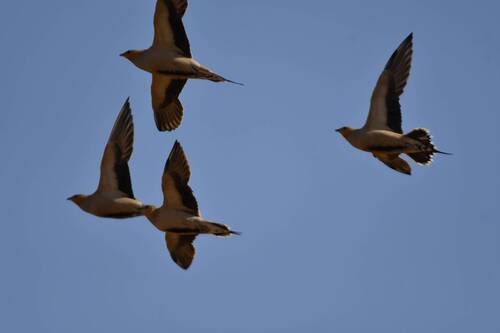 Grandule del Senegal
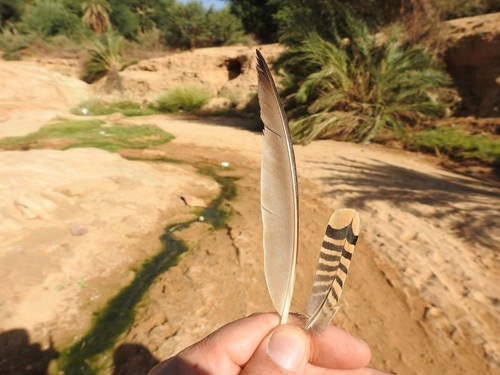 Lichtenstein's Sandgrouse
In breve
Grandule del Senegal si distingue meglio da Lichtenstein's Sandgrouse per le sue dimensioni maggiori, la coda più lunga con piume centrali leggermente allungate e il piumaggio distintivo: i maschi mostrano una nuca marrone-rossiccia, una gola arancione e un collare grigio chiaro, mentre entrambi i sessi hanno parti superiori grigio-rosate con piccole macchie scure e chiazze scure evidenti sulle ali e sul ventre. In volo, il Grandule del Senegal mostra primarie chiare con bordi scuri e una striscia scura sul ventre, mentre Lichtenstein's è più piccolo, tozzo, e entrambi i sessi sono strettamente barrati di nero su fondo beige sopra e sotto, privi del motivo maculato e dei forti contrasti di colore del Grandule del Senegal. Lichtenstein's manca anche delle piume centrali della coda allungate ed è nel complesso più uniforme e criptico. Queste differenze sono visibili sia negli uccelli posati che in volo, ma le viste in volo del motivo delle ali e del ventre sono particolarmente diagnostiche.
Consigli di identificazione
- Flight pattern and underwing (all ages): Il Grandule del Senegal mostra primarie chiare con un bordo scuro e una distintiva striscia scura sul ventre in volo; Lichtenstein's manca di queste caratteristiche ed è più uniformemente barrato sotto.
- Body size and shape: Il Grandule del Senegal è più grande e ha una coda più lunga (circa 33 cm), mentre Lichtenstein's è più piccolo, tozzo e ha una coda più corta (circa 25 cm).
- Tail shape: Il Grandule del Senegal ha piume centrali della coda leggermente allungate (ma non lunghe come quelle del Grandule); la coda di Lichtenstein's è corta e priva di allungamento.
- Male head and neck pattern: Il maschio del Grandule del Senegal ha una nuca marrone-rossiccia, un collare grigio chiaro, una gola arancione e un petto grigio; il maschio di Lichtenstein's manca di questi colori ed è strettamente barrato in tutto.
- Female plumage: La femmina del Grandule del Senegal è più opaca ma mostra ancora il motivo maculato e le chiazze scure; la femmina di Lichtenstein's è anch'essa barrata e priva di macchie o chiazze.
- Upperparts: Il Grandule del Senegal mostra parti superiori grigio-rosate con piccole macchie scure e chiazze scure evidenti sulle ali e sul ventre inferiore; Lichtenstein's è uniformemente beige con barrature nere fini, senza macchie o chiazze.
- Underparts: Il Grandule del Senegal ha una striscia scura sul ventre visibile in volo; Lichtenstein's è finemente barrato sotto, senza striscia sul ventre.
- Wing pattern in flight: Cerca le primarie chiare con bordo scuro nel Grandule del Senegal; le ali di Lichtenstein's sono più uniformemente barrate e mancano di pannelli o bordi contrastanti.
- Tail in flight: La coda del Grandule del Senegal appare più lunga e appuntita a causa della leggera allungamento delle piume centrali; quella di Lichtenstein's è corta e arrotondata.
- Voice: Se senti un musicale 'queeto-queeto' o un ripetuto 'queet - queet - queet', è il Grandule del Senegal; il richiamo di Lichtenstein's non è descritto ma non è notato come simile.
- Behavior at waterholes: Entrambe le specie visitano i punti d'acqua quotidianamente, quindi il contesto non è utile per la separazione.
- Habitat: Entrambe si trovano in habitat aridi, rocciosi o desertici; non fare affidamento solo sull'habitat per l'identificazione.
- Flock structure: Entrambe possono essere gregarie al di fuori della stagione riproduttiva; la dimensione del gruppo non è diagnostica.
- Juvenile birds: I giovani Grandule del Senegal mostrano già il motivo maculato e le chiazze scure, mentre i giovani di Lichtenstein's sono barrati come gli adulti.
- Pitfalls: Fai attenzione a confondere il Grandule del Senegal con altri sandgrouse con primarie scure (ad esempio, Crowned Sandgrouse), ma Lichtenstein's è sempre barrato, mai maculato o chiazzato.
Taglia
Il Grandule del Senegal è notevolmente più grande, raggiungendo circa 33 cm di lunghezza, mentre il Lichtenstein's Sandgrouse è più piccolo e tozzo, circa 25 cm. Questa differenza di dimensioni è evidente in un confronto diretto o quando si è familiari con entrambe le specie. Il Grandule del Senegal appare anche con una coda più lunga a causa delle sue piume centrali leggermente allungate, mentre la coda di Lichtenstein's è corta e priva di allungamento.
Piumaggio
I giovani e gli adulti del Grandule del Senegal mostrano entrambi una combinazione di parti superiori grigio-rosate con piccole macchie scure e chiazze scure prominenti sulle ali, sulla coda e sul ventre inferiore. In volo, tutte le età mostrano primarie chiare con un bordo scuro e una striscia scura sul ventre, che è un segno distintivo. I maschi hanno una nuca marrone-rossiccia, una gola arancione e un collare grigio chiaro, mentre le femmine sono più opache ma ancora maculate. Il Lichtenstein's Sandgrouse, al contrario, è strettamente e finemente barrato di nero su un fondo beige sopra e sotto in entrambi i sessi e tutte le età, dando un aspetto più uniforme e criptico. Manca del motivo maculato, dei forti contrasti di colore e della striscia scura sul ventre del Grandule del Senegal. La coda di Lichtenstein's è corta e poco appariscente, senza allungamento.
Comportamento
Entrambe le specie sono terricole e gregarie al di fuori della stagione riproduttiva, foraggiando in piccoli gruppi e facendo voli quotidiani verso i punti d'acqua. Il Grandule del Senegal è noto per il suo volo rapido e forte e il comportamento diffidente, spesso congelandosi quando minacciato. Anche Lichtenstein's è adattato a ambienti aridi ed è anch'esso diffidente, ma non vengono evidenziate differenze comportamentali specifiche nelle fonti.
Habitat
Entrambe le specie abitano regioni aride, inclusi deserti e colline rocciose, in tutta l'Africa settentrionale e orientale, nel Medio Oriente e fino in Asia. C'è una significativa sovrapposizione nei loro areali e habitat preferiti, quindi l'habitat da solo non è un separatore affidabile.
Voce
Il Grandule del Senegal ha un distintivo, musicale 'queeto-queeto' o un ripetuto richiamo acuto 'queet - queet - queet', che può aiutare a distinguerlo da altri sandgrouse. Nessuna descrizione vocale specifica è fornita per il Lichtenstein's Sandgrouse nelle fonti, quindi la voce è solo un separatore unidirezionale se si sente il richiamo del Grandule del Senegal.
Grandule del Senegal · Lichtenstein's Sandgrouse · I miei uccelli difficili