

Motmot

セネガルサケイ 対 クロビタイサケイ

Pterocles senegallus 対 Pterocles lichtensteinii

セネガルサケイとクロビタイサケイのクイズ
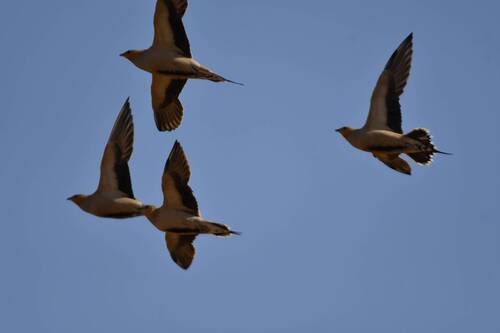
セネガルサケイ (Pterocles senegallus) セネガルサケイ
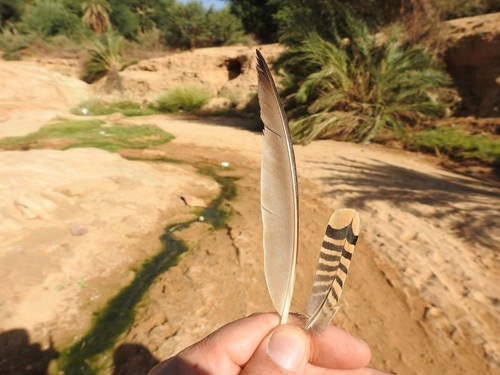
クロビタイサケイ (Pterocles lichtensteinii) クロビタイサケイ

メディア

読み込み中…

要点

セネガルサケイは、クロビタイサケイと区別するために、より大きなサイズ、やや長い尾、特徴的な羽色を持っています:オスは赤褐色の後頭部、オレンジ色の喉、淡い灰色の襟を示し、両性ともに小さな暗い斑点と翼と腹部に明らかな暗い斑点を持つ淡い灰色の上面を持っています。飛行中、セネガルサケイは淡い初級羽に暗い後縁と暗い腹部のストライプを示しますが、クロビタイサケイはより小さく、ずんぐりしており、両性ともに上面と下面が黒っぽい縞模様で、セネガルサケイの斑点模様や強い色のコントラストが欠けています。クロビタイサケイはまた、長い中央尾羽が欠けており、全体的により均一で隠蔽的です。これらの違いは、止まっている鳥と飛んでいる鳥の両方で見ることができますが、翼と腹部の模様の飛行中の視点は特に診断的です。

識別のコツ

  1. Flight pattern and underwing (all ages): セネガルサケイは、飛行中に暗い後縁と明確な暗い腹部のストライプを持つ淡い初級羽を示します;クロビタイサケイはこれらの特徴が欠けており、下面がより均一に縞模様です。
  2. Body size and shape: セネガルはより大きく、尾が長い(約33 cm)ですが、クロビタイサケイはより小さく、ずんぐりしており、尾が短い(約25 cm)です。
  3. Tail shape: セネガルはやや長い中央尾羽を持っています(ただし、シロハラサケイほど長くはありません);クロビタイサケイの尾は短く、長さがありません。
  4. Male head and neck pattern: オスのセネガルは赤褐色の後頭部、淡い灰色の襟、オレンジ色の喉、灰色の胸を持っています;クロビタイサケイのオスはこれらの色が欠けており、全体に密に縞模様です。
  5. Female plumage: メスのセネガルは鈍いですが、まだ斑点模様と暗い斑点を示します;クロビタイサケイのメスも縞模様ですが、斑点や斑点が欠けています。
  6. Upperparts: セネガルは小さな暗い斑点と翼と下腹部に明らかな暗い斑点を持つ淡い灰色の上面を示します;クロビタイサケイは均一に淡い色で、細かい黒っぽい縞模様があり、斑点や斑点がありません。
  7. Underparts: セネガルは飛行中に見える暗い腹部のストライプを持っています;クロビタイサケイは下面が細かく縞模様で、腹部のストライプがありません。
  8. Wing pattern in flight: セネガルの飛行中の淡い初級羽に暗い後縁を探してください;クロビタイサケイの翼はより均一に縞模様で、コントラストのあるパネルやエッジが欠けています。
  9. Tail in flight: セネガルの尾は、中央羽のわずかな伸長により、より長く、尖って見えます;クロビタイサケイは短く、丸みを帯びています。
  10. Voice: 音楽的な「クイート・クイート」や繰り返しの「クイート - クイート - クイート」が聞こえたら、それはセネガルです;クロビタイサケイの鳴き声は記載されていませんが、似ているとは言われていません。
  11. Behavior at waterholes: 両種は毎日水場を訪れるため、文脈は区別には役立ちません。
  12. Habitat: 両種は乾燥した、石の多い、または砂漠の生息地に生息しています;識別には生息地だけに頼らないでください。
  13. Flock structure: 両種は繁殖期以外は群れを作ることがあります;群れのサイズは診断的ではありません。
  14. Juvenile birds: 幼鳥のセネガルはすでに斑点模様と暗い斑点を示していますが、幼鳥のクロビタイサケイは大人のように縞模様です。
  15. Pitfalls: セネガルを暗い初級羽を持つ他のサケイ(例:ササフサケイ)と混同しないように注意してくださいが、クロビタイサケイは常に縞模様で、決して斑点や斑点がありません。

大きさ

セネガルサケイは明らかに大きく、約33 cmの長さに達しますが、クロビタイサケイは約25 cmでより小さく、ずんぐりしています。このサイズの違いは、直接比較や両種に慣れているときに明らかです。セネガルは、やや長い中央尾羽のために、尾が長く見えますが、クロビタイサケイの尾は短く、長さがありません。

羽色

幼鳥と成鳥のセネガルサケイは、両方とも小さな暗い斑点と翼、尾、下腹部に目立つ暗い斑点を持つ淡い灰色の上面の組み合わせを示します。飛行中、すべての年齢は暗い後縁と暗い腹部のストライプを持つ淡い初級羽を示し、これは重要なフィールドマークです。オスは赤褐色の後頭部、オレンジ色の喉、淡い灰色の襟を持ち、メスは鈍いですが、まだ斑点があります。対照的に、クロビタイサケイは、両性ともにすべての年齢で均一に淡い色の地面に密に細かい黒っぽい縞模様があり、より均一で隠蔽的な外観を与えています。セネガルの斑点模様、強い色のコントラスト、暗い腹部のストライプが欠けています。クロビタイサケイの尾は短く、目立たず、長さがありません。

行動

両種は地上に生息し、繁殖期以外は群れを作り、小さな群れで採餌し、水場への日常的な飛行を行います。セネガルサケイはその迅速で強い飛行と警戒心の強い行動で知られ、脅威を感じるとしばしば凍りつきます。クロビタイサケイも乾燥した環境に適応しており、同様に警戒心が強いですが、情報源には特定の行動の違いは強調されていません。

生息環境

両種は乾燥した地域、特に北部および東部アフリカ、中東、アジアにわたる砂漠や石の多い丘に生息しています。彼らの範囲と好まれる生息地には大きな重複があるため、生息地だけでは信頼できる区別にはなりません。

声

セネガルサケイは、他のサケイと区別するのに役立つ特徴的で音楽的な「クイート・クイート」や繰り返しの高音の「クイート - クイート - クイート」という鳴き声を持っています。情報源にはクロビタイサケイの特定の鳴き声の説明はありませんので、セネガルの鳴き声が聞こえた場合のみ、声は一方向の区別となります。

より良い説明を送る

比較と同じ項目を使ってください。文章はすぐに公開されます。

Spotted Sandgrouse is best separated from Lichtenstein's Sandgrouse by its larger size, longer tail with somewhat elongated central feathers, and distinctive plumage: males show a reddish-brown nape, orange throat, and a pale grey collar, while both sexes have pinkish-grey upperparts with small dark spots and obvious dark patches on the wings and belly. In flight, Spotted Sandgrouse shows pale primaries with dark trailing edges and a dark belly stripe, whereas Lichtenstein's is smaller, stockier, and both sexes are closely barred blackish on buff above and below, lacking the spotted pattern and strong color contrasts of Spotted. Lichtenstein's also lacks the elongated central tail feathers and is overall more uniform and cryptic. These differences are visible in both perched and flying birds, but flight views of the wing and belly pattern are especially diagnostic.

  1. Flight pattern and underwing (all ages): Spotted Sandgrouse shows pale primaries with a dark trailing edge and a distinct dark belly stripe in flight; Lichtenstein's lacks these features and is more uniformly barred below.
  2. Body size and shape: Spotted is larger and longer-tailed (about 33 cm), while Lichtenstein's is smaller, stockier, and shorter-tailed (about 25 cm).
  3. Tail shape: Spotted has somewhat elongated central tail feathers (but not as long as Pin-tailed Sandgrouse); Lichtenstein's tail is short and lacks any elongation.
  4. Male head and neck pattern: Male Spotted has a reddish-brown nape, pale grey collar, orange throat, and grey breast; Lichtenstein's male lacks these colors and is closely barred throughout.
  5. Female plumage: Female Spotted is duller but still shows the spotted pattern and dark patches; Lichtenstein's female is also barred and lacks any spots or patches.
  6. Upperparts: Spotted shows pinkish-grey upperparts with small dark spots and obvious dark patches on the wings and lower belly; Lichtenstein's is uniformly buff with fine blackish barring, no spots or patches.
  7. Underparts: Spotted has a dark belly stripe visible in flight; Lichtenstein's is finely barred below, with no belly stripe.
  8. Wing pattern in flight: Look for the pale primaries with dark trailing edge in Spotted; Lichtenstein's wings are more uniformly barred and lack contrasting panels or edges.
  9. Tail in flight: Spotted's tail appears longer and more pointed due to slight central feather elongation; Lichtenstein's is short and rounded.
  10. Voice: If you hear a musical 'queeto-queeto' or repeated 'queet - queet - queet', it is Spotted; Lichtenstein's call is not described but is not noted as similar.
  11. Behavior at waterholes: Both species visit waterholes daily, so context is not helpful for separation.
  12. Habitat: Both occur in arid, stony, or desert habitats; do not rely on habitat alone for identification.
  13. Flock structure: Both can be gregarious outside breeding season; flock size is not diagnostic.
  14. Juvenile birds: Juvenile Spotted already show the spotted pattern and dark patches, while juvenile Lichtenstein's are barred like adults.
  15. Pitfalls: Beware of confusing Spotted with other sandgrouse with dark primaries (e.g., Crowned Sandgrouse), but Lichtenstein's is always barred, never spotted or patchy.

Spotted Sandgrouse is noticeably larger, reaching about 33 cm in length, while Lichtenstein's Sandgrouse is smaller and stockier at about 25 cm. This size difference is apparent in direct comparison or when familiar with both species. Spotted also appears longer-tailed due to its somewhat elongated central tail feathers, while Lichtenstein's tail is short and lacks elongation.

Juvenile and adult Spotted Sandgrouse both show a combination of pinkish-grey upperparts with small dark spots and prominent dark patches on the wings, tail, and lower belly. In flight, all ages display pale primaries with a dark trailing edge and a dark belly stripe, which is a key field mark. Males have a reddish-brown nape, orange throat, and pale grey collar, while females are duller but still spotted. Lichtenstein's Sandgrouse, in contrast, is closely and finely barred blackish on a buff ground above and below in both sexes and all ages, giving a more uniform and cryptic appearance. It lacks the spotted pattern, strong color contrasts, and the dark belly stripe of Spotted. The tail in Lichtenstein's is short and unremarkable, without elongation.

Both species are ground-dwelling and gregarious outside the breeding season, foraging in small flocks and making daily flights to waterholes. Spotted Sandgrouse is noted for its rapid, strong flight and wary behavior, often freezing when threatened. Lichtenstein's is similarly adapted to arid environments and is also wary, but no specific behavioral differences are highlighted in the sources.

Both species inhabit arid regions, including deserts and stony hills, across northern and eastern Africa, the Middle East, and into Asia. There is significant overlap in their ranges and preferred habitats, so habitat alone is not a reliable separator.

Spotted Sandgrouse has a distinctive, musical 'queeto-queeto' or repeated high-pitched 'queet - queet - queet' call, which can help distinguish it from other sandgrouse. No specific vocal description is given for Lichtenstein's Sandgrouse in the sources, so voice is only a one-way separator if Spotted's call is heard.

変更を破棄しますか?

保存していない編集があります。今離れると失われます。

セネガルサケイ · クロビタイサケイ · 苦手な鳥