

Motmot

Splendid Starling vs Greater Blue-eared Starling

Lamprotornis splendidus versus Lamprotornis chalybaeus

Play a quiz with Splendid Starling and Greater Blue-eared Starling
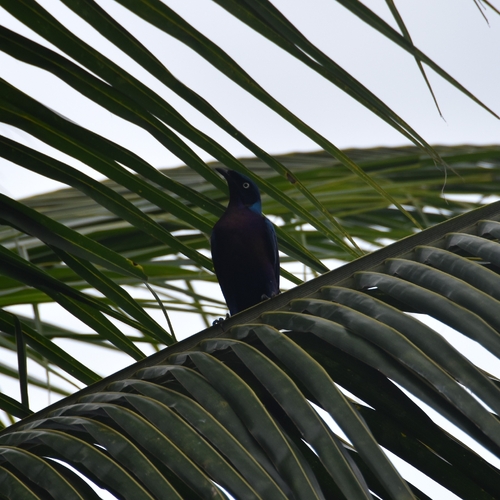
Splendid Starling (Lamprotornis splendidus) Splendid Starling
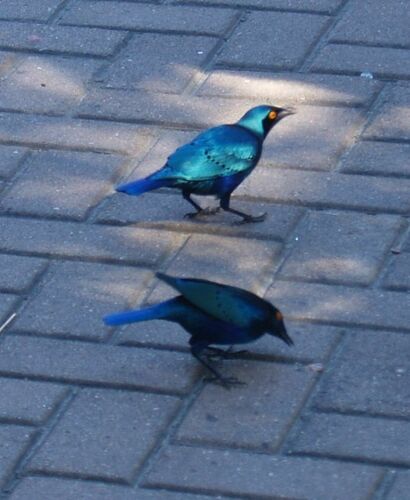
Greater Blue-eared Starling (Lamprotornis chalybaeus) Greater Blue-eared Starling

Media

Loading…

In short

The most reliable field mark between Splendid Starling and Greater Blue-eared Starling is overall size and bulk: Splendid Starling is distinctly heavier and more robust, while Greater Blue-eared is noticeably smaller and shorter-tailed. In the field, adult Greater Blue-eared Starling shows a strong blue-green gloss with a purple-blue belly and a bright yellow or orange eye, while Splendid Starling is generally darker and bulkier. Juvenile Greater Blue-eared is duller with blackish brown underparts, which can cause confusion with Splendid Starling, but the latter remains larger and more imposing. Both species are glossy starlings, so careful attention to size, tail length, and belly color is essential for confident separation.

Identification tips

  1. Size and bulk: Splendid Starling is much heavier and bulkier than Greater Blue-eared Starling. Use this when birds are seen together or with other starlings for scale.
  2. Tail length: Splendid Starling has a longer tail relative to its body, while Greater Blue-eared is shorter-tailed and more compact.
  3. Belly color (adult): Greater Blue-eared Starling shows a sharply defined purple-blue belly contrasting with its blue-green upperparts. Splendid Starling is more uniform and darker below.
  4. Ear patch (adult): Look for the blue ear patch on Greater Blue-eared Starling; Splendid Starling lacks this feature.
  5. Iris color (adult): Greater Blue-eared Starling has a striking yellow or orange iris, which stands out in good light. Splendid Starling's eye color is not specified here, but it is less likely to be as bright.
  6. Juvenile underparts: Juvenile Greater Blue-eared Starling has blackish brown underparts and is duller overall, which can resemble Splendid Starling, but note the smaller size and shorter tail.
  7. Gloss and sheen: Both species are glossy, but Greater Blue-eared is more blue-green and iridescent, especially in good light. Splendid Starling is glossier than most birds but lacks the intense blue-green and purple contrast.
  8. Flocking behavior: Large, mixed flocks in open woodland or around livestock favor Greater Blue-eared Starling. Solitary or less gregarious birds may be Splendid Starling, but this is not definitive.
  9. Perching on livestock: If you see a starling perched on cattle or other large mammals, it is more likely to be Greater Blue-eared.
  10. Vocalizations: A nasal 'squee-ar' call is diagnostic for Greater Blue-eared Starling; lack of this call does not confirm Splendid Starling, but hearing it is a strong clue.
  11. Habitat context: Open woodland and proximity to livestock or human activity point to Greater Blue-eared Starling. Splendid Starling is less tied to these habitats.
  12. Sex differences: Both species have similar plumage in males and females, so do not rely on sex for separation.
  13. Seasonal variation: No strong seasonal plumage differences are described for either species; focus on structural and color features year-round.
  14. Age pitfalls: Juvenile Greater Blue-eared can be confused with Splendid Starling due to duller plumage, but size and tail length remain helpful.
  15. Mixed flocks: If you encounter a mixed starling flock, check for the combination of size, tail, belly color, and iris to sort out these two species.

Size

Splendid Starling is significantly heavier (125 g vs. 86 g) and bulkier than Greater Blue-eared Starling. In the field, Splendid Starling appears larger-bodied and more robust, with a proportionally longer tail. Greater Blue-eared Starling is shorter-tailed and more compact overall. When seen together or with other starlings for scale, this size difference is often the first clue.

Plumage

Adult Greater Blue-eared Starling is glossy blue-green overall, with a distinct purple-blue belly and a blue ear patch. Its iris is bright yellow or orange, which stands out in the field. Juvenile Greater Blue-eared is duller, with blackish brown underparts, lacking the strong gloss and belly color of adults. Splendid Starling, while also glossy, is generally darker and more uniform, lacking the sharply defined purple-blue belly and blue ear patch of Greater Blue-eared. Both sexes are similar in each species, so sex is not a strong separator. Juvenile plumage in Splendid Starling is not described in detail in these notes, but the species remains larger and more robust at all ages.

Behaviour

Greater Blue-eared Starling is highly gregarious, often forming large flocks and mixing with other starlings. It frequently perches on livestock and forages on the ground for insects, sometimes removing ectoparasites. Splendid Starling's behavior is less specifically described here, but it is not noted for the same level of flocking or association with livestock. Both species are omnivorous and may be seen foraging on the ground.

Habitat

Greater Blue-eared Starling is a very common bird of open woodland, ranging widely across sub-Saharan Africa and often seen in association with livestock or near human habitation. Splendid Starling's habitat is not detailed in these notes, but it is not described as being as closely tied to open woodland or livestock as Greater Blue-eared. If the bird is in a large, noisy flock in open woodland or near cattle, Greater Blue-eared is more likely.

Voice

Greater Blue-eared Starling has a range of musical and grating calls, with the most familiar being a nasal 'squee-ar.' There are no vocalization details for Splendid Starling in these notes, so voice is only diagnostic for Greater Blue-eared.

Submit a better description

Use the same sections as the comparison. Your text is published immediately.

The most reliable field mark between Splendid Starling and Greater Blue-eared Starling is overall size and bulk: Splendid Starling is distinctly heavier and more robust, while Greater Blue-eared is noticeably smaller and shorter-tailed. In the field, adult Greater Blue-eared Starling shows a strong blue-green gloss with a purple-blue belly and a bright yellow or orange eye, while Splendid Starling is generally darker and bulkier. Juvenile Greater Blue-eared is duller with blackish brown underparts, which can cause confusion with Splendid Starling, but the latter remains larger and more imposing. Both species are glossy starlings, so careful attention to size, tail length, and belly color is essential for confident separation.

  1. Size and bulk: Splendid Starling is much heavier and bulkier than Greater Blue-eared Starling. Use this when birds are seen together or with other starlings for scale.
  2. Tail length: Splendid Starling has a longer tail relative to its body, while Greater Blue-eared is shorter-tailed and more compact.
  3. Belly color (adult): Greater Blue-eared Starling shows a sharply defined purple-blue belly contrasting with its blue-green upperparts. Splendid Starling is more uniform and darker below.
  4. Ear patch (adult): Look for the blue ear patch on Greater Blue-eared Starling; Splendid Starling lacks this feature.
  5. Iris color (adult): Greater Blue-eared Starling has a striking yellow or orange iris, which stands out in good light. Splendid Starling's eye color is not specified here, but it is less likely to be as bright.
  6. Juvenile underparts: Juvenile Greater Blue-eared Starling has blackish brown underparts and is duller overall, which can resemble Splendid Starling, but note the smaller size and shorter tail.
  7. Gloss and sheen: Both species are glossy, but Greater Blue-eared is more blue-green and iridescent, especially in good light. Splendid Starling is glossier than most birds but lacks the intense blue-green and purple contrast.
  8. Flocking behavior: Large, mixed flocks in open woodland or around livestock favor Greater Blue-eared Starling. Solitary or less gregarious birds may be Splendid Starling, but this is not definitive.
  9. Perching on livestock: If you see a starling perched on cattle or other large mammals, it is more likely to be Greater Blue-eared.
  10. Vocalizations: A nasal 'squee-ar' call is diagnostic for Greater Blue-eared Starling; lack of this call does not confirm Splendid Starling, but hearing it is a strong clue.
  11. Habitat context: Open woodland and proximity to livestock or human activity point to Greater Blue-eared Starling. Splendid Starling is less tied to these habitats.
  12. Sex differences: Both species have similar plumage in males and females, so do not rely on sex for separation.
  13. Seasonal variation: No strong seasonal plumage differences are described for either species; focus on structural and color features year-round.
  14. Age pitfalls: Juvenile Greater Blue-eared can be confused with Splendid Starling due to duller plumage, but size and tail length remain helpful.
  15. Mixed flocks: If you encounter a mixed starling flock, check for the combination of size, tail, belly color, and iris to sort out these two species.

Splendid Starling is significantly heavier (125 g vs. 86 g) and bulkier than Greater Blue-eared Starling. In the field, Splendid Starling appears larger-bodied and more robust, with a proportionally longer tail. Greater Blue-eared Starling is shorter-tailed and more compact overall. When seen together or with other starlings for scale, this size difference is often the first clue.

Adult Greater Blue-eared Starling is glossy blue-green overall, with a distinct purple-blue belly and a blue ear patch. Its iris is bright yellow or orange, which stands out in the field. Juvenile Greater Blue-eared is duller, with blackish brown underparts, lacking the strong gloss and belly color of adults. Splendid Starling, while also glossy, is generally darker and more uniform, lacking the sharply defined purple-blue belly and blue ear patch of Greater Blue-eared. Both sexes are similar in each species, so sex is not a strong separator. Juvenile plumage in Splendid Starling is not described in detail in these notes, but the species remains larger and more robust at all ages.

Greater Blue-eared Starling is highly gregarious, often forming large flocks and mixing with other starlings. It frequently perches on livestock and forages on the ground for insects, sometimes removing ectoparasites. Splendid Starling's behavior is less specifically described here, but it is not noted for the same level of flocking or association with livestock. Both species are omnivorous and may be seen foraging on the ground.

Greater Blue-eared Starling is a very common bird of open woodland, ranging widely across sub-Saharan Africa and often seen in association with livestock or near human habitation. Splendid Starling's habitat is not detailed in these notes, but it is not described as being as closely tied to open woodland or livestock as Greater Blue-eared. If the bird is in a large, noisy flock in open woodland or near cattle, Greater Blue-eared is more likely.

Greater Blue-eared Starling has a range of musical and grating calls, with the most familiar being a nasal 'squee-ar.' There are no vocalization details for Splendid Starling in these notes, so voice is only diagnostic for Greater Blue-eared.

Discard your changes?

You have unsaved edits. If you leave now, those changes will be lost.

Splendid Starling · Greater Blue-eared Starling · My Tricky Birds