

Motmot

Southern Brown-throated Weaver vs Grosbeak Weaver

Ploceus xanthopterus versus Amblyospiza albifrons

Play a quiz with Southern Brown-throated Weaver and Grosbeak Weaver

Southern Brown-throated Weaver (Ploceus xanthopterus) Southern Brown-throated Weaver
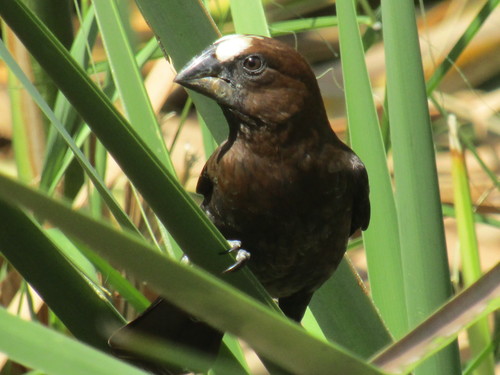
Grosbeak Weaver (Amblyospiza albifrons) Grosbeak Weaver

Media

Loading…

In short

The most reliable field mark between Southern Brown-throated Weaver and Grosbeak (Thick-billed) Weaver is bill structure: Grosbeak Weaver has a much heavier, conical bill, while Southern Brown-throated Weaver's bill is more typical of its genus. In the field, Grosbeak Weaver often appears bulkier and habitually fans or flicks its tail, whereas Southern Brown-throated Weaver is more slender and less demonstrative. Both species can overlap in southern Africa, especially in reedy wetlands, so careful attention to bill size and overall jizz is crucial. Juvenile and immature plumages are not described in detail for either species, so structural and behavioral cues are most reliable.

Identification tips

  1. Bill size and shape: Grosbeak Weaver has a very large, thick, conical bill—much heavier than the slenderer bill of Southern Brown-throated Weaver. This is the single most reliable field mark at all ages and seasons.
  2. Head and face structure: Grosbeak Weaver appears large-headed and blunt-faced due to its bill and skull proportions. Southern Brown-throated Weaver is more typical of Ploceus, with a finer head profile.
  3. Tail behavior: Watch for habitual tail fanning and flicking in Grosbeak Weaver, especially when perched or moving through reeds. Southern Brown-throated Weaver does not show this behavior.
  4. Nest association: If seen near nests, Grosbeak Weaver constructs a distinctive globular nest with a side-facing entrance near the top, suspended between upright reeds. Southern Brown-throated Weaver's nest is not described, but it will not match this unique structure.
  5. Plumage pitfalls: Both species may appear similar in overall coloration; do not rely on subtle color differences unless you see the white forehead patch on male Grosbeak Weaver, which is not always visible or present in all ages.
  6. Size impression: Grosbeak Weaver is bulkier and more robust overall, while Southern Brown-throated Weaver is lighter and more streamlined. This is most apparent in direct comparison or in mixed flocks.
  7. Habitat context: Both species use wetlands, but if you are in a reedbed with many large, globular nests, prioritize checking for Grosbeak Weaver. In less structured wetland or bush, either species may occur.
  8. Vocalizations: If you hear a harsh, unmusical song, suspect Grosbeak Weaver. Southern Brown-throated Weaver's voice is not described, so absence of this cue is not diagnostic.
  9. Colony size and density: Grosbeak Weaver can form dense colonies with many nests; Southern Brown-throated Weaver is less likely to be in such concentrations.
  10. Foraging behavior: Grosbeak Weaver uses its strong bill to crack open hard seeds and drupes, often seen manipulating food with visible effort. Southern Brown-throated Weaver feeds more like a typical weaver, picking at softer seeds and insects.
  11. Sex and age: If you see a male with a white forehead, this is diagnostic for Grosbeak Weaver. Females and immatures are trickier, so rely on bill size and behavior.
  12. Flight jizz: No specific wing pattern differences are described, but Grosbeak Weaver may look heavier and less agile in flight compared to the lighter Southern Brown-throated Weaver.
  13. Pitfalls: Immature birds of both species may lack strong color or pattern cues, so always check structure and behavior first. Do not rely on color alone.
  14. Seasonal context: Both species breed in southern Africa's wet season; if you see active nest building in reeds, check for Grosbeak Weaver's unique nest shape and colony structure.
  15. When in doubt: If you cannot see the bill clearly, try to observe feeding or tail behavior, or look for nest association to clinch the ID.

Size

Southern Brown-throated Weaver averages about 22 grams in body mass [wikidata], making it a medium-sized weaver. While no direct mass is given for Grosbeak Weaver, it is consistently described as bulkier and more robust, with a notably larger head and bill. In the field, Grosbeak Weaver will look heavier-set and more powerful, especially around the face and bill, compared to the more streamlined Southern Brown-throated Weaver.

Plumage

There are no detailed descriptions of age-specific wing or flight patterns for either species in the provided notes. Adult plumage differences are not described in detail, but the Grosbeak Weaver's most distinctive feature is its large, blunt bill and, in males, a white forehead patch (as referenced by its scientific name). Southern Brown-throated Weaver lacks this exaggerated bill and any white on the forehead. Both species are weavers and may show similar overall coloration, so structure is more reliable than plumage for separation in the field.

Behaviour

Grosbeak Weaver is notable for its habit of fanning and flicking its tail, a behavior not mentioned for Southern Brown-throated Weaver. Grosbeak Weavers are also bold and often seen in small colonies, especially around their distinctive globular nests suspended between reeds. Southern Brown-throated Weaver is less demonstrative and does not have these pronounced tail movements. In mixed weaver flocks, look for the bird with the most active tail and the largest bill.

Habitat

Both species occur in southern Africa and are associated with wetlands, but Grosbeak Weaver has a broader ecological range, including marshes, uplands, suburban areas, and artificial wetlands. It is especially tied to reedbeds for breeding, where its unique nest is built. Southern Brown-throated Weaver is also found in southern Africa, but the notes do not specify habitat beyond this. In reed swamps or marshes, both may occur, so habitat alone is not diagnostic, but the presence of large, globular nests with side-facing entrances is a strong clue for Grosbeak Weaver.

Voice

Grosbeak Weaver's song is described as unmusical and harsh, which may help in the field if vocalizations are heard. No vocal description is given for Southern Brown-throated Weaver, so this is only useful if you hear a particularly rough, unmelodic call or song.

Submit a better description

Use the same sections as the comparison. Your text is published immediately.

The most reliable field mark between Southern Brown-throated Weaver and Grosbeak (Thick-billed) Weaver is bill structure: Grosbeak Weaver has a much heavier, conical bill, while Southern Brown-throated Weaver's bill is more typical of its genus. In the field, Grosbeak Weaver often appears bulkier and habitually fans or flicks its tail, whereas Southern Brown-throated Weaver is more slender and less demonstrative. Both species can overlap in southern Africa, especially in reedy wetlands, so careful attention to bill size and overall jizz is crucial. Juvenile and immature plumages are not described in detail for either species, so structural and behavioral cues are most reliable.

  1. Bill size and shape: Grosbeak Weaver has a very large, thick, conical bill—much heavier than the slenderer bill of Southern Brown-throated Weaver. This is the single most reliable field mark at all ages and seasons.
  2. Head and face structure: Grosbeak Weaver appears large-headed and blunt-faced due to its bill and skull proportions. Southern Brown-throated Weaver is more typical of Ploceus, with a finer head profile.
  3. Tail behavior: Watch for habitual tail fanning and flicking in Grosbeak Weaver, especially when perched or moving through reeds. Southern Brown-throated Weaver does not show this behavior.
  4. Nest association: If seen near nests, Grosbeak Weaver constructs a distinctive globular nest with a side-facing entrance near the top, suspended between upright reeds. Southern Brown-throated Weaver's nest is not described, but it will not match this unique structure.
  5. Plumage pitfalls: Both species may appear similar in overall coloration; do not rely on subtle color differences unless you see the white forehead patch on male Grosbeak Weaver, which is not always visible or present in all ages.
  6. Size impression: Grosbeak Weaver is bulkier and more robust overall, while Southern Brown-throated Weaver is lighter and more streamlined. This is most apparent in direct comparison or in mixed flocks.
  7. Habitat context: Both species use wetlands, but if you are in a reedbed with many large, globular nests, prioritize checking for Grosbeak Weaver. In less structured wetland or bush, either species may occur.
  8. Vocalizations: If you hear a harsh, unmusical song, suspect Grosbeak Weaver. Southern Brown-throated Weaver's voice is not described, so absence of this cue is not diagnostic.
  9. Colony size and density: Grosbeak Weaver can form dense colonies with many nests; Southern Brown-throated Weaver is less likely to be in such concentrations.
  10. Foraging behavior: Grosbeak Weaver uses its strong bill to crack open hard seeds and drupes, often seen manipulating food with visible effort. Southern Brown-throated Weaver feeds more like a typical weaver, picking at softer seeds and insects.
  11. Sex and age: If you see a male with a white forehead, this is diagnostic for Grosbeak Weaver. Females and immatures are trickier, so rely on bill size and behavior.
  12. Flight jizz: No specific wing pattern differences are described, but Grosbeak Weaver may look heavier and less agile in flight compared to the lighter Southern Brown-throated Weaver.
  13. Pitfalls: Immature birds of both species may lack strong color or pattern cues, so always check structure and behavior first. Do not rely on color alone.
  14. Seasonal context: Both species breed in southern Africa's wet season; if you see active nest building in reeds, check for Grosbeak Weaver's unique nest shape and colony structure.
  15. When in doubt: If you cannot see the bill clearly, try to observe feeding or tail behavior, or look for nest association to clinch the ID.

Southern Brown-throated Weaver averages about 22 grams in body mass [wikidata], making it a medium-sized weaver. While no direct mass is given for Grosbeak Weaver, it is consistently described as bulkier and more robust, with a notably larger head and bill. In the field, Grosbeak Weaver will look heavier-set and more powerful, especially around the face and bill, compared to the more streamlined Southern Brown-throated Weaver.

There are no detailed descriptions of age-specific wing or flight patterns for either species in the provided notes. Adult plumage differences are not described in detail, but the Grosbeak Weaver's most distinctive feature is its large, blunt bill and, in males, a white forehead patch (as referenced by its scientific name). Southern Brown-throated Weaver lacks this exaggerated bill and any white on the forehead. Both species are weavers and may show similar overall coloration, so structure is more reliable than plumage for separation in the field.

Grosbeak Weaver is notable for its habit of fanning and flicking its tail, a behavior not mentioned for Southern Brown-throated Weaver. Grosbeak Weavers are also bold and often seen in small colonies, especially around their distinctive globular nests suspended between reeds. Southern Brown-throated Weaver is less demonstrative and does not have these pronounced tail movements. In mixed weaver flocks, look for the bird with the most active tail and the largest bill.

Both species occur in southern Africa and are associated with wetlands, but Grosbeak Weaver has a broader ecological range, including marshes, uplands, suburban areas, and artificial wetlands. It is especially tied to reedbeds for breeding, where its unique nest is built. Southern Brown-throated Weaver is also found in southern Africa, but the notes do not specify habitat beyond this. In reed swamps or marshes, both may occur, so habitat alone is not diagnostic, but the presence of large, globular nests with side-facing entrances is a strong clue for Grosbeak Weaver.

Grosbeak Weaver's song is described as unmusical and harsh, which may help in the field if vocalizations are heard. No vocal description is given for Southern Brown-throated Weaver, so this is only useful if you hear a particularly rough, unmelodic call or song.

Discard your changes?

You have unsaved edits. If you leave now, those changes will be lost.

Southern Brown-throated Weaver · Grosbeak Weaver · My Tricky Birds