

Song Thrush vs Meadow Pipit
Turdus philomelos versus Anthus pratensis
Play a quiz with Song Thrush and Meadow Pipit
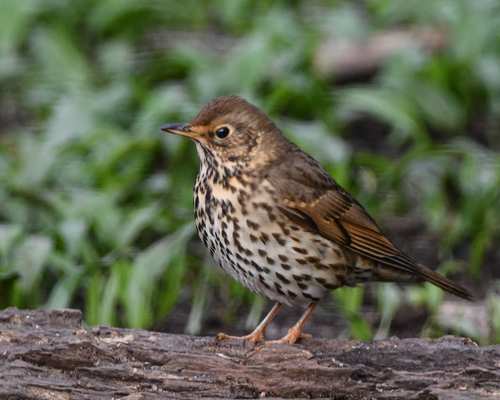 Song Thrush
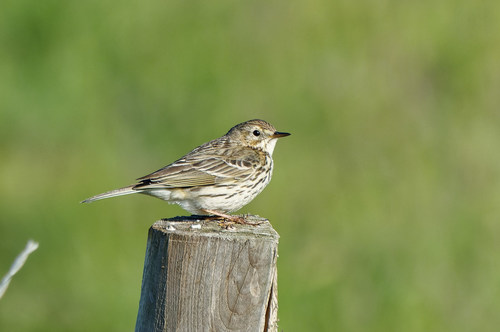 Meadow Pipit
In short
The most reliable way to separate Song Thrush from Meadow Pipit is by structure and underpart spotting: Song Thrush is a much bulkier bird with a thick bill, warm yellow underwing, and bold, rounded black spots on creamy underparts, while Meadow Pipit is slender, with a thin bill, fine streaking below, and a long hind claw. Juvenile Song Thrushes may show some back streaking, but never the overall streaky, finely marked look of a pipit. In flight, Song Thrush reveals a warm yellow underwing, unlike the Meadow Pipit’s plain brown flight feathers. Size, jizz, and voice are also very different, and should be checked if plumage is ambiguous.
Identification tips
- Size and bulk: Song Thrush is much larger and heavier than Meadow Pipit; if the bird looks chunky and robust, pipit is ruled out.
- Bill shape: Song Thrush has a thick, yellowish bill; Meadow Pipit’s bill is thin and pointed, suited for insect feeding.
- Underpart markings: Song Thrush shows bold, rounded black spots on cream or buff underparts (all ages); Meadow Pipit has fine, even streaks, never spots.
- Upperparts: Song Thrush is plain brown above (juveniles may have some buff/orange streaks on back and wing coverts); Meadow Pipit is brown and streaky above, blending into the grass.
- Underwing color: In flight, Song Thrush flashes a warm yellow underwing; Meadow Pipit’s underwing is not contrasting, remaining brownish.
- Tail pattern: Meadow Pipit has a brown tail with narrow white edges; Song Thrush’s tail is plain brown, lacking white edges.
- Legs and feet: Both have pinkish legs, but Meadow Pipit’s rear claw is extremely long and straight, often visible in good views or photos; Song Thrush’s feet are more typical for a thrush, with no exaggerated claw.
- Flight style: Song Thrush flies strongly and directly; Meadow Pipit’s flight is fluttery and undulating, often with a parachuting song display.
- Song: Song Thrush sings loudly from a perch, with repeated musical phrases and mimicry; Meadow Pipit sings a simple, accelerating series of thin notes, usually in flight.
- Call: Song Thrush’s call is a sharp 'tsip' or strident 'chook-chook'; Meadow Pipit’s call is a faint 'tsi-tsi.'
- Habitat: Song Thrush is found in wooded areas, gardens, and hedgerows; Meadow Pipit prefers open grassland, moorland, and coastal marshes.
- Posture: Song Thrush stands upright and hops; Meadow Pipit walks or runs with a more horizontal, creeping gait.
- Juvenile confusion: Juvenile Song Thrush may show some back streaks, but always retains bold underpart spots and lacks the pipit’s overall streaky look.
- Context: If the bird is singing from a treetop or rooftop, thrush is likely; if it’s parachuting over a meadow, pipit is likely.
- Pitfalls: In poor light or at distance, Meadow Pipit’s streaks may look spotty, but the bird’s small size, thin bill, and long hind claw are clinchers. Song Thrush never shows the pipit’s fine, even streaking or flight style.
Size
Song Thrush is much larger and heavier (body mass ~72g) compared to the Meadow Pipit (15–22g). Song Thrush measures 20–23.5 cm in length, while Meadow Pipit is only 14.5–15 cm. In the field, Song Thrush looks chunky and robust, with a thickset body and relatively short tail, whereas Meadow Pipit appears slim, delicate, and long-tailed. The difference in bulk is usually obvious even at a distance.
Plumage
Juvenile Song Thrushes can show some buff or orange streaks on the back and wing coverts, but still have the characteristic bold, rounded black spots on cream or buff underparts, and a warm yellow underwing (all ages). Meadow Pipit of all ages is brown above and buff below, with fine, even streaking on the breast and flanks, and no bold spots. The pipit’s tail is brown with narrow white edges, and its underwing is not contrastingly colored. Song Thrush adults are plain brown above, with neat black spots below; Meadow Pipit is more uniformly streaked and lacks the thrush’s strong contrast. The Song Thrush’s bill is yellowish, legs and feet pink; Meadow Pipit has a thin bill and pale pinkish-yellow legs, but the most striking feature is the very long hind claw, which is absent in Song Thrush.
Behaviour
Song Thrushes are often seen foraging on the ground, hopping with a purposeful, upright stance, or singing loudly from prominent perches such as treetops or rooftops. Meadow Pipits have a more creeping, mouse-like walk, and are frequently seen making short flights low over grassland, often with a fluttering, parachuting song flight. Song Thrushes rarely perform aerial song displays. In flight, Song Thrush is direct and strong, while Meadow Pipit is fluttery and undulating.
Habitat
Song Thrush prefers woodland edges, parks, gardens, and hedgerows, often near trees or dense shrubs. Meadow Pipit is a bird of open country—grasslands, moors, coastal marshes, and uplands—rarely venturing into wooded areas. If you see a streaky brown bird in a treeless moor or saltmarsh, it is much more likely to be a Meadow Pipit; in a garden or woodland, Song Thrush is more expected.
Voice
Song Thrush has a loud, clear, and musical song, with repeated phrases and a wide variety of notes, often mimicking other species or sounds; its call is a sharp 'tsip' or a strident 'chook-chook' when alarmed. Meadow Pipit’s song is much simpler: a repetitive, accelerating series of thin 'tsi-tsi' notes, usually delivered in a short parachuting flight. The pipit’s calls are faint and high-pitched, lacking the volume and variety of the thrush.