

Solitary Sandpiper vs Wood Sandpiper
Tringa solitaria versus Tringa glareola
Play a quiz with Solitary Sandpiper and Wood Sandpiper
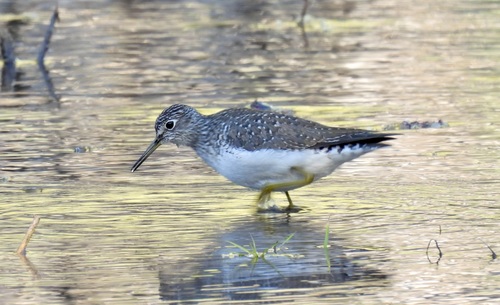 Solitary Sandpiper
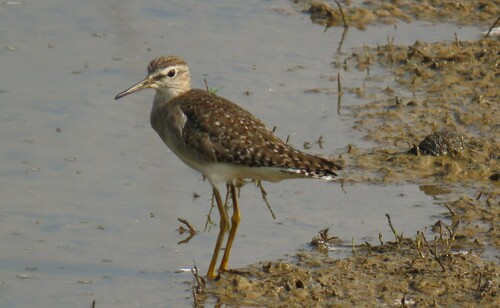 Wood Sandpiper
In short
The most reliable way to separate Solitary Sandpiper from Wood Sandpiper is by their rump and tail pattern in flight: Solitary Sandpiper shows a dark rump and tail center, while Wood Sandpiper has a less contrasting, pale rump patch (though not as bright as Green Sandpiper). On the ground, Solitary looks dumpier and darker above, with a more contrasting, clean white belly, while Wood Sandpiper is leggier, paler, and more finely marked. Bill and leg color, as well as overall structure, help in close views, but flight views of the rump are often decisive. Both can appear similar at a glance, especially juveniles, but careful attention to these marks will usually clinch the ID.
Identification tips
- Rump and tail pattern in flight: Solitary Sandpiper always shows a dark rump and tail center; Wood Sandpiper shows a pale rump patch, though not as bright as Green Sandpiper. This is the most reliable field mark for all ages and seasons.
- Structure: Solitary Sandpiper is compact and dumpy, with a shorter, thicker bill and relatively short legs. Wood Sandpiper is more elegant, with longer, yellowish legs and a finer, shorter bill—especially obvious when both are seen together.
- Upperparts color: Solitary is dark greenish above, giving a more somber, shadowy look. Wood Sandpiper is paler brown above, with a lighter, more washed-out appearance.
- Underparts: Solitary has clean, bright white underparts with a greyish breast; Wood Sandpiper's underparts are also white but the breast and neck are more diffusely and finely spotted, lacking the sharp contrast of Solitary.
- Wing spotting: Both species have brown wings with pale spots, but Solitary's spots are more distinct and the overall contrast is higher.
- Leg color: Wood Sandpiper's legs are longer and yellowish; Solitary's are duller and shorter, but this can be subtle in poor light or mud.
- Bill: Wood Sandpiper's bill is finer and shorter; Solitary's is thicker and slightly longer relative to head size.
- Flight jizz: Wood Sandpiper appears more buoyant and graceful in flight, with longer wings and legs trailing behind; Solitary is more compact and direct.
- Vocalization: Listen for Solitary's three-note whistle in flight; Wood Sandpiper's call is not described here, so this can help if heard.
- Habitat context: If the bird is alone in a wooded or secluded freshwater spot, Solitary is more likely; if in open, marshy wetlands, especially in Eurasia, Wood Sandpiper is more probable.
- Group size: Solitary Sandpiper is usually alone or in very small groups; Wood Sandpiper is more often in loose flocks, especially on migration.
- Season and range: Know your location—Solitary is a Nearctic breeder, Wood Sandpiper is Eurasian. Vagrants do occur, but context helps.
- Pitfalls: Juvenile Wood Sandpipers may appear darker and more marked above, but the rump patch in flight still separates them from Solitary. Beware of confusing Wood Sandpiper with Green Sandpiper, which has a much brighter white rump.
- Perched vs. flight: Always try to see the bird in flight for rump pattern if in doubt; perched birds can be tricky, especially juveniles.
- When in doubt: Focus on rump/tail pattern in flight, overall structure, and habitat context for the most reliable separation.
Size
Wood Sandpiper is noticeably heavier (mean mass 67.5g vs. 48.6g for Solitary Sandpiper [wikidata]), and appears longer-legged and more delicate in structure. Solitary Sandpiper is more compact and dumpy, with a shorter, stubbier look. In the field, Wood Sandpiper's longer yellowish legs and finer bill add to its more elegant, shank-like impression, while Solitary is chunkier overall.
Plumage
In all ages, Solitary Sandpiper in flight shows a dark rump and tail center, lacking any pale or white rump patch—this is the single most diagnostic mark, especially when compared to Wood Sandpiper, which shows a pale (but not brilliant white) rump patch that contrasts with the rest of the upperparts. On the ground, Solitary has a dark greenish back, greyish head and breast, and sharply white underparts, with brown wings dotted with small pale spots. Wood Sandpiper is paler brown above, with more diffuse, smaller spots on the breast and neck, and a less contrasting, more subdued appearance overall. Both species have some spotting above, but Solitary's is more distinct and its underparts are cleaner white. Juvenile and immature Wood Sandpipers may show a slightly more marked upperwing, but the rump patch remains a key difference at all ages. There is no mention of age-specific upperwing panels or contrasting flight marks beyond the rump/tail pattern for these two species.
Behaviour
Both species forage in shallow water or mud, probing for invertebrates. Wood Sandpiper tends to be more active and is often seen in more open, wetland habitats, moving with a lighter, more graceful gait. Solitary Sandpiper, true to its name, is often found alone or in very small groups, and may appear more deliberate and less restless than Wood Sandpiper. Both species bob their tails, but Solitary's dumpier build and solitary habits can be clues.
Habitat
Solitary Sandpiper is a Nearctic species, while Wood Sandpiper is Eurasian. In their respective ranges, both favor freshwater wetlands, muddy margins, and shallow pools rather than coastal habitats. Wood Sandpiper is the smallest of the Eurasian shanks and prefers open, marshy ground, while Solitary Sandpiper is more likely to be found alone along wooded streams or ponds. Habitat overlap is possible on migration, but Wood Sandpiper is more likely in open, grassy wetlands, while Solitary prefers more secluded, forested water edges.
Voice
Solitary Sandpiper gives a distinctive three-note whistle in flight. No specific flight call is described for Wood Sandpiper in the provided notes, so this call may help clinch Solitary in the right context, but is not always diagnostic without direct comparison.